
Vision Error Proofing versus Mechanical Poka-yoke: How to Choose
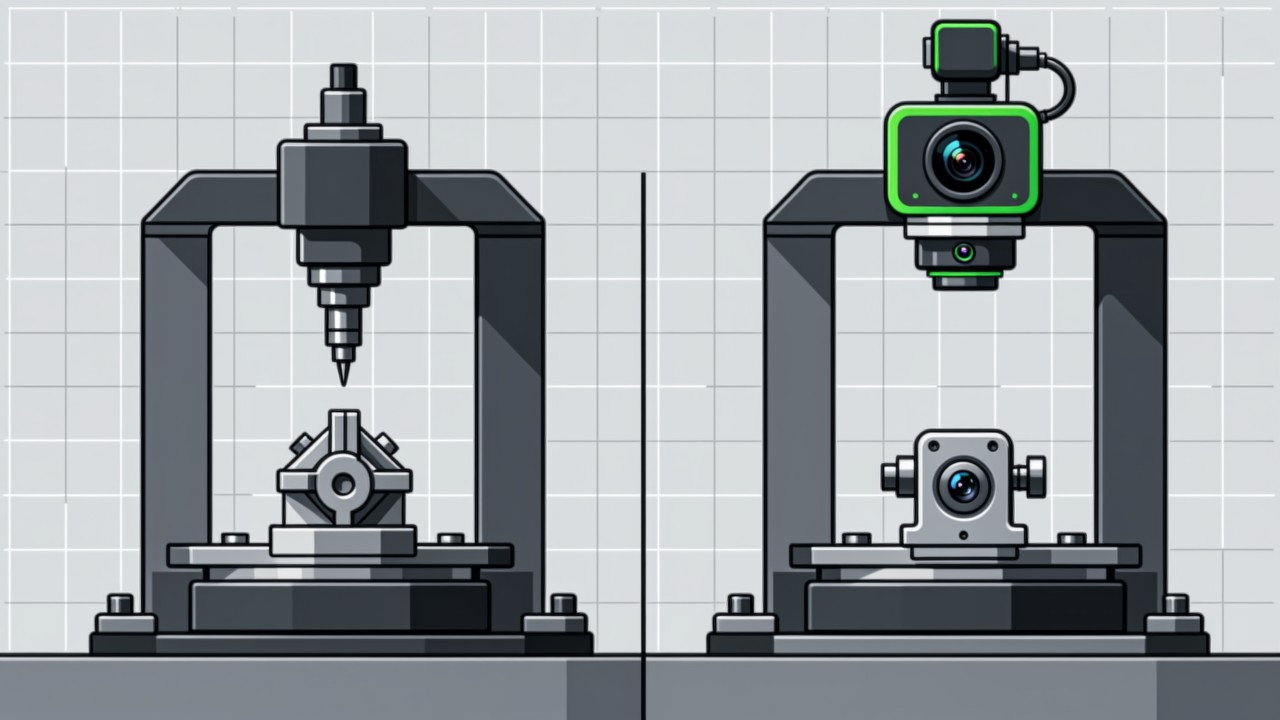
These two are not rivals, and treating them as a binary is where most of the argument comes from. A mechanical fixture makes a mistake physically impossible but can only prevent mistakes whose shape it was built for. A camera makes nothing impossible but can judge an almost unlimited range of conditions and leaves a record of every verdict. The deciding question is whether the requirement is "this must not happen" or "we must know whether it happened" — the first is a fixture problem, the second is a camera problem.
Key takeaways
- Fixtures prevent; cameras detect. The verbs are different, so the requirements have to be as well.
- Fixtures are more reliable per condition but only cover the conditions they were built for.
- Cameras cover far more conditions but carry a false alarm cost that a fixture never has.
- The most common answer is not either-or: constrain with a fixture, judge with a camera.
Mechanical error proofing and vision error proofing are frequently framed as a binary choice, and that framing is where most of the argument comes from. The two do genuinely different things. A fixture makes an incorrect action physically impossible — the part does not fit unless it is oriented correctly, the door does not close unless the tool is in its holder. A camera makes nothing impossible; it judges whether something happened and reports a verdict. One prevents, one detects. Once that distinction is clear, the selection question becomes tractable: does this requirement mean "it must not happen", or does it mean "we must know whether it happened"? The first is a fixture problem, the second is a camera problem.
Where the two genuinely differ
| Aspect | Mechanical poka-yoke | Vision error proofing |
|---|---|---|
| Mechanism | Physically prevents the incorrect action | Judges and reports whether an action was correct |
| Reliability per condition | Very high when the condition is well defined | Dependent on imaging conditions and threshold setting |
| Range of conditions | One fixture covers one specific error | One camera can judge several conditions at once |
| Record | None by itself | Every verdict, image and timestamp is recorded |
| Cost structure | Design and machining up front, cheap to run | Hardware and setup moderate, ongoing tuning required |
| Change cost | Product change usually means a new fixture | Product change may need only a criterion update |
The fourth row is the one that decides most real cases. A fixture is very reliable within its own scope and tells you nothing outside it — when a defect escapes, you have no idea whether the fixture worked and something got past it, or the fixture was never involved at all. A camera is less reliable per condition but leaves a record of every judgement, which is what makes root cause analysis and process improvement possible at all. So the choice is not only about error prevention; it is also about whether you want process data afterwards. Where a quality system or a customer audit requires traceable evidence, that consideration alone often settles it.
When a fixture is clearly the right answer
- The error has a definite physical form, such as a part that can only go in one way. A locating feature solves it completely and permanently, with no threshold and no false alarms.
- The consequence is a safety risk. Where someone could be injured, physical prevention is the right layer; no vision system should be the last line of defence for personal safety.
- The cost of an escape is extremely high and the error form is stable, as in high-value assembly where a single orientation mistake is catastrophic.
- The takt is extremely tight and the judgement is simple, where the few milliseconds of image processing are themselves a problem.
The limitation on all four is the same: a fixture can only prevent an error whose shape it was built for. Add a new variant, change a material, introduce a part that looks similar but differs in a way the fixture cannot feel, and it stops working — quietly, since a fixture that no longer applies still feels like it is doing its job. That is the failure mode nobody notices until it is expensive.
When vision is clearly the right answer
Vision wins wherever the requirement is about knowing rather than preventing. Sequence and order — a fixture can enforce order within its own cycle, but cannot report that step four was skipped when it has no idea what happened at step four. Action correctness in manual assembly, where the whole point is that a person performs the work and you want to know whether they did it as the standard specifies. High-mix production, where a fixture per variant would mean a rack of fixtures and a changeover for each, while a camera can handle a new variant with a criterion update. And multi-condition stations, where one camera covers the presence of a part, the attitude of a tool and the completion of a step in the same frame. The specific patterns are covered in preventing missing operations and preventing skipped steps.
Cost accounting has been known to mislead
A fixture often looks cheaper at quotation and more expensive over its life. Design and machining are a one-off, and running costs are almost nil, which suits a single fixed product. But a product change means a new fixture, and high-mix production means a rack of them plus changeover labour. Vision inverts this: moderate hardware and setup cost, plus ongoing threshold tuning, but a product change may only need a criterion update. The comparison should also include the cost of a fixture's silent failure — a fixture that has stopped matching the product does not break or alarm, it simply fails to stop the error it used to stop. Placing that on the same sheet as the quotation is what makes the comparison honest.
Selection questions we get asked
We already have a working fixture. Do we still need vision?
If it genuinely covers every occurrence of the error it was built for, you probably do not. But examine it against current products and variants, because fixtures have a tendency to survive past the point where they still apply — and when they stop applying, nothing tells you.
Can vision replace a safety interlock?
No. For personal safety, physical prevention and certified safety devices are the correct layer. Vision can serve as a supplementary prompt or record, but it must not be the last line of defence for someone's safety.
Our products change often. Which do we choose?
In high-mix, low-volume production, vision generally has the advantage, because changing a criterion is far cheaper than rebuilding a fixture. The economics shift back towards fixtures only where a single product runs for years at volume.
Is your current error proofing a fixture, a camera, or neither?
Describe the error you are trying to stop and we will say where it is genuinely preventible and where it has to be detected.
Related articles
-
Alarm Fatigue: Why the Floor Turns the System Off
Many visual SOP systems are not beaten by technical problems — they are muted by…
Read more → -
Visual SOP Camera Selection and Mounting
Camera selection for visual SOP is not the same as for product inspection. The s…
Read more → -
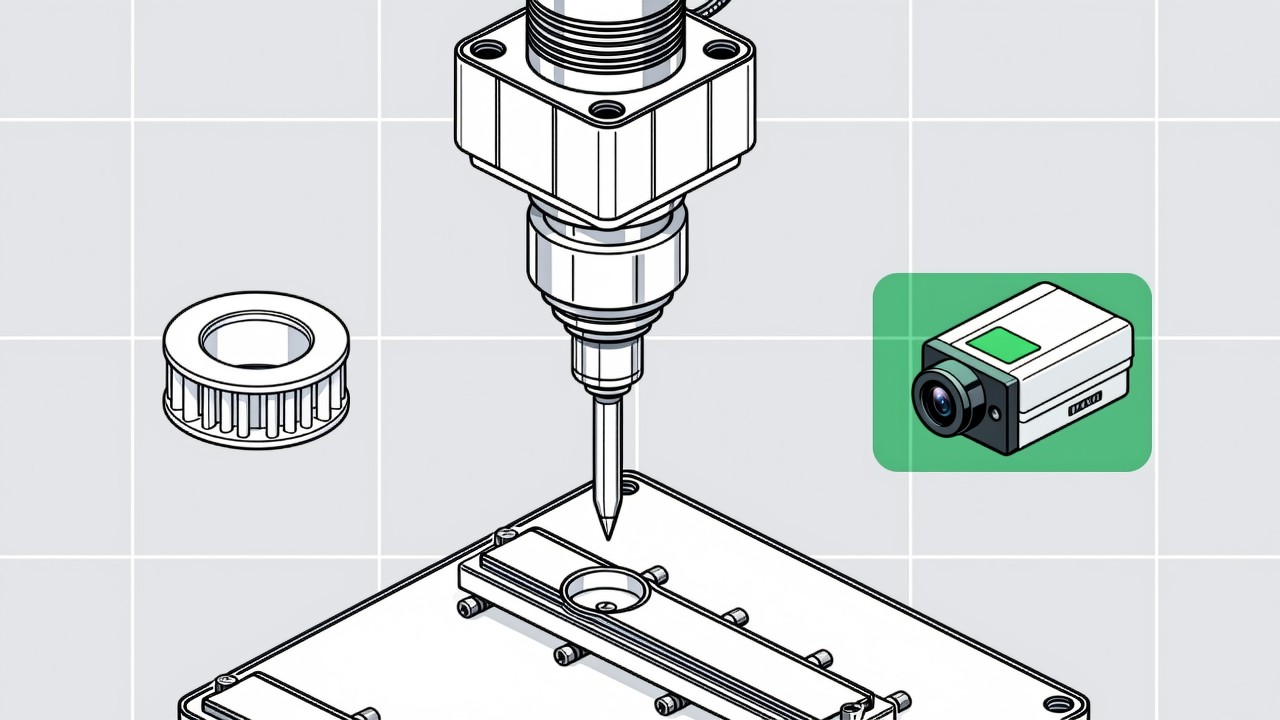
Vision Monitoring at the Semiconductor Die Bonder
Semiconductor packaging stations are characterised by high precision, fast cycle…
Read more → -
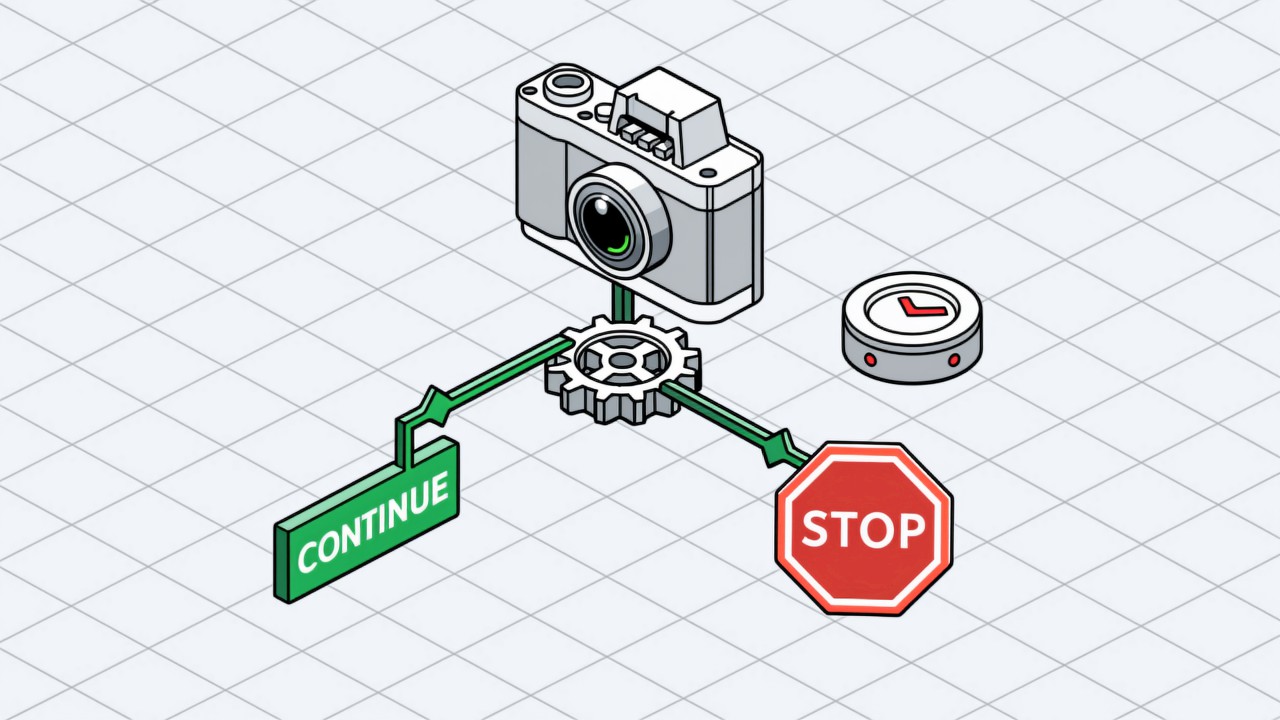
Wrong-Assembly Alarms Without the False Alarms
The most common reason a visual SOP project fails is not poor recognition — it i…
Read more →
Need specific advice for your production line?
Our engineers can share practical approaches to process error prevention and SOP compliance inspection for your scenario.
Request a free trial plan