
Dust, Oil, Heat, Vibration: What the Shopfloor Does to a Camera
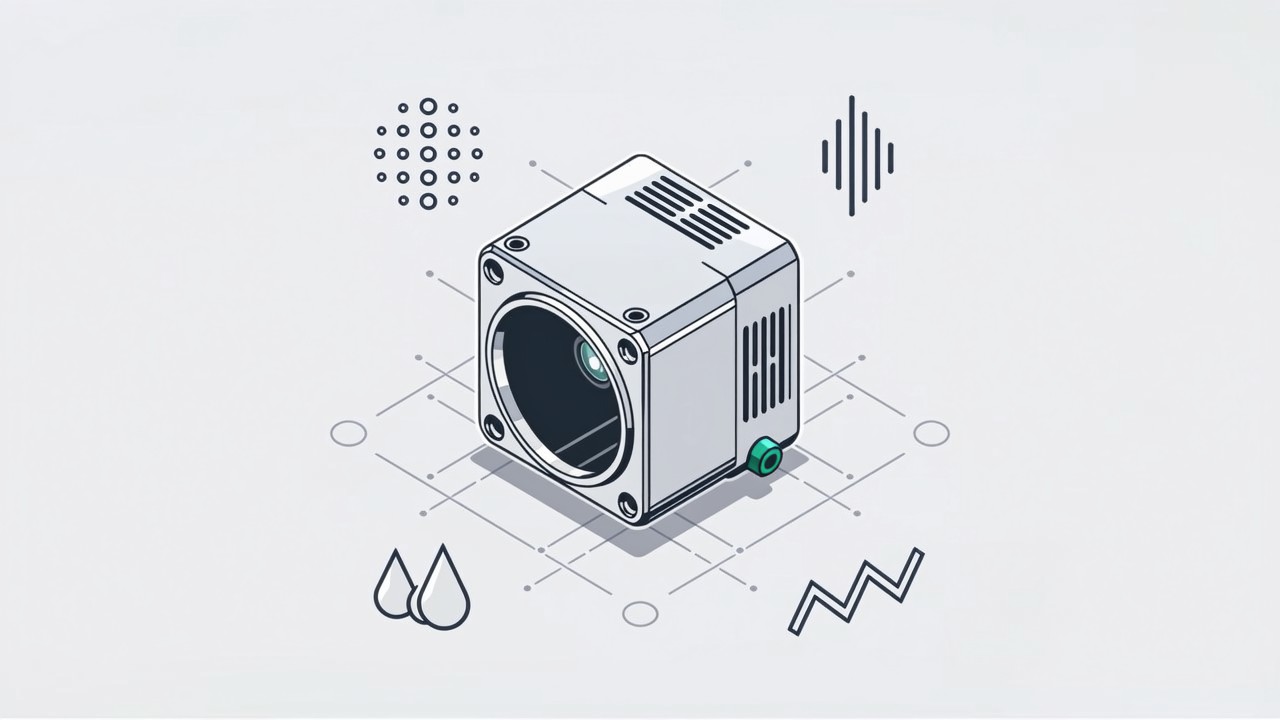
A vendor demonstration hall is clean, evenly lit and climate controlled. A real shopfloor is none of those. Dust and oil mist form a film on the front surface in weeks, ambient light swings between shifts, machine heat softens focus, and vibration slowly moves the angle. None of these breaks the system outright — they all erode it, which is the harder problem, because the drift is invisible until the line complains. This article works through each factor, what it does and what to do about it.
Key takeaways
- Four factors cause most of the trouble: dust and oil mist, ambient light, heat, and vibration.
- All four act slowly, so they must be caught by a review cycle, not by a fault alarm.
- Protection and cleaning access have to be designed together; if cleaning is hard, it stops happening.
- Combining filters costs less than the failures they prevent, and heat is the one that gets forgotten.
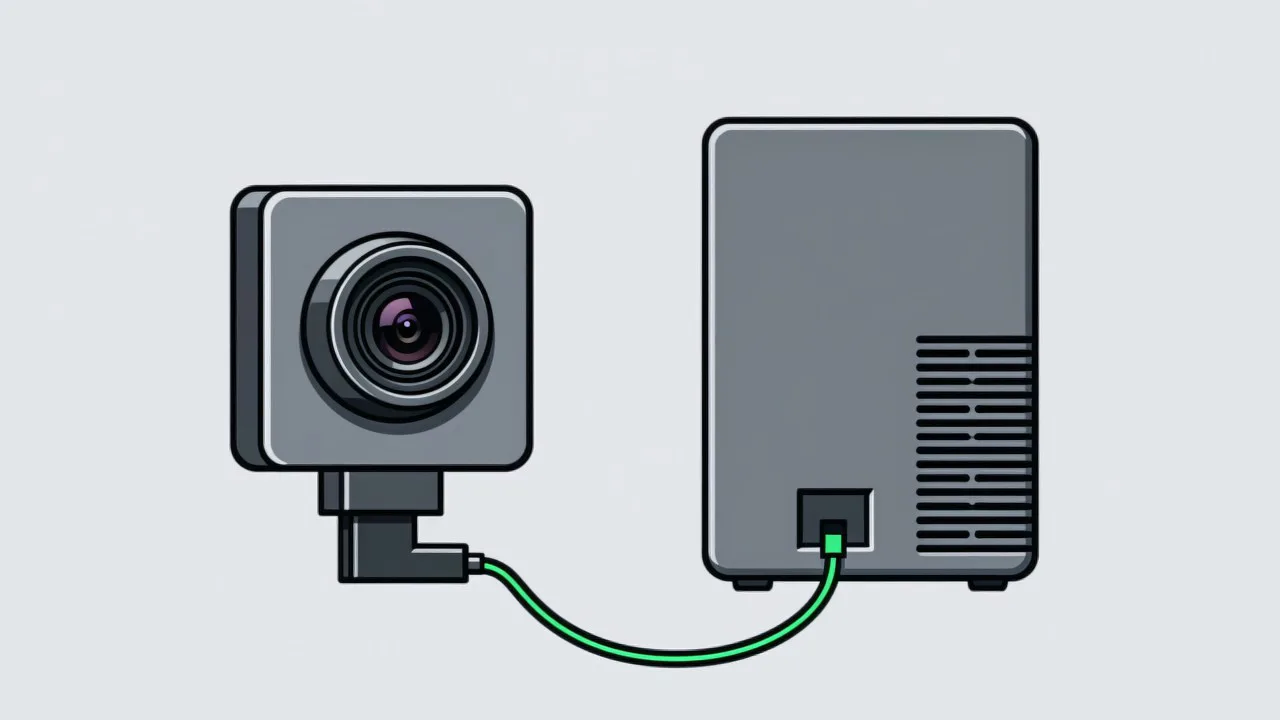
Vision systems get demonstrated in clean halls with even lighting and stable temperature. A real shopfloor is not that. Dust settles, coolant splashes, oil mist hangs in the air, daylight comes and goes through windows and doors, machines sit next to heat sources, and every press and conveyor adds vibration. None of this breaks a vision system outright — it erodes it. Erosion is the harder problem, because it is invisible while it happens: the images are still being captured, the verdicts are still being produced, and only the accuracy has quietly moved. The saving grace is that four factors account for almost all of the trouble, and all four are manageable.
The four factors
| Factor | What it does | Typical timeframe | Countermeasure |
|---|---|---|---|
| Dust and oil mist | Film on the lens or window; contrast drops, edges soften | Weeks | Enclosure or shroud, removable protective window, cleaning routine |
| Ambient light | Introduces reflections and glare; contrast and criteria drift | Within a day, between shifts | Integrated lighting, shrouds, keep the illuminated field stable |
| Heat | Sensor noise rises, focus drifts, images soften | Hours to months | Heat shield, airflow, distance from heat sources, wider tolerances |
| Vibration | Camera angle creeps, focus drifts, motion blur appears | Months | Rigid mount to a stable structure, anti-loosening features, periodic checks |
The fourth column is where projects either succeed or quietly decay. The most common failure is not choosing the wrong countermeasure but omitting one entirely — heat being the usual omission, because people associate vision problems with lighting and rarely think about temperature. Sensor noise rising with temperature shows up as slightly less stable verdicts, which nobody attributes to heat, and the eventual conclusion is that "this system is a bit unreliable" rather than that a heat shield is missing. Fixture and mount design for these conditions is covered in camera mounts and fixtures.
Protection and cleaning access go together
Two design decisions belong together and usually are not: protecting the camera and making it cleanable. Adding a sealed enclosure solves the protection half and can make the cleaning half worse if the cover needs tools and partial disassembly to remove. When cleaning takes ten minutes, requires a ladder, and involves moving other equipment, cleaning simply stops happening, and dust accumulation does the rest. A quick-release protective window, a hinged cover, or a simple clip gets the job done in seconds and keeps the routine alive. The right question is not whether the enclosure protects the camera — it is how long it takes the operator to get at the front surface. Anything over a minute tends not to happen.
- Removable protective window: a scratch on a cheap glass disc costs far less than a scratch on the lens element behind it.
- Integrated lighting or a shroud: sealing out ambient light does more for stability than any threshold tuning, and is usually cheaper.
- Positive locking on every axis: friction-only mounts creep under vibration, and the creep is invisible while it happens.
- Space for airflow: heat builds fastest in tightly sealed enclosures with no path for it to escape.
A five-minute self-check
Periodic checks can be done by equipment or quality staff in five minutes: is there a film on the front window; does image contrast still match the reference image; is the camera body noticeably warm to the touch; can the mounting bracket be moved by hand; is the field of view still framing the same area. Those five questions catch the majority of environmental degradation, and the answers cost nothing to record. The results are also the earliest evidence of drift, which pairs directly with the sample-review routine in model drift and recalibration.
Environment questions we get asked
How high an IP rating do we need?
It depends on the actual exposure. Oil mist and washdown need a genuinely sealed housing, while dust alone may only need a protective window. Overspecifying costs money in both purchase price and heat dissipation, so assess the real conditions rather than defaulting to the highest rating.
Shop lighting changes through the day. Does that matter?
It matters a great deal where the camera relies on ambient light. If illumination is integrated and the field is shrouded from ambient light, the system becomes insensitive to shop lighting and the whole class of problem disappears.
Our old equipment vibrates heavily. Is vision still viable?
Yes, with a rigid mount anchored to a stable structure. Mounting on the vibrating machine body itself is the usual mistake; use a floor post or a wall anchor with a short cantilever instead.
How dirty or how hot does your station actually get?
Describe the station conditions and we will specify the enclosure, mount and cleaning cycle that suit them.
Related articles
-
Alarm Fatigue: Why the Floor Turns the System Off
Many visual SOP systems are not beaten by technical problems — they are muted by…
Read more → -
Visual SOP Camera Selection and Mounting
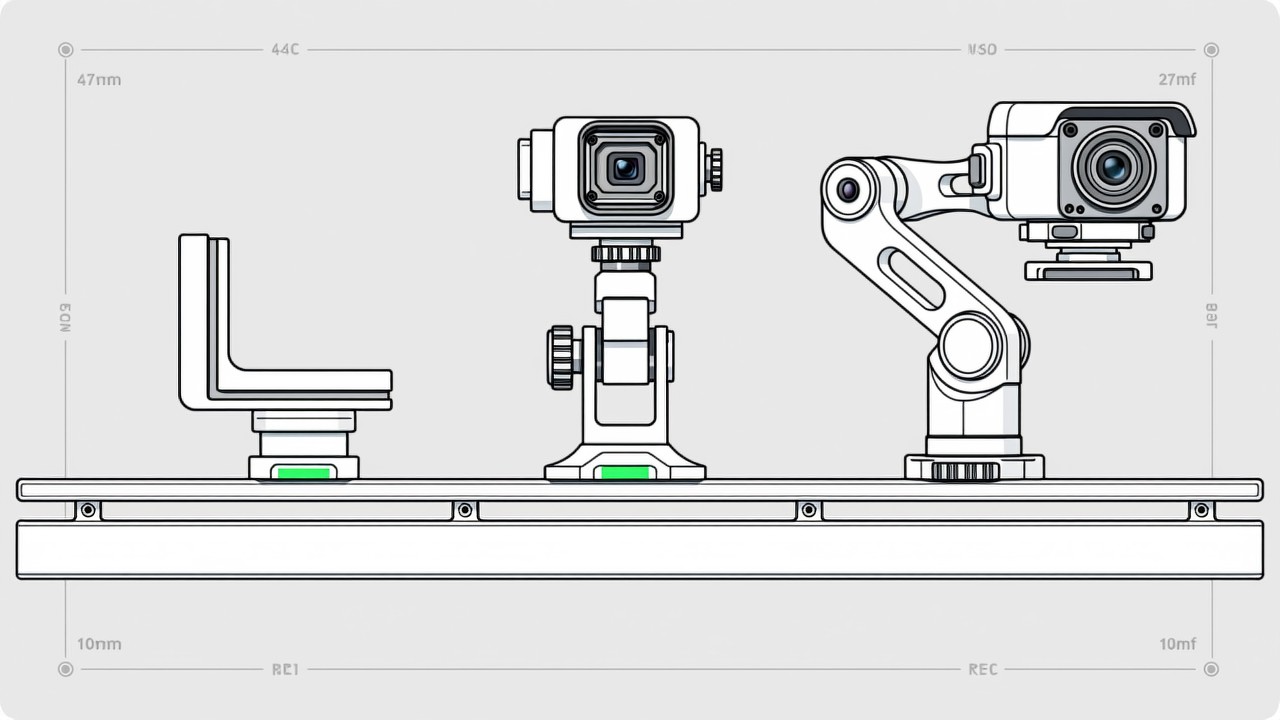
Camera selection for visual SOP is not the same as for product inspection. The s…
Read more → -
Vision Monitoring at the Semiconductor Die Bonder
Semiconductor packaging stations are characterised by high precision, fast cycle…
Read more → -
Wrong-Assembly Alarms Without the False Alarms
The most common reason a visual SOP project fails is not poor recognition — it i…
Read more →
Need specific advice for your production line?
Our engineers can share practical approaches to process error prevention and SOP compliance inspection for your scenario.
Request a free trial plan