
How to Reduce Vision False Alarms: Calibration, Frames, Whitelists
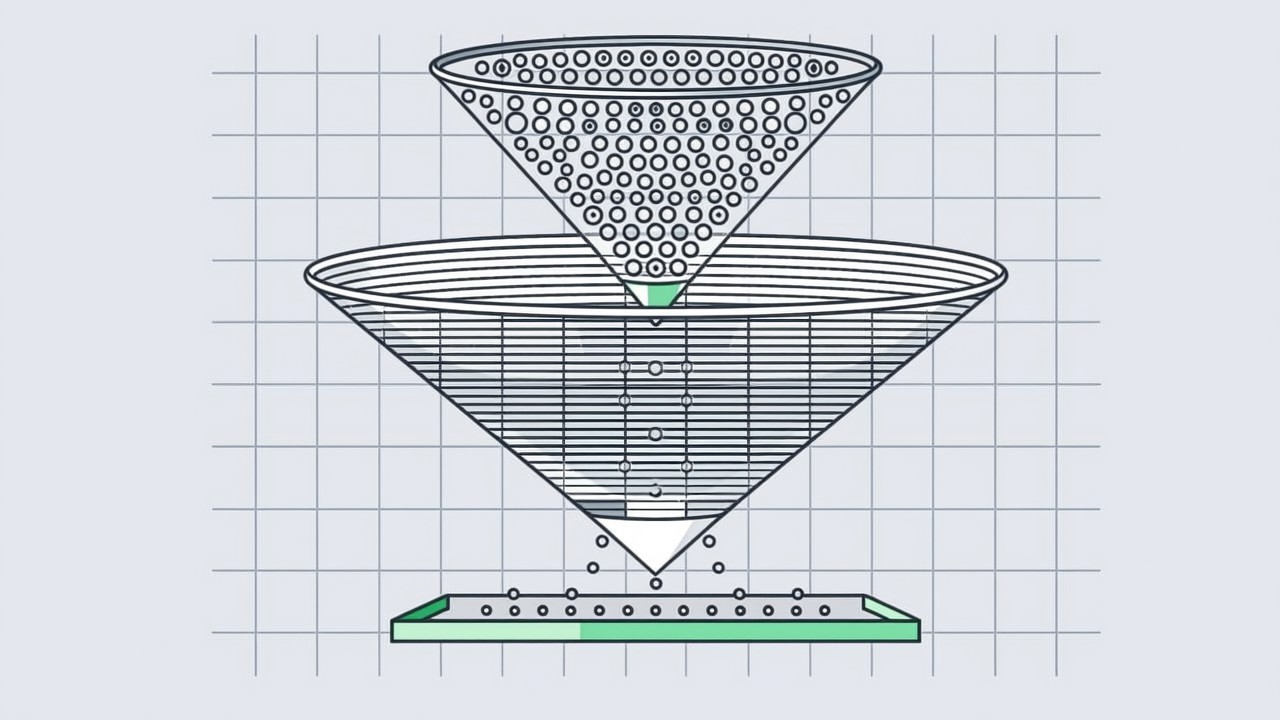
False alarms are not tuned away with one parameter. They are managed in layers: agree what counts as a false alarm first, then set thresholds per station, use consecutive-frame confirmation and time windows to filter jitter, use a whitelist for legitimate variation, and finally tier alerts by severity.
Key takeaways
- What counts as a false alarm is usually the biggest argument — settle the definition before the metric.
- Consecutive-frame confirmation clears most jitter, at the cost of N divided by frame rate seconds of latency.
- One threshold for every station is a common reason false alarms cluster.
- Fewer alerts and more misses move together; a falling count is not a better system.
False alarms are not tuned away with one parameter. They are managed in layers: agree what counts as a false alarm first, then set thresholds per station, use consecutive-frame confirmation and time windows to filter jitter, use a whitelist for legitimate variation, and finally tier alerts by severity. Define before you tune. Skip that order and every meeting reopens the same argument: the floor says the system cries wolf, the vendor says the numbers are on target, and nobody can settle it. The goal is not to make the alert count small, but to make every alert that survives worth an operator looking up.
Decide what counts as a false alarm first
Define before you measure. The same alert can be counted as a false alarm by one person and a useful reminder by another, and the resulting numbers can differ several-fold. A workable rule: an alert counts as a false alarm when the system flagged an anomaly and the operator confirmed the state was actually normal. Alerts an operator ignored without confirming are not counted as false alarms, but they should be tracked separately as unhandled alerts — they measure trust, not accuracy. Keep the two apart; merging them distorts both. Write the definitions into a one-page document that production, quality and the vendor all accept, or the argument comes back every week. Related terminology is in the glossary.
The four main sources of false alarms
| Source | What it looks like on the floor | What to do about it |
|---|---|---|
| Jitter | One-frame noise, motion blur, an occasional trigger | Consecutive-frame confirmation, time windows |
| Legitimate variation | Different part numbers, fixtures or colours look different but are correct | Whitelists, per-part-number rules |
| Environment | Shift-change lighting, reflections, someone walking past | Lighting design and background control |
| One threshold for all | The same threshold applied to stations that look nothing alike | Thresholds calibrated per station |
Six concrete levers
- Consecutive-frame confirmation. A single frame does not fire an alert; require N consecutive frames to agree. Three to five frames is typical, and it clears most jitter-driven false alarms at the cost of N divided by frame rate seconds of added latency.
- Time-window filtering. Every action has a plausible minimum duration; discard triggers shorter than that, which removes false triggers from sudden scene changes.
- Whitelists. List legitimate variation explicitly — a part number, shift-start lighting, a maintenance state — matched by part number or program name, rather than switching a whole station off.
- Per-station thresholds. Background, cycle time and occlusion differ station to station; one threshold for the plant guarantees some stations are noisy and others are dull.
- Alert tiering. Split alerts into must-stop, log-for-review and statistics-only. Different tiers need different presentation, so that not every alert sounds the same.
- Lighting and background. Many algorithm problems are unstable lighting. Fixing the light and the background is usually faster than retuning; camera choice is covered in choosing a camera.
Why thresholds have to be per station
On one line, the difference between stations can be larger than the difference between lines. Some have a clean background and stable light; others see people passing and reflections shifting all shift. Apply one plant-wide threshold and some stations fire ten-plus times a shift while others never fire at all. Calibrate per station, treat the threshold as part of the station configuration, and re-confirm it whenever the part number or fixture changes. Calibration is not complicated: with the line stopped, have an experienced operator perform the normal and abnormal states a few times each, keep the frames as a baseline, then run one real shift to see where false alarms fall. The first calibration takes about half a day per station; after that the cost is mainly changeover rechecks. A practical starting target is no more than one false alarm per station per shift — above three to five a shift, operators start ignoring alerts and the system becomes decoration. That failure mode is covered in what happens after too many alerts.
Tier the alerts
- Must stop. Safety-critical or non-reworkable steps warrant an alert that interrupts the cycle. There should be very few of these, or they lose their force.
- Log for review. Alerts that do not affect the current unit but need checking are logged and shown lightly at the station, not pushed at the operator mid-task.
- Statistics only. Data for trend analysis and process improvement is not shown on the floor, so that statistics and actionable alerts are not mixed together.
Common questions about false alarms
What false-alarm rate is good enough?
There is no universal number; it depends on process risk and tolerance. A usable reference is no more than one false alarm per shift at critical stations, relaxed elsewhere. More important is to read it alongside missed detections — a very low false-alarm rate is meaningless on its own, and a low count nobody looks at is wasted work.
Does a whitelist just hide the problem?
Not if entries have clear conditions for going in and coming out. Matching by part number, shift or maintenance state is reasonable; switching a whole station off by time of day is hiding it. Review the whitelist on a schedule.
Why do false alarms come back two weeks after tuning?
Usually the station drifted: a fixture changed, lighting changed, a new part number arrived. Treat thresholds as a maintenance item rather than a one-off calibration, and put the recheck into the changeover process.
Too many false alarms, and the floor has stopped looking?
Send us the typical frames and the times they fire, and we will help work out whether the cause is calibration, thresholds or lighting.
Related articles
-
Alarm Fatigue: Why the Floor Turns the System Off
Many visual SOP systems are not beaten by technical problems — they are muted by…
Read more → -
Visual SOP Camera Selection and Mounting
Camera selection for visual SOP is not the same as for product inspection. The s…
Read more → -
Vision Monitoring at the Semiconductor Die Bonder
Semiconductor packaging stations are characterised by high precision, fast cycle…
Read more → -
Wrong-Assembly Alarms Without the False Alarms
The most common reason a visual SOP project fails is not poor recognition — it i…
Read more →
Need specific advice for your production line?
Our engineers can share practical approaches to process error prevention and SOP compliance inspection for your scenario.
Request a free trial plan