
Vision Monitoring at the Die Bonder: Implementation Points
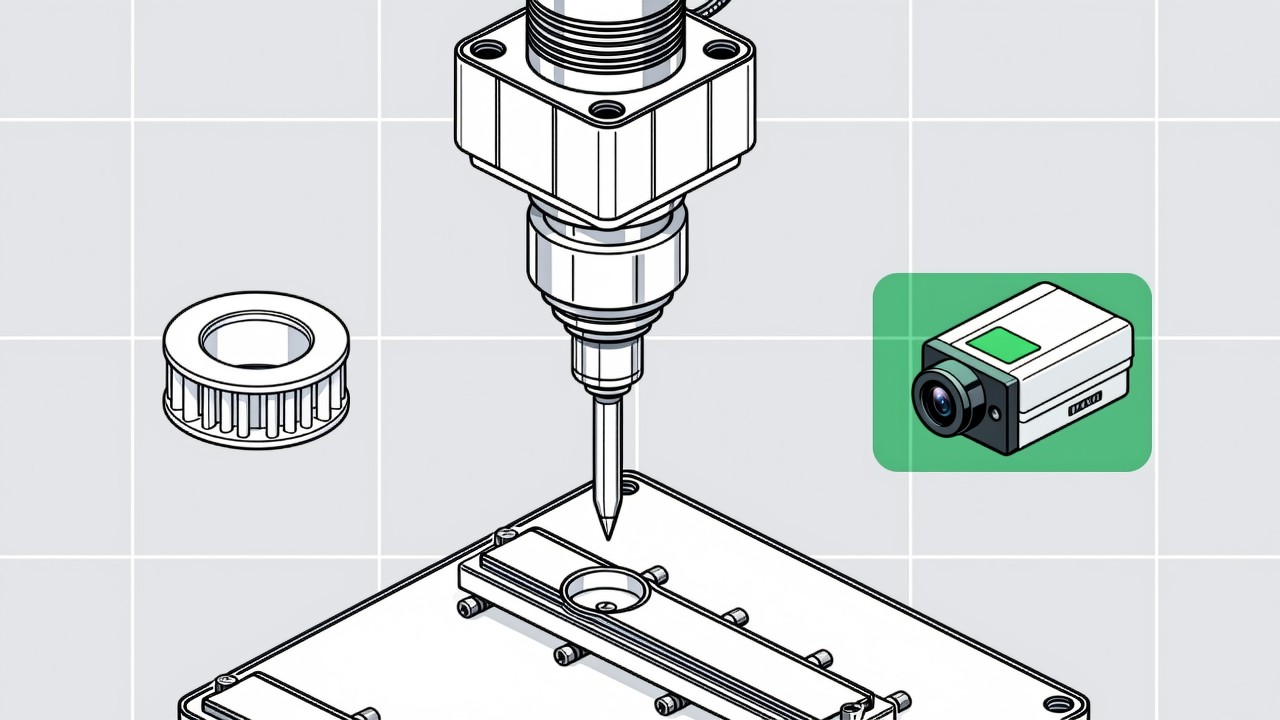
Semiconductor packaging stations are characterised by high precision, fast cycle times and strict cleanliness. What vision SOP monitoring has to solve here is not whether the camera can see, but where it can be mounted, what it should judge, and how it works alongside the signals the equipment already produces.
Key takeaways
- A cleanroom imposes extra requirements on camera cooling, enclosure and cable routing.
- High-cycle stations need the judgement completed within the cycle, which usually means edge inference.
- Semiconductor equipment is already signal-rich; vision judgements should cross-check those signals rather than stand alone.
- Aim detection at the manual intervention points — fully automated steps are already covered by the equipment.
Semiconductor packaging is highly automated, and the first reaction is often that there is nothing left to monitor. The answer is that what needs monitoring is precisely the manual intervention — loading, material change, visual inspection, exception handling, and recovery after an equipment alarm. A deviation at those points is something the equipment itself cannot perceive. The wider scenario is set out under semiconductor packaging visual AI SOP.
Three implementation points
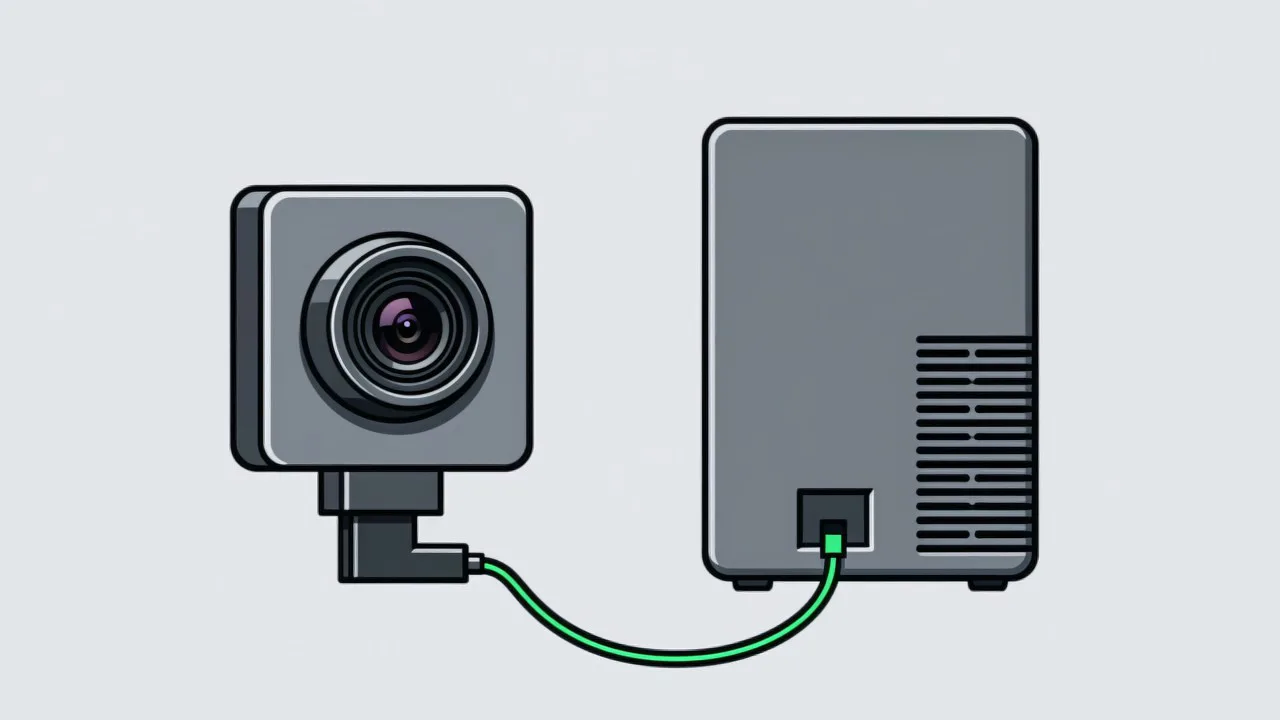
- Imaging conditions. Lights and brackets cannot be placed freely in a cleanroom, and space inside the equipment is extremely limited. An all-in-one smart camera is usually the answer, keeping changes to the existing tooling to a minimum.
- Cycle time. Packaging cycles are often measured in seconds or less, so the judgement must complete inside the cycle. That means edge inference on the local device, with no network round trip.
- Signal cross-checking. The equipment already produces a rich set of status signals — position, pressure, temperature, alarm codes. Cross-checking vision judgements against them improves reliability markedly, and makes the case easier for the equipment engineering team to accept.
Which steps are worth monitoring first
| Step | What to monitor | Value |
|---|---|---|
| Loading / material change | Whether magazine changes follow procedure and the batch is correct | Prevents mixed or wrong-batch material |
| Visual inspection | Whether the inspection action actually happened and whether units are skipped | Stops inspection becoming a formality |
| Exception handling | The order of steps after an equipment alarm | Prevents a wrong reset causing a batch of defects |
| Fixture change | Whether the jig was changed and parameters switched during changeover | Prevents changeover residue |
Why high-precision stations need a different camera conversation
On a packaging line the subject is often small and the motion quick, so the imaging decisions that carry over from general assembly do not automatically apply. Three points come up again and again. First, the shutter: a fast pick-and-place head moving across the frame will smear under a rolling shutter, so a global shutter is usually the baseline rather than an upgrade. Second, the light: polished die, wafer surfaces and metal tooling reflect, and a fixed, controlled source matters more here than resolution. Third, the position: the camera must see the action without entering the envelope of a moving head or an operator’s hand.
- Global versus rolling shutter — how motion distortion breaks judgement, and when it does not matter: global and rolling shutter compared.
- Lighting design — why a stable source beats a better camera on reflective and low-contrast parts: vision SOP lighting design.
- Detection granularity — what a station can and cannot judge at cycle speed: workstation SOP monitoring.
Common questions about the semiconductor scenario
Can ordinary industrial cameras be used in a cleanroom?
The housing and materials need to meet cleanroom requirements, with attention to heat dissipation and outgassing. The specific selection depends on the cleanroom class and has to be confirmed with the design.
The equipment is packed — there is no mounting space. What then?
Consider mounting above or to the side of the station, or on the material in and out path. When space is extremely tight, the monitoring point can sometimes be moved one station upstream or downstream.
Will it affect the equipment’s existing safety circuits?
No. The vision system runs alongside, and is not wired into the equipment’s control or safety circuits.
Want to talk through a semiconductor scenario?
Tell us the process step and the equipment, and we can judge whether vision monitoring is feasible.
Related articles
-
Wrong-Assembly Alarms Without the False Alarms
The most common reason a visual SOP project fails is not poor recognition — it i…
Read more → -
Preventing Skipped Steps in Production
A skipped step and a missing operation are different problems. In a skipped step…
Read more → -
How Visual SOP Connects to MES
The hard part of integration is not the technology choice — it is defining what …
Read more → -
Manual Inspection vs Visual AI SOP Cost
The two cost structures are fundamentally different. Manual inspection is an ong…
Read more →
Need specific advice for your production line?
Our engineers can share practical approaches to process error prevention and SOP compliance inspection for your scenario.
Request a free trial plan