
Judging Motion Correctness: Four Measurable Criteria
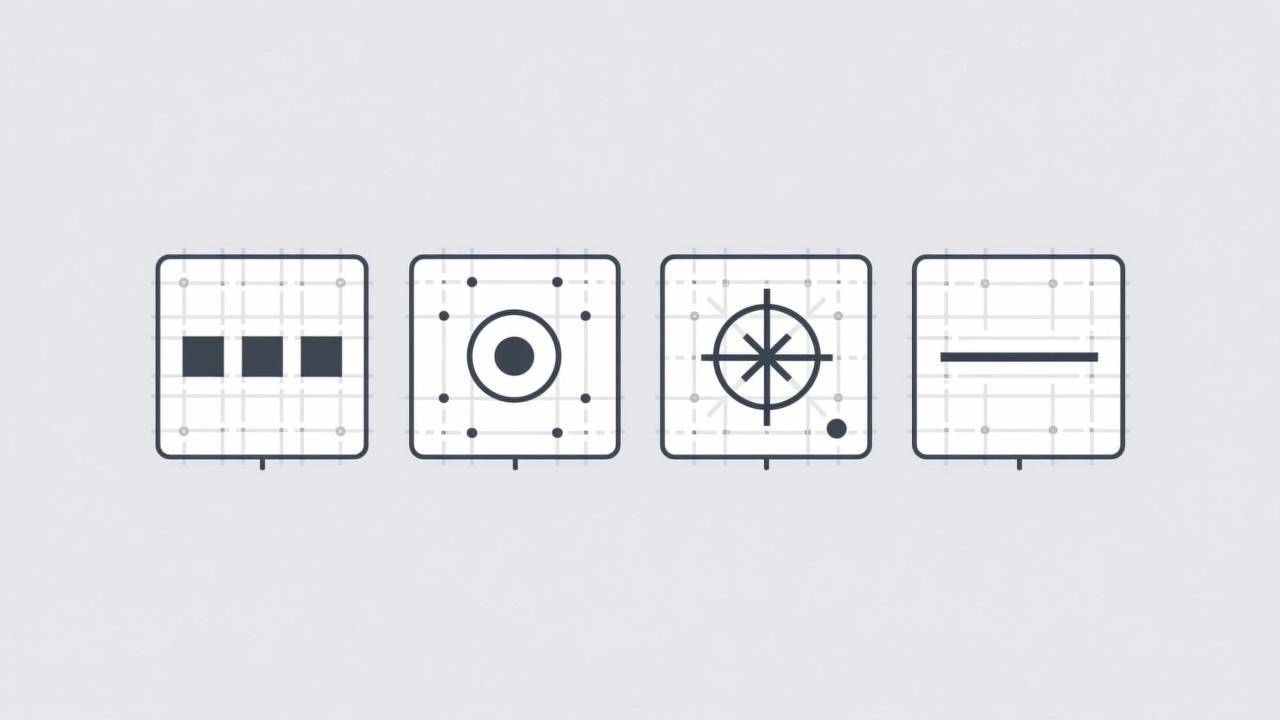
An incorrect motion is management language, not a criterion. Before vision can judge it, it has to become one of four measurable things: was the sequence right, did the required action occur, was the position within range, was the duration within its interval. If it breaks down this way, feasibility and cost follow quickly. If it does not, the work standard itself is usually vague, and no system will fix that. This article defines the four criteria, their imaging requirements and how each typically fails, and explains why body posture should normally be recorded rather than judged.
Key takeaways
- Sequence, presence, position and duration cover almost every visual SOP requirement.
- A requirement that will not break down is usually a work standard problem; fix the standard first.
- Posture has no defensible pass-fail boundary, so record it rather than judging it.
- One station can carry several criteria at once, but they must be reported separately, never averaged.
An incorrect motion is management language, not a criterion. Handed to a technical team as-is, it produces a vague proposal. Broken into four measurable things, feasibility becomes immediately clear: was the sequence correct, did the required action occur, was the position within its allowed range, was the duration within its interval. Almost every visual SOP requirement ends up as one or more of these. The part that will not break down is usually not a technical problem at all — it is a work standard written in words like "firm but not excessive" or "smooth", which no two people judge the same way and which no system will judge consistently either. The right order in that case is to fix the standard first and talk about the system afterwards.
The four criteria and what each demands
| Criterion | What is judged | Imaging requirement | Typical failure |
|---|---|---|---|
| Sequence | Whether a set of actions occurred in the defined order | Each action start must be reliably separable | Two actions overlap in the image and cannot be separated |
| Presence | Whether an object, tool or action appeared | Stable contrast between target and background | Occlusion hides the target and reads as missing |
| Position | Offset of workpiece or tool relative to a datum | A stable datum to reference against | The datum itself drifts |
| Duration | Time between two events | Event times must be reliably detected | Takt variation makes normal work look abnormal |
The four differ a great deal in difficulty and cost. Presence is usually easiest — the image difference between the object being there and not there is clear, and lighting is straightforward to design. Sequence comes next, with the difficulty lying in segmenting continuous motion into identifiable events. Position has the highest demands, because every offset is measured against a reference, and an unstable reference destabilises everything. Duration is the cheapest engineering-wise, needing only event times, but it is highly sensitive to takt stability, and a line whose takt already fluctuates will quickly turn it into a false alarm generator. Assessing a project in this order usually captures the most benefit where the cost is lowest.
Why posture should not be judged automatically
Posture is genuinely useful in training, and usually a poor automatic criterion, because the pass boundary cannot be defined. A person tightening a screw correctly can hold their body many different ways. A system that accepts only one will flag a great deal of correct work as abnormal. A system that accepts every correct posture will also let a share of incorrect ones through. The economics are simply bad. The more practical treatment is to demote posture to a record: keep video or key frames for review and training, and keep it out of the real-time verdict. What deserves real-time interception is work with a defensible boundary — the sequence was wrong, the screw was never tightened, the part was placed backwards. For where vision genuinely covers the ground and where it does not, see the limits of visual inspection.
Several criteria at once must be reported separately
A station often carries both sequence and presence criteria. On the shopfloor prompt they can merge into a single alarm, but for statistics and acceptance they must be separated. A miss on a sequence criterion and a miss on a presence criterion have completely different causes and completely different remedies. Merging them means a poorly performing check item gets hidden behind a well performing one in the average. Keeping check item IDs in the write-back fields is precisely what makes that separation possible, as covered in field design. One further point: when several criteria share a station, check whether they interfere in time. Sequence judgement needs the whole action pattern, while presence needs a single instant, and those instants may sit several hundred milliseconds apart. A single frame asked to serve both usually serves neither well.
Criteria will change, so plan for it
Process changes, fixture adjustments and incoming part revisions all invalidate criteria that previously held. This is not a system failure; it is the normal state of a manufacturing floor, so assume from day one that criteria will change and leave a mechanism for it. Criteria should live in a configuration file or a parameter table so a change needs no development work. Every change should carry a version number linked to the write-back data. Every change should be followed by a run of the standard samples to confirm nothing regressed. The full handling flow is described in how the system follows a process change. Writing "criteria will change" into the acceptance document and the maintenance agreement saves both sides a great deal of argument later.
Judging boundary questions we get asked
The line says no step may be skipped. Which criterion is that?
Sequence — with a caveat. Skipping has two forms: a step that never happened at all, which is really a presence criterion, and a step that happened out of order, which is sequence. They need different imaging and fail differently, so define them separately.
Every operator works differently. Will we get a flood of false alarms?
If the criteria are anchored on sequence, presence, position and duration, working style usually does not change the verdict. What breaks is a design that treats a standard posture as the criterion, which is one more reason not to automate posture judging.
Can one action be judged on both sequence and duration?
Yes, and commonly is. Report them separately, and check takt variation first. If normal work naturally spans a wide duration range, duration judging will produce many false alarms, and sequence should carry the requirement alone.
How many lines in your work standard translate into measurable criteria?
Send us the SOP and the workstation requirements and we will translate them item by item.
Related articles
-
Alarm Fatigue: Why the Floor Turns the System Off
Many visual SOP systems are not beaten by technical problems — they are muted by…
Read more → -
Visual SOP Camera Selection and Mounting
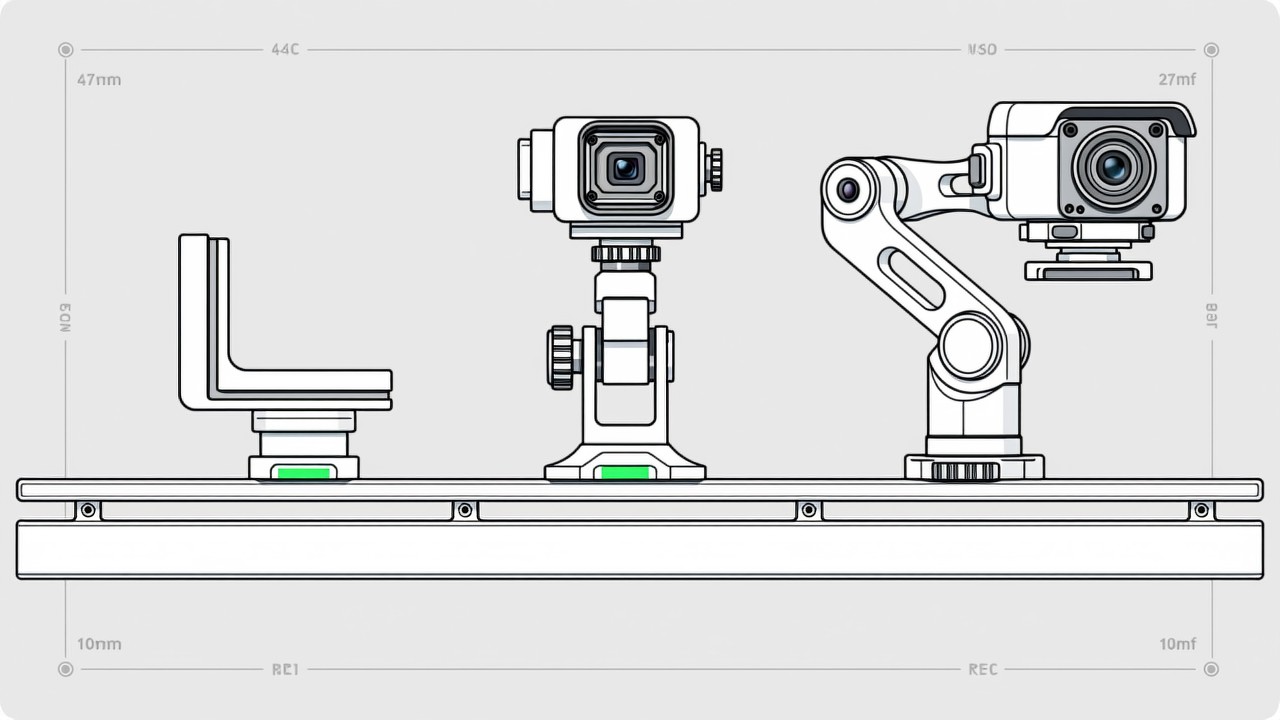
Camera selection for visual SOP is not the same as for product inspection. The s…
Read more → -
Vision Monitoring at the Semiconductor Die Bonder
Semiconductor packaging stations are characterised by high precision, fast cycle…
Read more → -
Wrong-Assembly Alarms Without the False Alarms
The most common reason a visual SOP project fails is not poor recognition — it i…
Read more →
Need specific advice for your production line?
Our engineers can share practical approaches to process error prevention and SOP compliance inspection for your scenario.
Request a free trial plan