
How to Prevent Missing Operations: Five Methods Compared
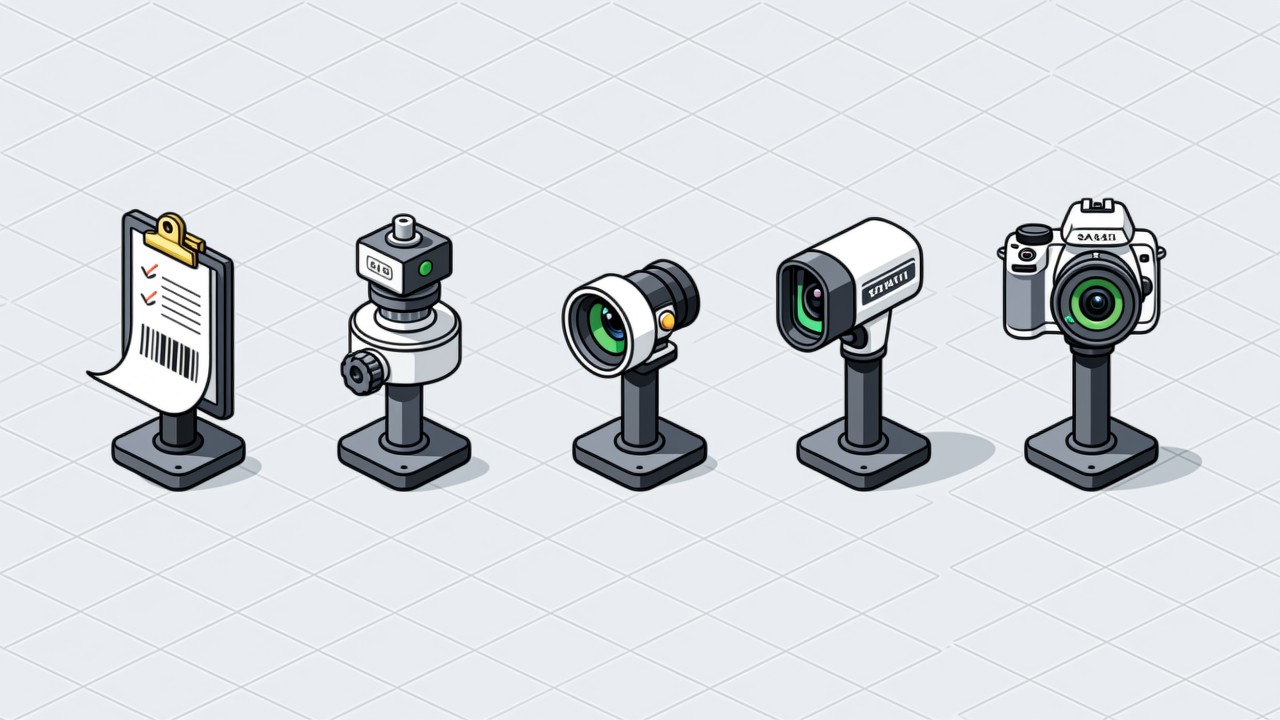
There is no silver bullet for a missing operation. Paper sign-off depends on people, barcode routing depends on discipline, physical poka-yoke is limited by the mechanism, and weight or sensor checks only cover specific failure modes. Vision SOP verification adds the layer none of them do: whether the action actually happened. Real projects usually combine two or three of these.
Key takeaways
- The five methods inspect different things: some check records, some check results, only vision checks the action itself.
- Paper sign-off and barcode routing share a blind spot — the scan can come before the work, or never happen at all.
- Physical poka-yoke is the most reliable but the most expensive to retrofit, and only fits steps with a clear mechanical feature.
- Vision SOP verification is limited by imaging conditions, so it has to be proven on site during the design phase.
- The combination that usually wins: poka-yoke on critical stations, vision on the rest, and both feeding MES.
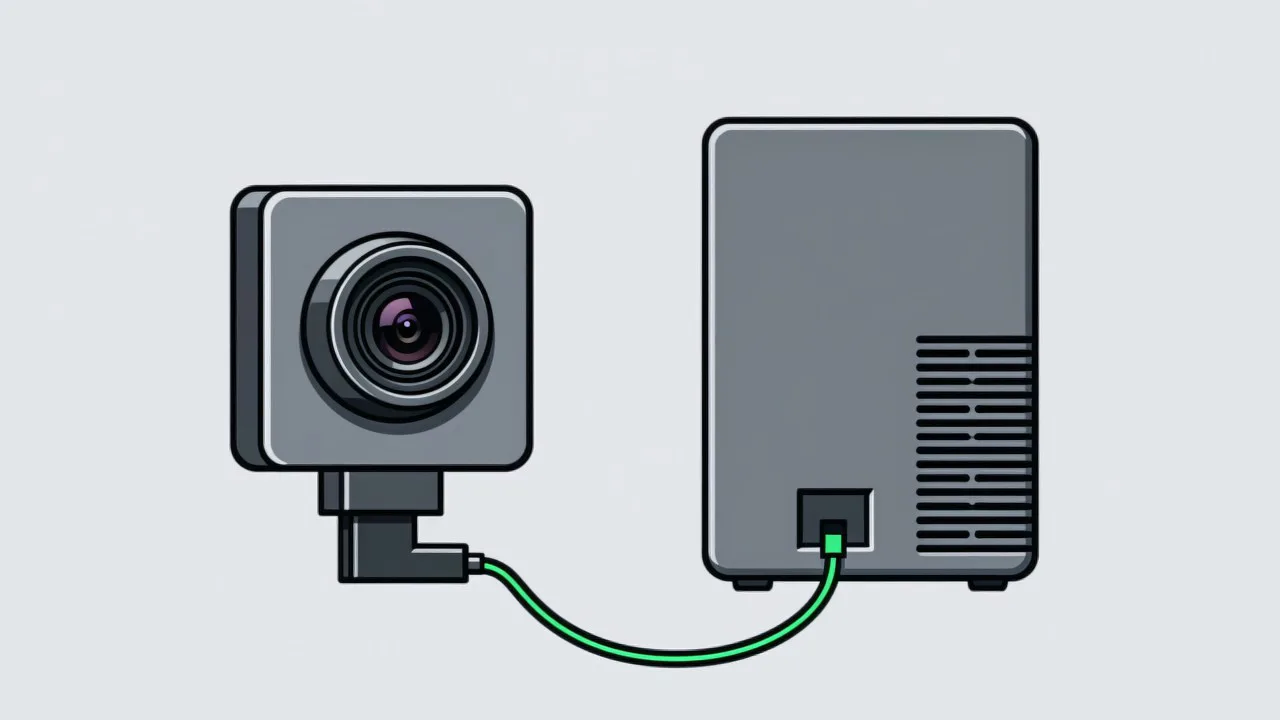
Choosing how to prevent missing operations comes down to one question: are you trying to check the record, the result, or the action itself? The three differ enormously in difficulty and reliability, and they determine where each method goes blind. The pattern of checking an action rather than an outcome is what a visual SOP error-proofing system is built around.
The five methods, one by one
| Method | What it checks | Strength | Main blind spot |
|---|---|---|---|
| Paper sign-off | The record | Very cheap, usable immediately | Sign-off and execution are not synchronised; back-filled signatures are hard to spot |
| Barcode routing | The record | Connects naturally to MES | Scanning before the work is done, missed scans, someone else scanning |
| Physical poka-yoke | Physical possibility | Most reliable, does not depend on a system | Expensive to retrofit; only fits steps with a mechanical feature |
| Weight / sensors | A result characteristic | Objective, unaffected by human factors | Detects only that the total is wrong, not which operation caused it |
| Vision SOP verification | The action itself | Judged per operation, traceable, no extra operator actions | Constrained by imaging conditions and has to be validated on site |
Why checking the action beats checking the record
Paper records and barcode scans rest on a shared assumption: that the record equals the work. In practice the two come apart constantly. Operators chasing output scan several operations at once and then work through them slowly. On a busy shift a scan is missed and back-filled from memory. A unit left over by the previous shift gets scanned by the next one. In every case the record is complete, and the work was not done to standard. If the record itself is the weak link, the underlying operation sequence is worth reviewing — see preventing skipped steps.
Vision verification does not read the record, it watches the action. A camera at each station continuously observes whether picking, assembling, fastening and inspection actually happened, whether the material is present and whether it is the right way round. Results are time-stamped and tied to the product serial number, so they can be written into process traceability in MES. The detection granularity is described in AI visual workstation SOP monitoring.
Where each method stops being worth the effort
Reliability is only half the decision; the other half is what the method costs to keep running. Paper sign-off is almost free to start and expensive to trust, because its value depends on how honestly it is filled in. Barcode routing is cheap once the MES connection exists but demands that operators scan in the right order every time. Physical poka-yoke is the reverse — costly to fit and then nearly free to live with. Understanding this shape matters more than picking a favourite method, and a result-inspection system such as AOI has its own place in that picture rather than replacing any of the five.
Common questions about preventing missing operations
We already scan at every station — do we still need vision?
If the scan record and the actual work agree closely, you may not need to add anything. Run a consistency audit first: follow the line and record the real action sequence for a sample, then compare it with the system record. If the agreement rate is below what you expect, that is the case for vision.
Can vision catch a step that was done, but done badly?
Partly. Presence checks — is the part there, has the screw been driven — are far more reliable than degree checks such as how tight or how straight. For degree, combine vision with process parameters such as torque and pressure.
Can the five methods be mixed at one station?
Yes, and it is common. A fastening station, for example, may have both a torque record from the driver and a vision check on the action; cross-checking the two cuts misjudgement substantially.
Not sure which method fits your operation?
Describe the station and the process, and we will recommend a combination.
Related articles
-
Why SOP Is Not Followed on the Line
SOPs rarely fail because operators ignore them. Five structural reasons explain …
Read more → -
Alarm Fatigue: Why the Floor Turns the System Off
Many visual SOP systems are not beaten by technical problems — they are muted by…
Read more → -
Visual SOP Camera Selection and Mounting
Camera selection for visual SOP is not the same as for product inspection. The s…
Read more → -
Vision Monitoring at the Semiconductor Die Bonder
Semiconductor packaging stations are characterised by high precision, fast cycle…
Read more →
Need specific advice for your production line?
Our engineers can share practical approaches to process error prevention and SOP compliance inspection for your scenario.
Request a free trial plan