
Why SOP Is Not Followed: The Real Causes
SOPs rarely fail because operators ignore them. Five structural reasons explain almost every case: the standard cannot be executed, the work is invisible, feedback arrives too late, supervision costs too much, and exceptions never close the loop. Working out which one applies tells you whether the fix is managerial or technical.
Key takeaways
- “The operator did not follow the SOP” is almost never the root cause, and blaming the person keeps every fix from working.
- Of the five real causes, invisible work and delayed feedback are the two a vision system addresses directly.
- Manual inspection has a hard ceiling on coverage and consistency; adding inspectors does not scale indefinitely.
- The job of the technology is to fill the coverage gap in supervision, not to replace training or process improvement.
Almost every manufacturer has met this scene: the work instruction is posted at the station, the training was delivered, the sign-off sheet is signed, the assessment was carried out — and a customer audit still turns up a unit with a step missing. The quickest conclusion a manager can reach is that the operator did not follow the procedure, so training is refreshed, penalties get stiffer, and the problem stays exactly where it was. The real mistake is diagnosing a system defect as an attitude problem.
The five root causes
- The standard cannot be executed. The SOP is written too vaguely — “tighten fully”, say — with no way to judge whether that has happened. The operator falls back on interpretation, and interpretation always drifts.
- The work is invisible. Results can be inspected; the process is watched by nobody. A missing screw is known to no one at the moment it is skipped — it surfaces at the next station, or in the customer’s hands.
- Feedback is too slow. Hours, days or months can pass between a mistake being made and being found. The later the feedback, the higher the cost of correction and the weaker the learning.
- Supervision costs too much. Coverage from walking inspectors falls as shifts and station count rise. On a line with dozens of stations running three shifts, an inspector covers a small fraction — and the standard drifts over time.
- Exceptions never close the loop. A missing step is written on a form or entered into a system, and nobody traces it back to which station, which shift, or whether the same pattern is repeating.
Where management ends and vision begins
| Root cause | What management can do | What technology adds |
|---|---|---|
| Standard cannot be executed | Break the SOP into observable, judgeable actions and states | — (technology does not fix a bad standard) |
| Work is invisible | Raise inspection frequency and sampling rate | Every station, every shift, every unit visible end to end |
| Delayed feedback | Shorten the sampling cycle, inspect at the line | Notification within seconds of the step happening |
| Supervision cost | Optimise shift planning, assign clear ownership | Very low marginal coverage cost after the initial build |
| Exceptions never close | Set up a quality review routine | Automatic recording of station, time and serial number for retrospective analysis |
One point needs to be made clearly: technology fills the coverage gap in supervision. It does not replace operator training, and it does not replace process improvement. A vision system can tell you a step was not performed, but why it was not — an awkward fixture, a cycle time that is too tight, an operator who is not yet fluent — still takes a person to analyse and fix. If a single method is not enough, the five prevention methods compared sets out the alternatives. The capability boundary of these systems is described on the Visual AI SOP System page.
Where to start
A practical four-step path
- Step 1: find the data
Pull the last twelve months of warranty repairs and customer complaints and isolate the failures whose root cause was a step not being carried out. Group them by station, and start where they cluster.
- Step 2: watch the station
Spend one full shift at that station and record where the operator’s actual action sequence diverges from the SOP. Those divergences are your detection targets.
- Step 3: validate on a small scale
Run a technical validation at one station and use real data to establish the false-alarm and miss rates before deciding whether to roll out. The assessment method is in the visual SOP site assessment checklist.
- Step 4: replicate and lock in
Once one station works, turn the detection rules into reusable configuration and copy them to similar stations. Route the exception records into the quality review process at the same time — that is what closes the loop.
Which cause are you actually looking at?
The five causes look identical in a meeting and completely different on the floor, so the fastest way to separate them is a short diagnostic rather than an argument. Take the last three known failures at the station and ask two questions about each: could the operator have told, in the moment, whether the step was done correctly? And did anyone find out within the same shift? If the first answer is no, the standard is the problem. If the first is yes but the second is no, you are looking at visibility and feedback, which is the case a vision system is built for.
| What you observe | Most likely cause | Where to start |
|---|---|---|
| Two operators disagree on whether a unit is acceptable | The standard cannot be executed | Rewrite the SOP into observable states |
| The same step is missed again after retraining | Visibility and feedback | Watch the station for a full shift |
| Complaints cluster on one shift or one team | Supervision coverage | Map where inspection actually happens |
| Failure is found at final test with no trace of where it began | Exception loop never closes | Define what a record must contain |
Once the cause is clear, the practical next step is a station-level feasibility check before any hardware is discussed — the visual SOP site assessment checklist sets out the eight conditions, and the detection granularity you can realistically expect is described under workstation SOP monitoring.
Common questions about SOP execution
Will adding inspectors fix SOP execution?
It helps, but it has a structural ceiling. Inspection coverage falls as shifts and stations multiply, the cost of headcount grows linearly with the line, and the judgement standard drifts between people.
Will operators feel watched by visual AI?
It depends on how the system is designed and introduced. Record station and process data only, leave it unlinked from individual identity by default, and position the system as helping people catch a missed step before it becomes someone’s fault. This is one of the biggest single factors in whether adoption works.
Does every step need monitoring?
No. Prioritise three categories of station: those where a missed step causes a safety or functional failure, those where the product cannot be reworked afterwards, and those that generate the most complaints. Blanket coverage is neither economical nor necessary.
Does your line keep missing the same operation?
Tell us about the station and the process problem, and we will tell you whether technology is the right fix.
Related articles
-
Alarm Fatigue: Why the Floor Turns the System Off
Many visual SOP systems are not beaten by technical problems — they are muted by…
Read more → -
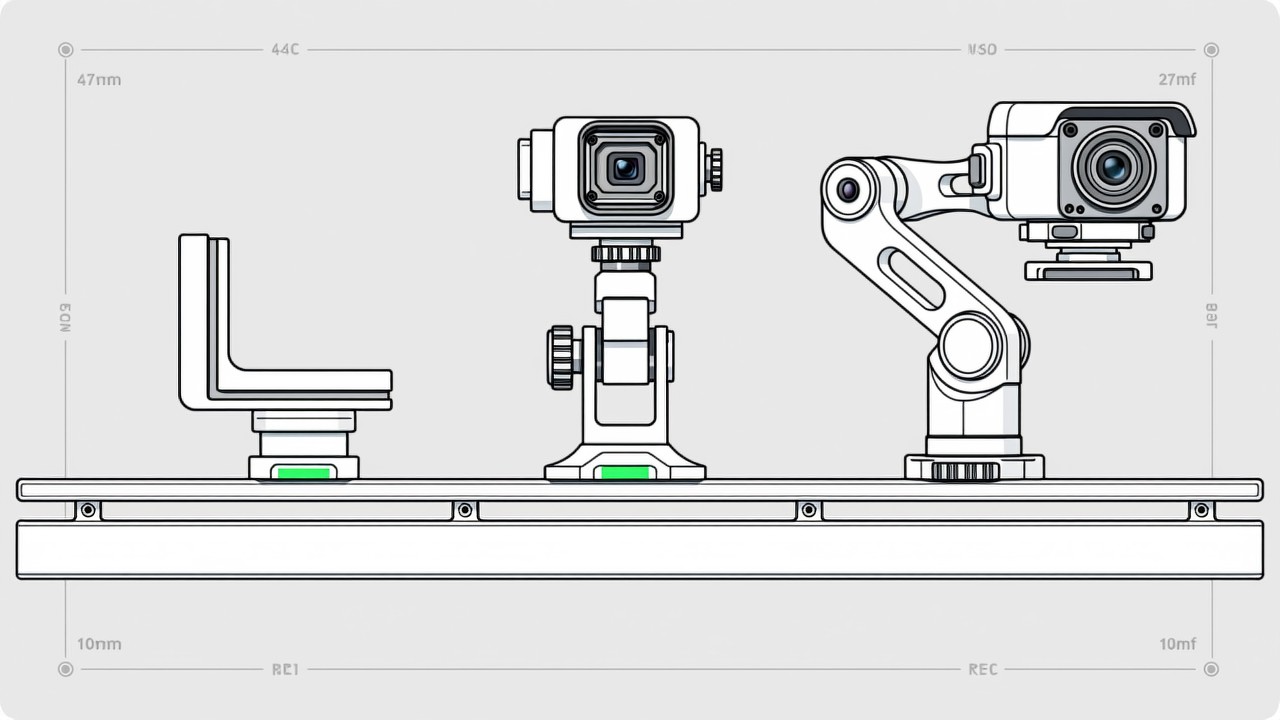
Visual SOP Camera Selection and Mounting
Camera selection for visual SOP is not the same as for product inspection. The s…
Read more → -
Vision Monitoring at the Semiconductor Die Bonder
Semiconductor packaging stations are characterised by high precision, fast cycle…
Read more → -
Wrong-Assembly Alarms Without the False Alarms
The most common reason a visual SOP project fails is not poor recognition — it i…
Read more →
Need specific advice for your production line?
Our engineers can share practical approaches to process error prevention and SOP compliance inspection for your scenario.
Request a free trial plan