
Operators Resist Being Filmed: What Actually Helps
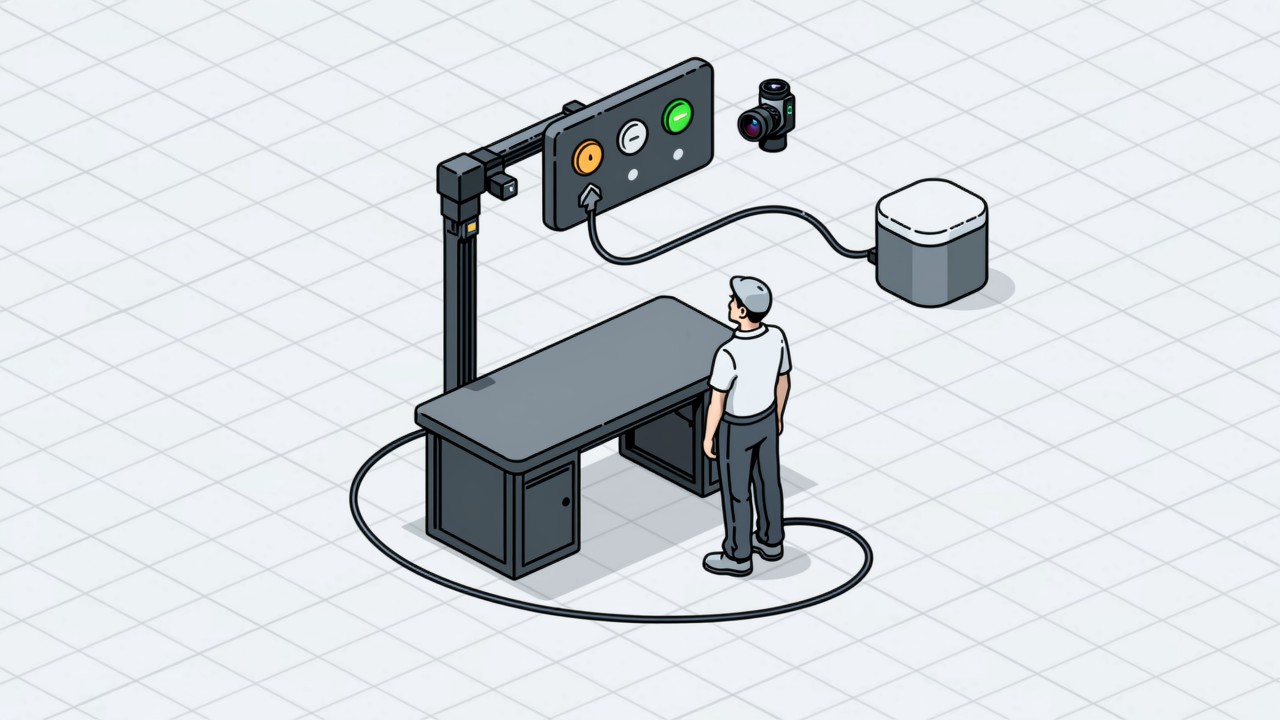
Operators rarely push back on the technology itself. What they push back on is footage that can later be used against them. The starting point is to make the purpose explicit — the system watches whether a process step was performed, not who performed it — and to settle what is filmed, how long it is kept and who can look at it before the first camera goes up.
Key takeaways
- Resistance is really about uncertainty: what is filmed, how long it is kept and who can see it.
- Monitoring the task and monitoring the person can be built as two completely separate things.
- Letting operators help calibrate, and using the first alerts to fix fixtures, beats any briefing.
- Agree retention in writing: period, access and purpose limits, settled before go-live.
Operators rarely push back on the technology itself. What they push back on is footage that can later be used against them. The starting point is to make the purpose explicit: the system watches whether a process step was performed, not who performed it. In practice this means settling three questions before the first camera goes up — what is filmed, how long it is kept, and who can look at it. Objection does not fade after one briefing; it fades when operators can see what the system does for them.
Resistance is really about uncertainty
- Fear of being blamed. Once footage is tied to discipline or pay, resistance is close to guaranteed — and it damages the credibility of the whole system. People start working around it rather than with it.
- Being watched continuously. A camera that never stops is a different experience from an inspector who walks past twice a shift. The inspection has a beginning and an end; the camera does not.
- No idea where the footage goes. Data that nobody can see is the easiest thing to be suspicious of, especially when staff have no idea how it is used downstream.
- Nothing in it for them. If the system only ever catches people out and never removes a problem from their day, acceptance stays low for a long time.
Monitoring the task and monitoring the person are different things
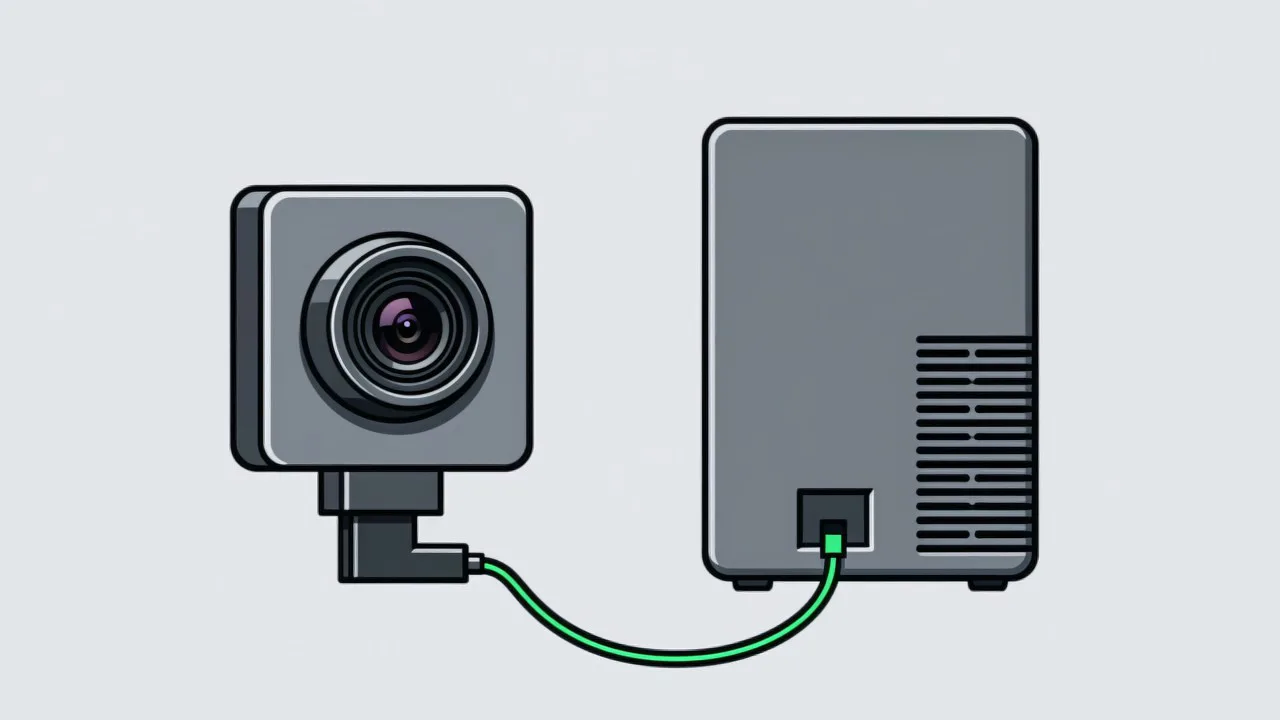
Technically, these can be built to be completely separate. A vision AI SOP system looks at whether the required actions appear at the station, whether they are in the right order, and whether any step was skipped. The object of judgement is the action, not the face. Whether faces are recorded, and whether data is tied to an individual, are separate choices — not an inevitable property of the system. The same detection capability can be configured as a supervisory tool or as a work aid; the difference is configuration and policy. Get this positioning wrong and every downstream decision — what is recorded, how long it is kept, who can retrieve it — becomes an argument. Conversely, workstation monitoring can be scoped so that it never sees more than the station itself.
| Monitoring the task (start here) | Monitoring the person (invites resistance) | |
|---|---|---|
| What is recorded | Station, step, action sequence, timestamp | Identity, face, time at the station |
| How data is linked | By station and shift by default | By employee ID |
| Typical use | Missed-step alerts, traceability, process improvement | Attendance, discipline, performance scoring |
| What it becomes | A tool operators use | A supervisor operators avoid |
One honest caveat: even task-only monitoring puts people under a camera for a whole shift, and that carries real psychological weight. The way to handle it is not to deny that, but to make sure operators get something out of the system too — an alert that helps them fix a step before it becomes a problem, exception records that get a fixture or a cycle time fixed. That is worth more than any briefing. How data should be scoped is covered in data traceability for visual SOP. One pattern worth noting: the first complaints usually come from line leaders, not operators, because they answer for quality and absorb the mood. Win them over and the rest is easier.
Talking to the floor without it becoming a formality
Four steps
- Step 1: set the scope before go-live
Say which stations are filmed, whether the angle is overhead or side-on, and whether the resolution can resolve a face. Do not leave people to guess. Task-only and face-capable are different systems, and this is the point operators care about most — show the actual image.
- Step 2: let operators help calibrate
Ask the person who knows the process best to help define what counts as normal, and make sure the false alarms they raise get recorded and fixed. People who help calibrate are consistently more comfortable, because they know what the system does and does not judge.
- Step 3: start with a use that helps the operator
Use the first alerts for missed-step reminders and fixture improvements, not for catching people out. A simple test: in the first month, does anyone come and ask you for the alert log?
- Step 4: fix a feedback channel
Collect comments on false alarms on a schedule and state how quickly you will respond. Speed of response matters more than a perfect answer, especially in the first two weeks.
Agreeing the data-retention scope
- Retention period. State how long video and process data are kept and what happens at the end of that period, rather than keeping everything indefinitely.
- Access. Who can view, and under what circumstances, written into policy and known to staff — not left with one administrator.
- Purpose limits. Agree that data is not used for attendance, discipline or other purposes unrelated to process quality.
- A route to contest. Give staff a way to dispute a false alarm, and make sure the dispute is recorded.
- Legal scope. Rules on personal data differ by jurisdiction; the exact boundaries and notice obligations should be confirmed with your legal advisers. What is described here is operational practice only.
Common questions about camera resistance
Can we get the same result without cameras?
In some cases. Poka-yoke fixtures, sensors and interlocking solve part of the problem, but they are weak at judging action sequence and whether a step was skipped. For which problems suit vision and which suit sensors, see vision versus sensors.
If someone does not want their face filmed, is that possible?
Yes. Camera angle and field of view can be set to cover the station only, and data can be decoupled from identity. Raise this at design stage — retrofitting later costs far more.
Do objections go away once the system is live?
Not on their own. If the first alerts are all corrections, and false alarms are not fixed quickly, resistance turns into simply not using the system. How fast you respond to false alarms in the first two weeks often decides whether it is ever accepted.
Staff uneasy about the cameras and not sure how to raise it?
Tell us about the station and the specific concerns, and we will suggest a design the floor is more likely to accept.
Related articles
-
Alarm Fatigue: Why the Floor Turns the System Off
Many visual SOP systems are not beaten by technical problems — they are muted by…
Read more → -
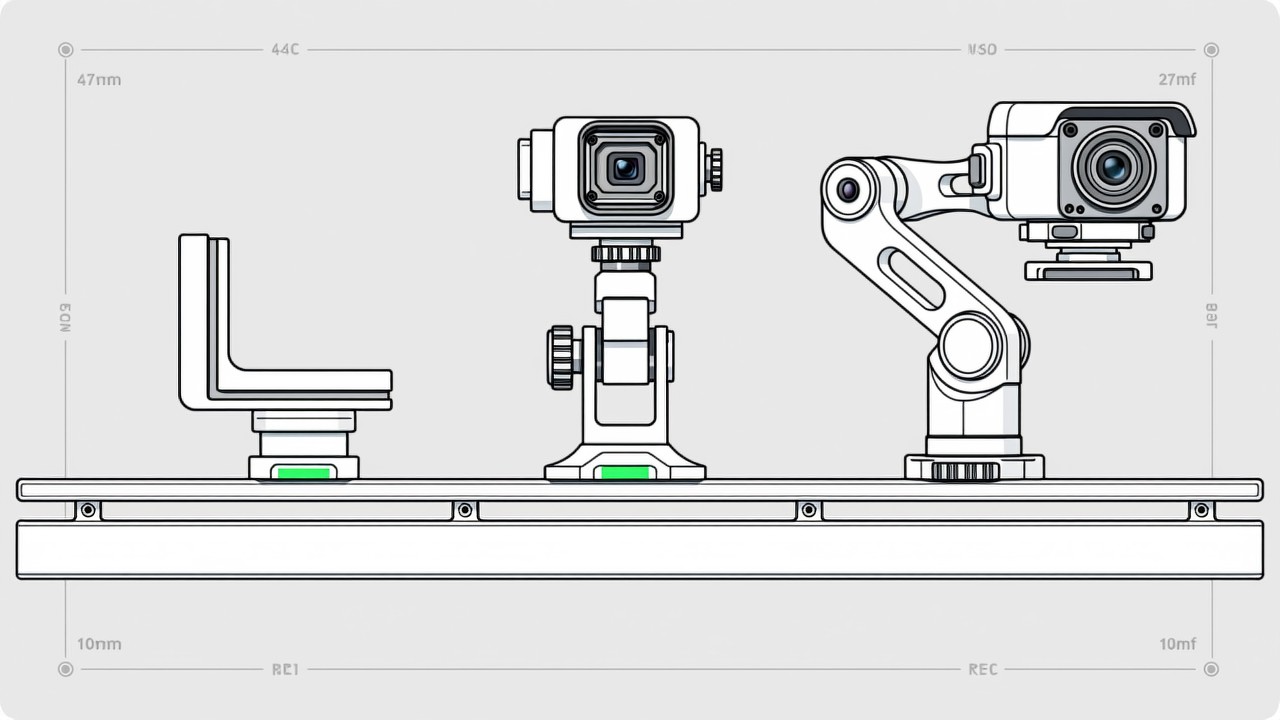
Visual SOP Camera Selection and Mounting
Camera selection for visual SOP is not the same as for product inspection. The s…
Read more → -
Vision Monitoring at the Semiconductor Die Bonder
Semiconductor packaging stations are characterised by high precision, fast cycle…
Read more → -
Wrong-Assembly Alarms Without the False Alarms
The most common reason a visual SOP project fails is not poor recognition — it i…
Read more →
Need specific advice for your production line?
Our engineers can share practical approaches to process error prevention and SOP compliance inspection for your scenario.
Request a free trial plan