
Visual AI SOP for Automotive Final Assembly Lines
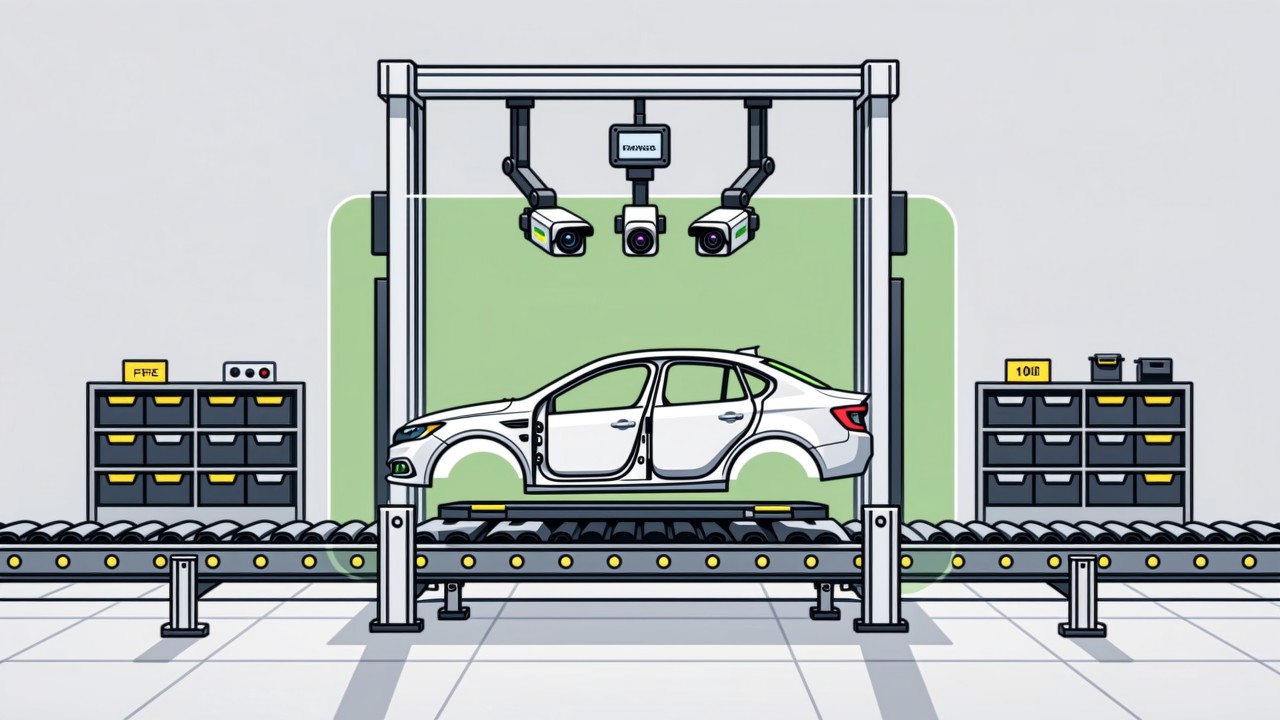
Final assembly is where carmakers have the densest concentration of operations and the most manual intervention. Mixed-model production and multiple trim configurations create enormous process variation, and people plus paper process cards cannot guarantee that every vehicle completes every required step. We deploy Visual AI SOP at interior, chassis, powertrain and end-of-line stations to verify assembly actions and operation sequence in real time, and archive each vehicle's process record as traceable data.
Key takeaways
- Mixed-model flexibility: operation sequences switch automatically by model and configuration, so one station can serve many variants.
- Missing-step interception: an unexecuted critical operation raises an alarm before the vehicle reaches end-of-line test.
- Tool interlock: signals from electric tool controllers confirm that tightening actions match the required operation.
- Vehicle build file: every operation's execution time and record is archived by VIN for quality traceability.
- Cycle-time compatible: judgement runs at the edge and does not consume main-line cycle time.
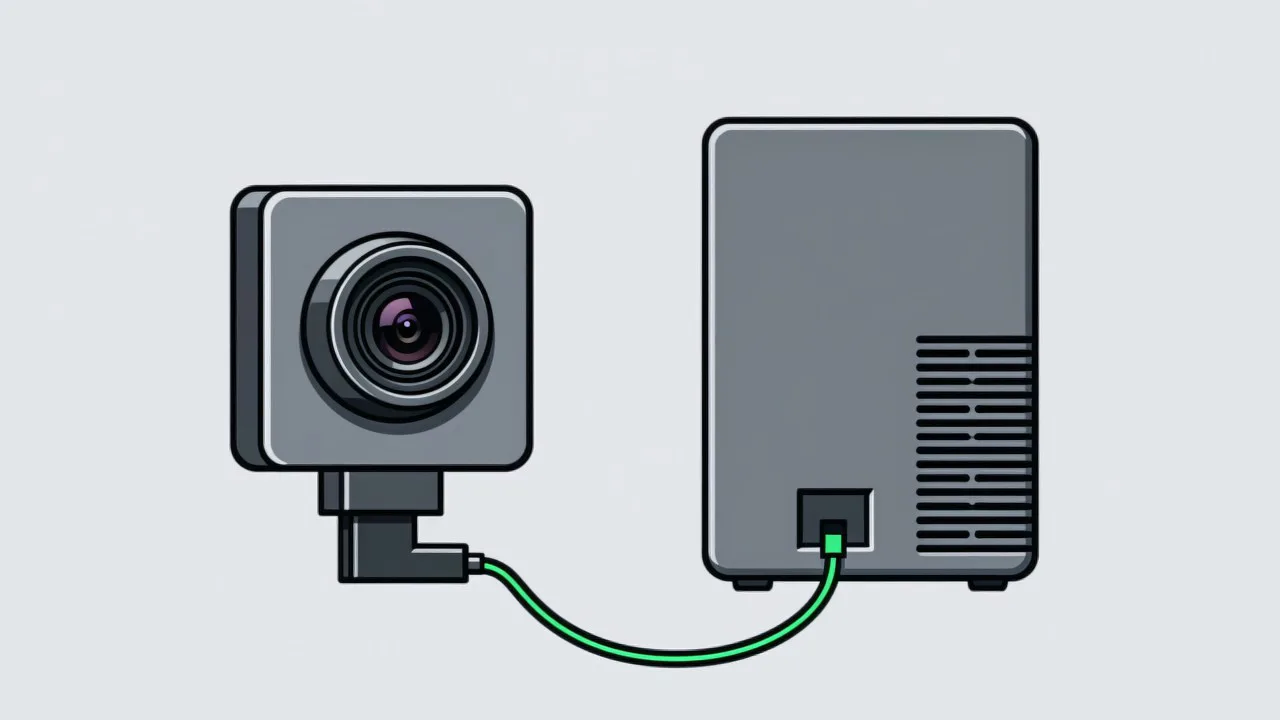
The core tension on a final assembly line is many operations, many configurations and a tight cycle time. The same line may be building two-wheel and four-wheel drive vehicles with different interior specifications, and the number and order of operations differ accordingly. Operators have tens of seconds to judge and install, and any omitted step can mean rework or even a recall risk.
The traditional answer - process cards, poka-yoke checklists and end-of-line inspection - is all after the fact. Visual AI SOP moves the judgement to the moment the operation happens, and it can change its acceptance criteria automatically as the vehicle configuration changes. The mechanics are covered in our article on skip step prevention, and the same principle carries over to auto parts assembly.
Key Workstations and Monitoring Logic
| Workstation | Monitored content | Main risks prevented |
|---|---|---|
| Interior trim | Trim installation actions, clip seating, harness connector insertion | Trim omitted, clip not fully seated, connector not pushed home |
| Chassis assembly | Brake lines, suspension parts, fastener installation actions and order | Missing bolts, assembly order reversed |
| Powertrain | Pipe and hose connections, fluid fill actions, tool-use confirmation | Hose left unconnected, fill step omitted |
| Seats and seatbelts | Installation actions, torque tool use, safety-part confirmation | Safety-critical part omitted, torque not applied |
| End-of-line test | Test item execution actions, vehicle handover confirmation | Test item skipped, no re-test after repair |
Configuration Switching Under Mixed-Model Production
How the SOP switches automatically by vehicle model
- Read the vehicle configuration
Pull the current model and configuration code from MES, a host system or the body carrier tag.
- Load the matching operation sequence
The system retrieves that model's standard operation sequence and acceptance rules, with no manual switching.
- Verify actions against the sequence
Compare completed operator actions against the required sequence in real time, flagging omissions, wrong order and repeats.
- Archive the record by VIN
Bind the process result to the VIN and write it to the database for quality traceability and aftersales analysis.
What Visual SOP Cannot Cover on a Vehicle Line
Visual SOP does not remove the need for torque poka-yoke or barcode verification where a signal already exists; it covers the operations that leave no signal of their own. Assemblies hidden behind trim panels, inside cavities or under the floor cannot be judged once they are closed, so the check has to sit at the station before the part disappears from view - a trade-off discussed in vision vs sensor division.
- Tolerance and torque values stay with the tooling and the gauges; vision confirms the action and the assembly state, not the numerical result.
- Where the operator's body occludes the station for the whole cycle, one camera is not enough and a second viewpoint or a start-and-end-frame strategy is required.
- A stable VIN read and the current model and configuration code are preconditions; without them the wrong operation sequence loads.
- Cosmetic matters such as paint and trim finish are a different inspection task and are not what this judges.
Automotive final assembly questions we hear most
The cycle time is only fifty or sixty seconds - is vision fast enough?
Yes. Recognition and judgement run at the edge, and single-frame inference typically takes milliseconds to tens of milliseconds, so it does not consume main-line cycle time.
What if the operator's body blocks the camera?
This is the most common challenge in final assembly. We run field-of-view coverage simulation at the design stage, use multiple viewpoints, and adopt a start-and-end-frame decision strategy rather than requiring the whole action to stay visible, which reduces the impact of occlusion.
Models are refreshed every year - do the rules have to be rebuilt?
No. Operation sequences and acceptance rules are configured in the back end, so a refresh means adding or removing configuration items, and the action recognition models are usually reused as they are.
Assess your final assembly workstation
Tell us your workstation layout, cycle time and the process that causes the most trouble today, and we will recommend camera options and a pilot workstation.
Other industry solutions
-
Textile
Textile and apparel work splits into very fine operations and changes …
Read more → -
Food Processing
Food process management has two hard constraints: food safety audits d…
Read more → -
Small Appliances
A significant share of small-appliance field failures are not failed c…
Read more → -
3C Electronics
3C assembly is characterised by many small parts, many screws, tight t…
Read more → -
Auto Parts
The typical auto parts plant runs high variety, low volume and fast ch…
Read more → -
Semiconductor
Semiconductor packaging has a long process chain, fast station cycle t…
Read more →
Related products & capabilities
-
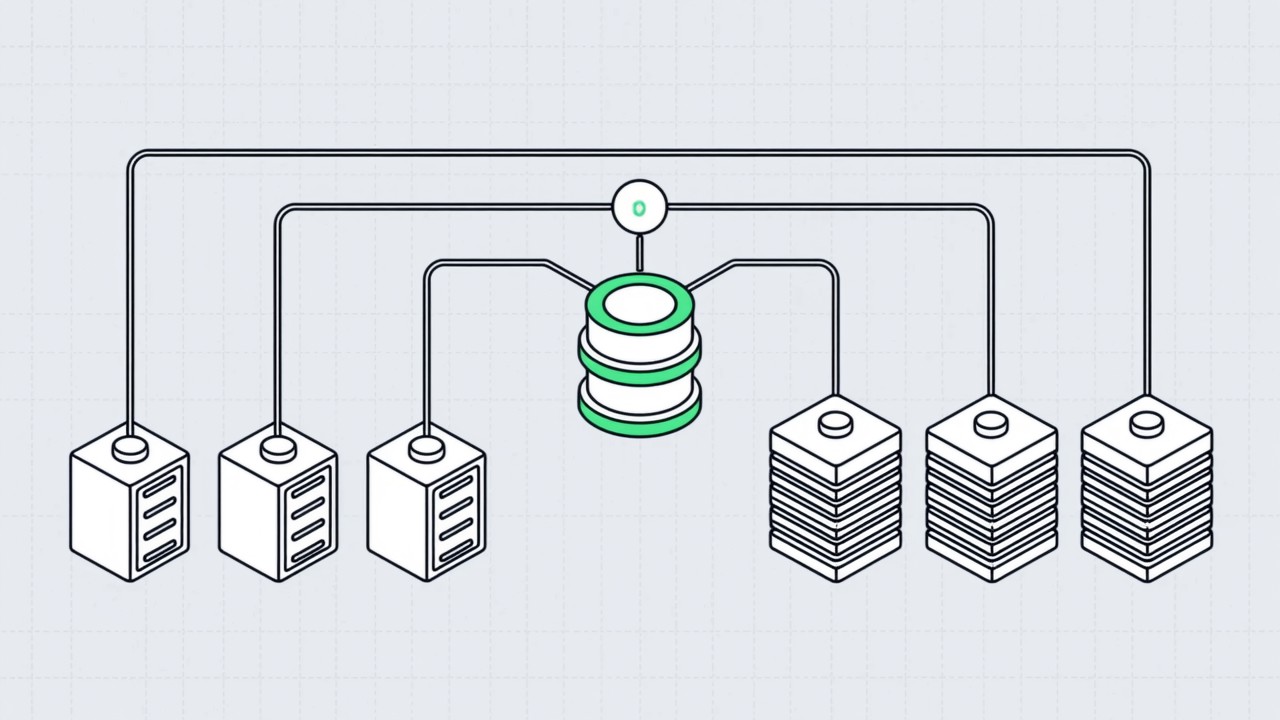
MES Integration
Run standalone, a visual SOP system only solves on-the-spot blocking. …
Read more → -
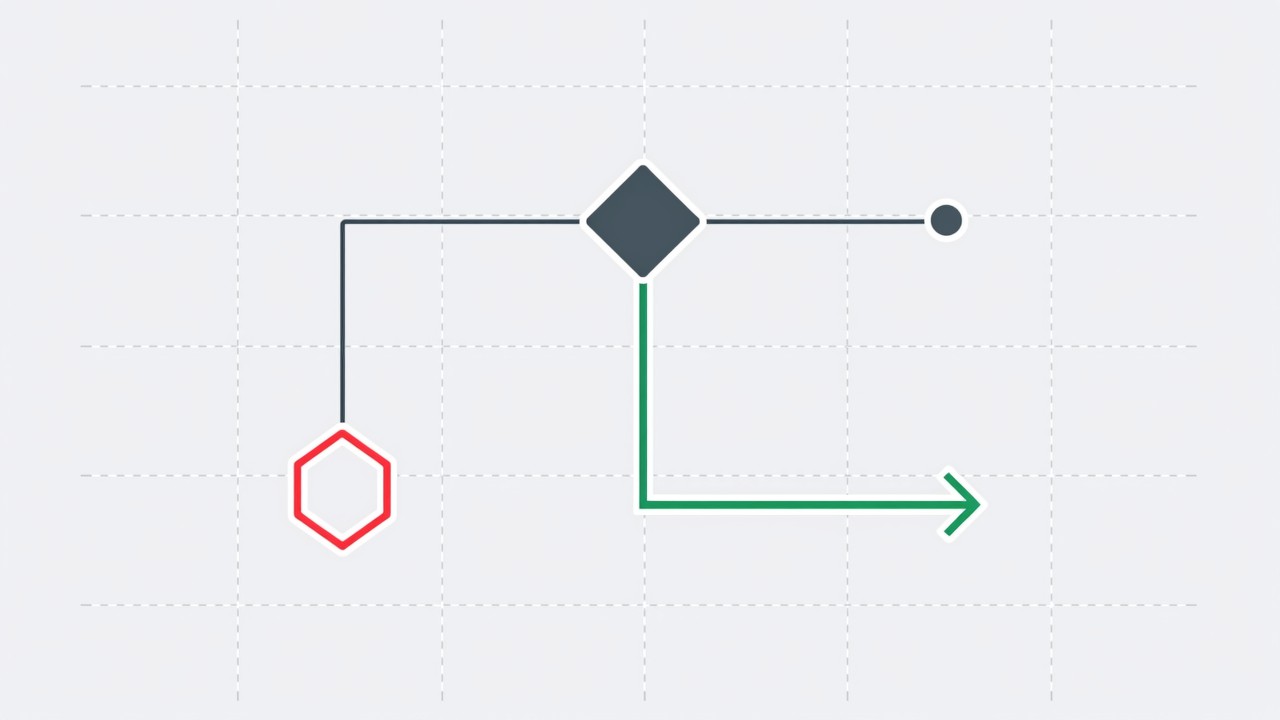
Error Prevention
The point of poka-yoke is to make an error impossible, or to catch it …
Read more → -
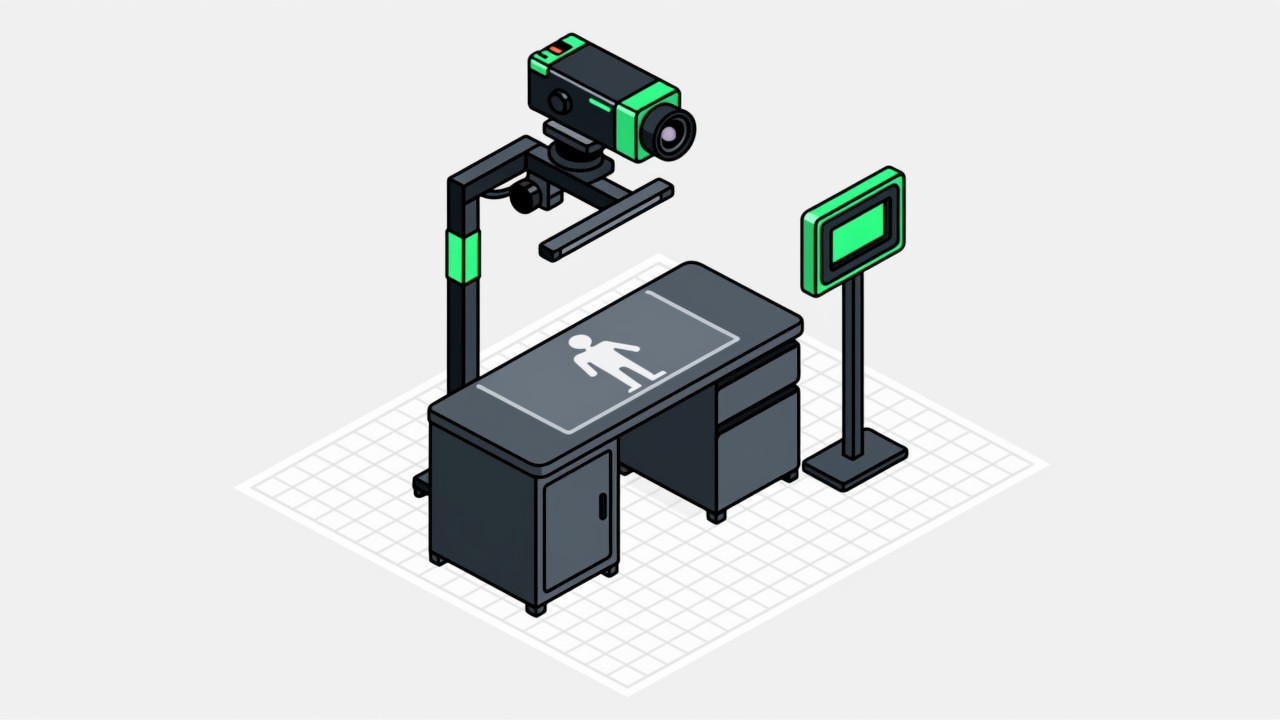
Workstation Monitoring
The workstation is the smallest unit of SOP execution. We turn the vid…
Read more → -
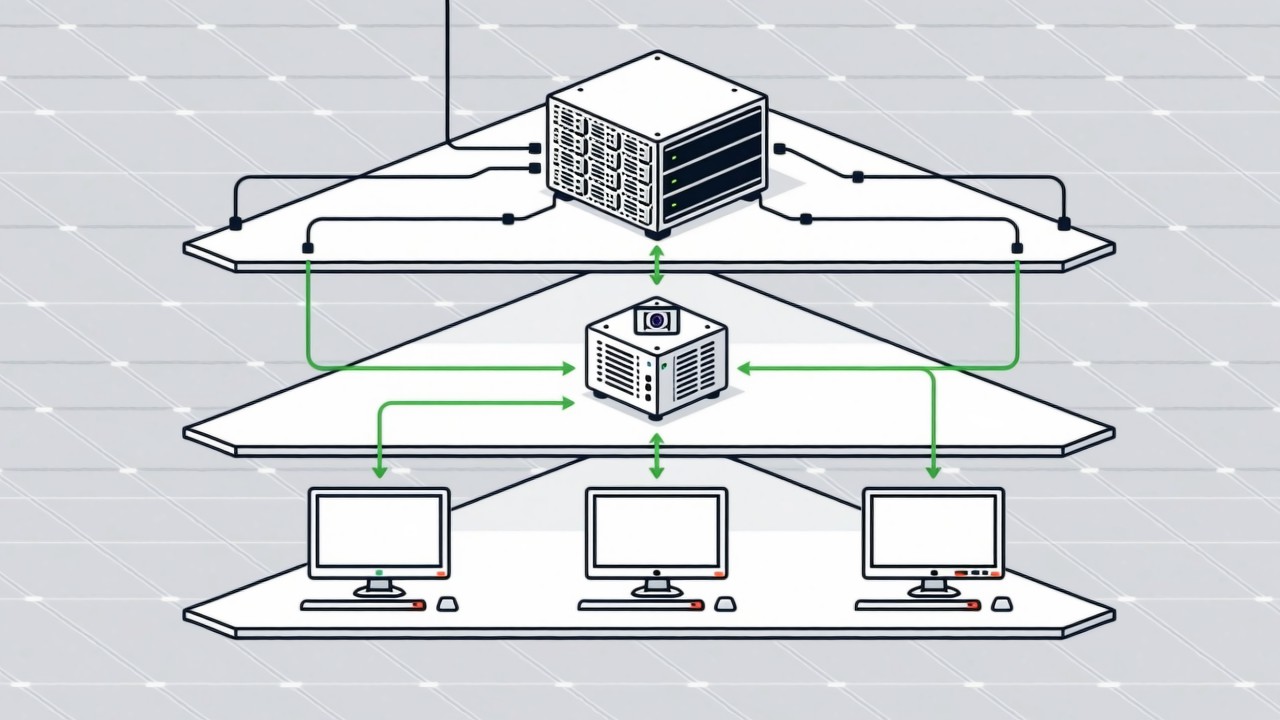
Visual AI SOP System
The Intsoft Visual AI SOP System is built in four layers: workstation …
Read more →
Does your industry face similar process problems?
Tell us your workstation scenario and process pain points, and we will tailor a solution based on cases already delivered in your industry.
Request a free trial plan