
Global vs Rolling Shutter: What to Choose for Line-Side Action Recognition
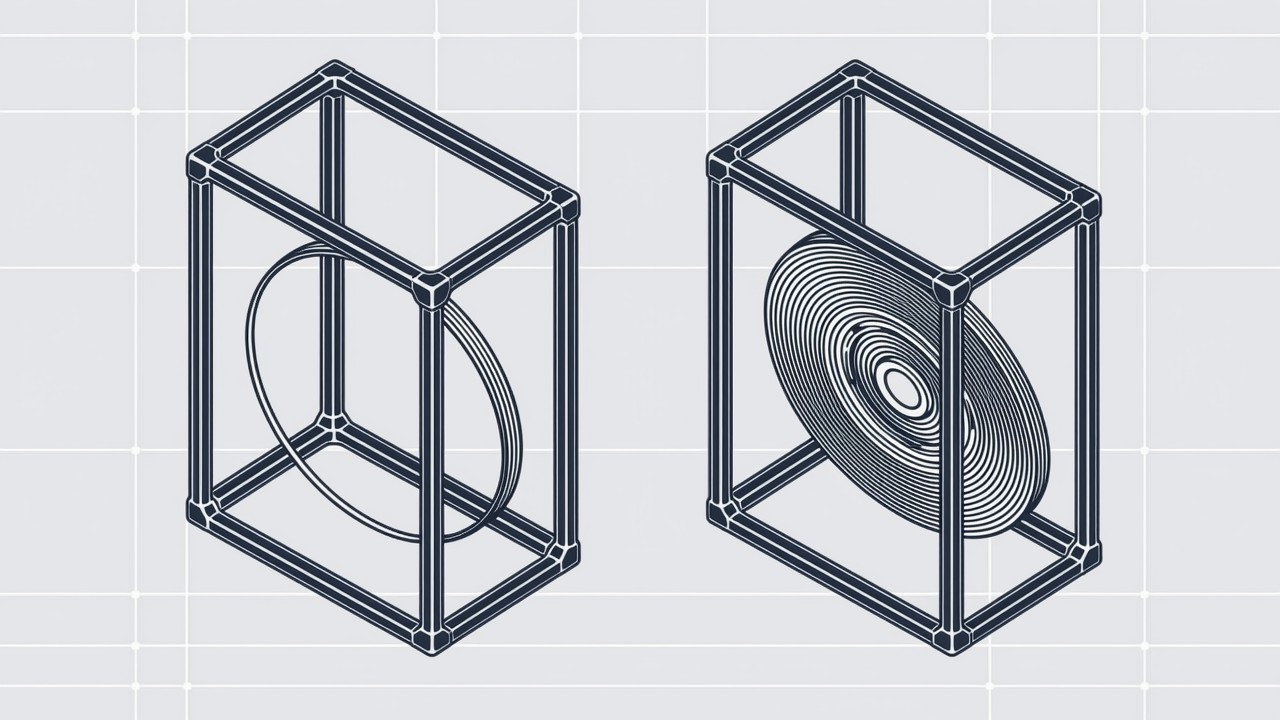
A global shutter sensor exposes the whole array at once, so fast movement stays the right shape; a rolling shutter exposes line by line, producing skew, smear and jelly distortion. For action recognition the deciding number is blur, which equals speed multiplied by exposure time — work that out first, then decide whether the sensor is worth the premium.
Key takeaways
- One number decides it: how far the target travels during exposure, relative to the size of the feature being judged.
- Rolling shutter distortion comes from line-by-line readout; movement perpendicular to readout shows up as skew.
- Shortening exposure suppresses blur, but it drives the light requirement up by the same factor.
- A global shutter removes distortion, not blur. Vibration and defocus are unaffected by the sensor choice.

Choosing between a global and a rolling shutter for line-side action recognition comes down to one number: how far the target travels during the exposure, measured against the size of the feature being judged. If the target barely moves, a rolling shutter is entirely adequate. If a hand crosses tens of millimetres, a global shutter is required. This is a property of the camera itself, separate from where the camera is mounted and how the field of view is drawn, which is covered in camera mounting and field of view.
The difference in one line
| Global shutter | Rolling shutter | |
|---|---|---|
| Exposure | Whole array exposed at once | Exposed line by line |
| Fast-moving target | Shape preserved, only overall blur | Skew, smear, jelly distortion |
| Readout time | Read out as a whole after exposure | Several to tens of milliseconds for the full frame |
| Cost | Higher at the same specification | Lower at the same specification |
| Suited to | Action sequences, position, order | Static states, slow actions, result confirmation |
Work out the blur before changing sensors
Blur = target speed × exposure time. The product is a distance, and comparing it with the size of the feature tells you whether a global shutter is needed. Take a typical case: hand speed during pick-and-place commonly runs between 300 and 800 mm per second. At an exposure time of 2 ms that gives 0.6 to 1.6 mm of blur. For judging whether a part has left a bin, where the feature is measured in centimetres, that is acceptable. For judging whether a connector is fully seated, where the gap is measured in millimetres, it is already unreadable.
- Blur below one tenth of the feature size: imaging is stable and a rolling shutter is enough.
- Blur between one tenth and one third of the feature size: treat with care; shorter exposure and stronger light may bring it back into range.
- Blur above one third of the feature size: judgement is no longer reliable. Move to a global shutter, or change how fast the station is asked to be.
What rolling shutter artefacts look like, and where they bite
- Three artefacts, in practice. Skew: a vertical object moving horizontally is recorded slanted, as with a powered driver tightening a screw. Jelly distortion: movement along the readout direction stretches or compresses the object. Banding: with an unsynchronised AC light source, horizontal light and dark stripes appear across the frame.
- Where a rolling shutter is fine. Targets that are essentially stationary: confirming a finished assembly, confirming a part’s load position, presence checks on a fixture. None of these depends on the shape of a moving object, so distortion does not change the answer, and many result-confirmation stations in electronics assembly fall into this category.
- Where a global shutter is required. Judging the middle of an action: fast pick-and-place, connector insertion, fastening, labelling, flipping. These need to know when the action happened and whether the order was right, and distortion causes direct misjudgement. Dynamic inspection on a moving conveyor deserves particular care: the part is moving, and the feature being judged is its position and pose, so skew and smear appear together. Do not save money with a rolling shutter there.
Three practical trade-offs
The order to decide in
- Fix the detection targets first, and ignore cameras
List every rule to be judged: is it “was the step done” or “was it done correctly”? The second demands far more of the imaging, and the shutter choice changes with it.
- Then estimate the blur of the fastest action
Take the quickest action at the station, estimate its linear speed, multiply by the intended exposure time, and compare with the feature size. This resolves most disagreements before they start. In practice misjudgements are measured with precision and recall, not by eye.
- Then look at the budget, not the other way round
The global shutter premium sits in the camera; the cost of a misjudgement is a miss that ships or an alarm that stops the line. Where fast actions are being judged, the saving rarely covers a single complaint.
- Remember what changing the camera cannot fix
However short the exposure, if the action is faster than the exposure the frame is blurred as a whole. A global shutter removes distortion, not blur. Vibration, a loose lens mount and poor focus are all independent of shutter type and are solved with bracket stiffness and lens fixing.
Shutter, exposure time and lighting are three faces of one decision and have to be settled together. Shortening exposure demands a brighter light; brightness is often delivered by strobing, and strobing requires the light controller and the camera trigger to be tightly synchronised or banding appears. Decided separately at the design stage, they tend to be reworked as a group on site, and stations whose imaging never settles usually trace back to here. Settling the combination up front is also why the imaging requirements for the Visual AI SOP System are stated as a set rather than as a camera specification.
Common questions about shutter type
Does every action-monitoring station need a global shutter?
No. Stations that only confirm a result and whose target is essentially stationary work fine with a rolling shutter. A global shutter is needed where a frame is captured during the action and the judgement depends on the object’s shape — fast insertion, fastening and labelling being the usual examples.
Can short exposure plus a strong light replace a global shutter?
It suppresses overall blur but not the line-by-line distortion. Where judgement depends on shape, angle or alignment, skew and jelly distortion still cause errors. It can substitute where the only question is whether a part is present, regardless of its shape.
Why can the existing security cameras not be reused?
They are rolling-shutter devices with automatic exposure, aperture and gain, so imaging consistency cannot be guaranteed. The same action photographed on day shift and night shift does not look the same, and no threshold can be set on that.
Fast actions at the station, unsure about the shutter?
Tell us the motion and the cycle time and we will estimate the blur and the imaging conditions.
Related articles
-

Alarm Fatigue: Why the Floor Turns the System Off
Many visual SOP systems are not beaten by technical problems — they are muted by…
Read more → -
Visual SOP Camera Selection and Mounting
Camera selection for visual SOP is not the same as for product inspection. The s…
Read more → -
Vision Monitoring at the Semiconductor Die Bonder
Semiconductor packaging stations are characterised by high precision, fast cycle…
Read more → -
Wrong-Assembly Alarms Without the False Alarms
The most common reason a visual SOP project fails is not poor recognition — it i…
Read more →
Need specific advice for your production line?
Our engineers can share practical approaches to process error prevention and SOP compliance inspection for your scenario.
Request a free trial plan