
After go-live: putting support, spares and SLA in writing
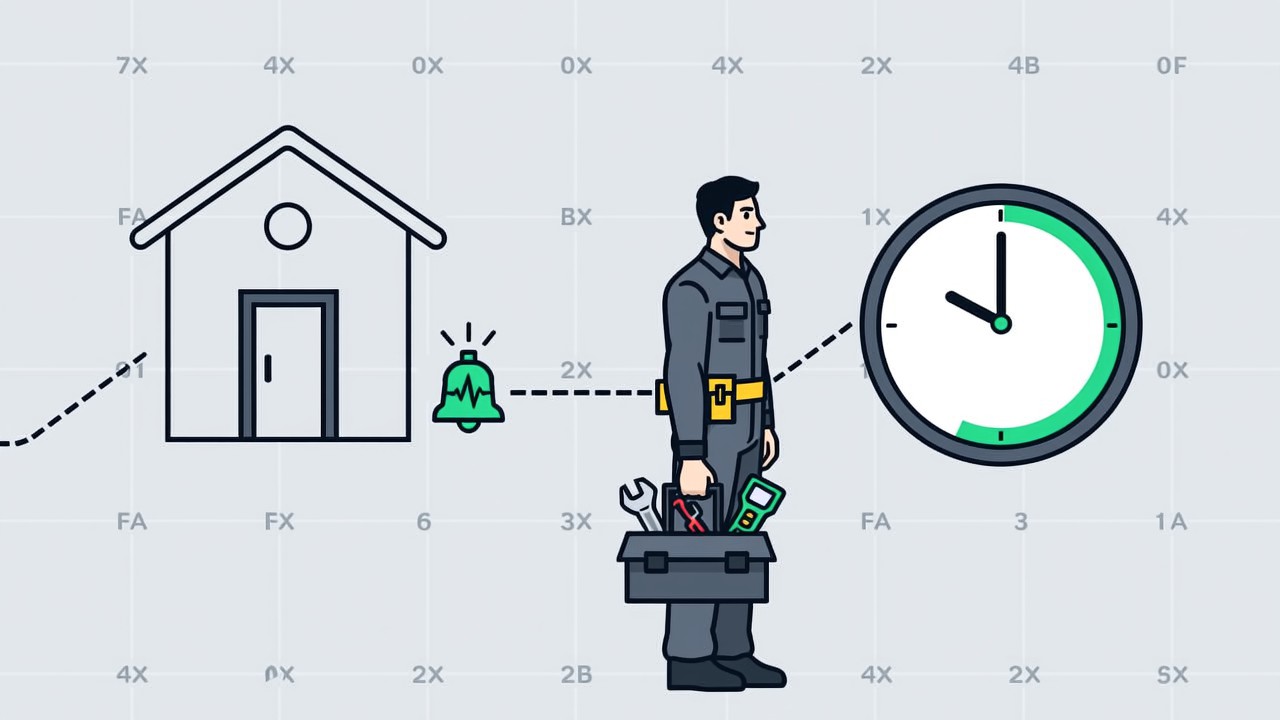
The after-sales clause that causes the most trouble is the one that blends “respond” with “resolve”. A workable SLA separates acknowledgement, access and restoration times, and states the spares list and who owns the image data. Rule changes are ongoing service — leave them unwritten and changeover becomes an argument.
Key takeaways
- An SLA must separate acknowledgement, access and restoration — committing to only one is incomplete.
- A spares list matters more than a discount: name the models, quantities and replacement cycles.
- Agree who owns the image data and the model configuration, and how they can be exported, to avoid lock-in.
- Rule changes and new part numbers are routine service; price them per case or per year rather than assuming they are free.
Once a visual AI SOP system is running, most disputes come down to three things: how fast you respond, who pays for spares, and whether a rule change counts as covered service. Leave any of the three out of the contract and you will almost certainly fail to agree on it later, mid-changeover or mid-breakdown. The goal is not a long SLA — it is to split “respond” apart and write the boundaries down.
Split “response” into three, and half the disputes disappear
A clause like “four-hour response” binds almost nobody, because no one can say when the four hours start or what counts as a response. A workable approach breaks the service into three intervals, fixes a time for each, and states whether each covers business hours only or the clock.
| Interval | Definition | What to watch |
|---|---|---|
| Acknowledgement | From the report to a human confirming receipt and triaging it | State the reporting channel and what counts as human confirmation |
| Access | Time for an engineer to connect remotely or arrive on site | Separate remote from on-site, with different limits for each |
| Restoration | From access to the function being restored | Say whether waiting for a spare counts; treat hardware separately |
Spares: the list matters more than the discount
In after-sales negotiation, attention usually goes to the spares discount. But what decides downtime is not the discount — it is whether a replacement part is on site. The hardware in a vision system is not complicated, and how quickly a station recovers usually comes down to whether the consumable parts were thought through in advance. Rather than bargaining over a percentage, the spares list, its cycles and its supply route belong in the agreement. Over the life of the system, the spares policy moves the total cost of ownership more than a one-off price negotiation, a point that connects to visual SOP budget and ROI.
- A consumables list with model numbers. Camera, light, lens, industrial PC, cabling — each with its model and a recommended stock quantity.
- Replacement cycles and the judgement. Lights have a finite life; state at what degradation output they count as due for replacement, and who decides.
- Supply lead times. Time from order to dispatch, and whether discontinued models have a substitute.
- Who may swap what. Which parts the customer can replace and which require the vendor or an authorised party, so responsibility stays clear.
Data and configuration ownership
A vision system generates images and decision records continuously, and it accumulates a set of models and rules. Settle ownership of both at contract stage: the decision records are the customer’s production data and should be exportable at any time in an open format, while the models and rules should be handed over or migrated if the service ends. Both clauses exist to prevent being locked in to a single vendor, and both bear on whether traceability actually holds up — for the requirement behind it, see visual SOP data traceability, and for the interface side, visual SOP and MES integration.
Rule changes: the most overlooked item after go-live
Changeovers, new part numbers and small process tweaks all change the detection rules. This is routine demand, not a fault, so it usually falls outside “free fault maintenance”. Two approaches are common: change work priced per case, or an annual rule-maintenance package. Whichever you pick, three things must be agreed in advance — the scope and turnaround of a single change, such as how many days to configure the rules for one new part number; whether a change includes on-site sampling and validation or is remote configuration only; and how many changes are included per year, with the price of anything beyond that. These three matter because a vision system tends to prove its worth in the second and third year, which is exactly when changeovers are most frequent. Say how rule maintenance will work, and the system will not be shelved in year two for being too hard to change. For the adjustment rhythm in the early months, the visual SOP rollout timeline describes the settling period.
Common questions about support and SLA
Is round-the-clock response a reasonable promise?
It depends on the shift pattern. For a three-shift, 24-hour line, always-on acknowledgement is fair. For a single-shift station, limiting the response window to working hours but tightening the restoration time is usually more realistic.
Should spares be held on site?
For critical parts whose failure stops the station, such as the camera or light, keep one set on site. For parts that rarely fail, rely on the supply lead time. The test is how long the station stops when that part fails.
Are upgrades included in the maintenance fee?
Distinguish fault fixes from feature additions. Bug fixes are usually covered; new features or support for new hardware are normally billed separately. Leave this unstated and it becomes a dispute later.
Is something missing from your support terms?
Send us your current maintenance agreement and we will check the response, spares and change boundaries.
Related articles
-
Alarm Fatigue: Why the Floor Turns the System Off
Many visual SOP systems are not beaten by technical problems — they are muted by…
Read more → -
Visual SOP Camera Selection and Mounting
Camera selection for visual SOP is not the same as for product inspection. The s…
Read more → -
Vision Monitoring at the Semiconductor Die Bonder
Semiconductor packaging stations are characterised by high precision, fast cycle…
Read more → -
Wrong-Assembly Alarms Without the False Alarms
The most common reason a visual SOP project fails is not poor recognition — it i…
Read more →
Need specific advice for your production line?
Our engineers can share practical approaches to process error prevention and SOP compliance inspection for your scenario.
Request a free trial plan