
Visual AI SOP Selection: 12 Questions to Settle Before You Commit
The algorithm is rarely what kills a vision SOP project. The budget is signed before anyone has nailed down the site conditions and the acceptance criteria. Twelve questions split into four groups — four on site conditions, three on detection capability, three on integration, two on cost and ownership. If a group cannot be answered, the project belongs in assessment, not procurement.
Key takeaways
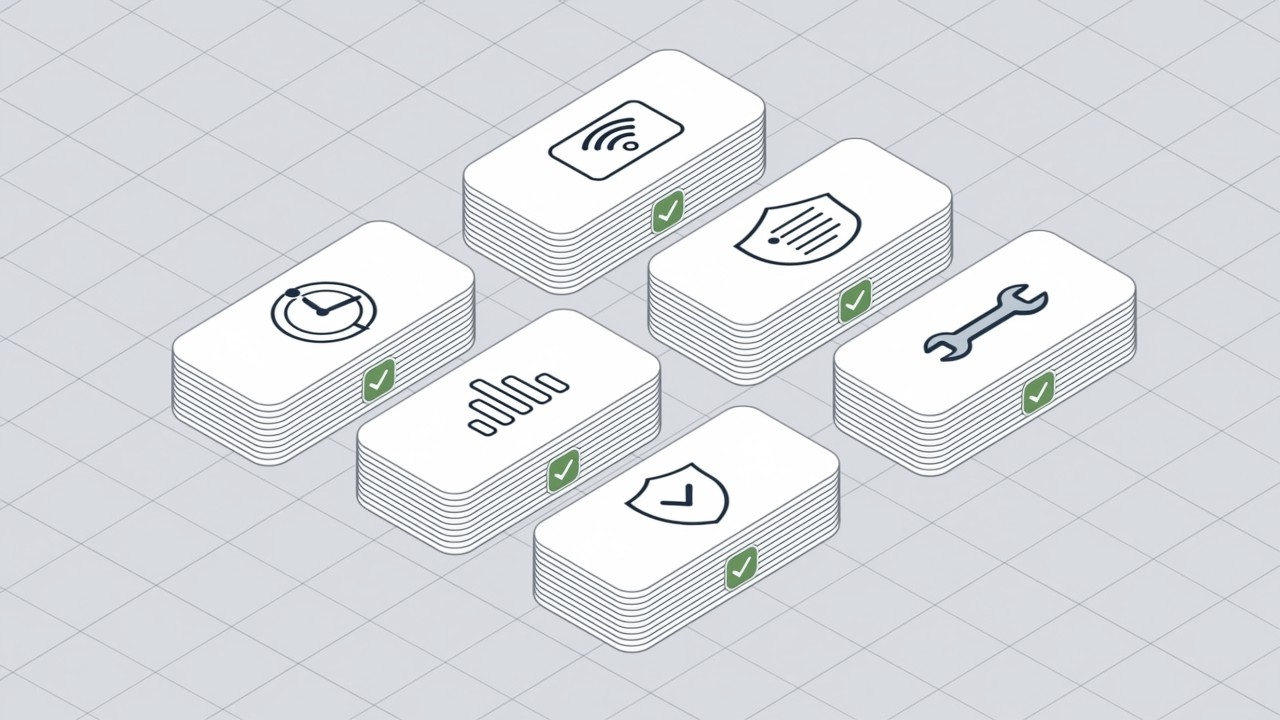
- Site conditions are a hard constraint: they depend on the station, not on how good the model is.
- Quality and production have to agree on the false-alarm versus miss trade-off at kick-off, not at acceptance.
- A notification that arrives more than two seconds late has lost its power to correct anything.
- Unwritten standards, very low annual volume and no room for power or network are three reasons not to start.
Vision AI SOP projects rarely fail on the algorithm. They fail because nobody settled the site conditions and the acceptance criteria before the purchase order went out. Split the decision into twelve questions — four on site conditions, three on detection capability, three on integration, two on cost and ownership. If any group cannot be answered, the project belongs in assessment, not in procurement. All twelve can be settled in half a day on site plus one round of historical data, and the usual outcome is not “roll it out everywhere” but “pilot one station”.
Group one: site conditions decide whether it can be done at all
- What exactly is being judged? Is it “was the step performed” or “was it performed correctly”? Detecting that a part appeared and disappeared needs one class of model; judging angle, position and sequence needs another, and the cost differs accordingly.
- What is the cycle time in seconds? Cycle time sets the exposure time available per frame, and with it the compute budget. A station making one unit every three seconds and one making a unit every thirty seconds cannot use the same frame rate or the same model complexity.
- What is the space like, and what gets in the way? Will the operator’s hands cross the target? Will a neighbouring robot or a fixture block the view periodically? Can a bracket be bolted down, or does the camera have to hang from the ceiling?
- Can the lighting be controlled? Ceiling lights, side windows and the illumination from the next station all change, and day shift does not look like night shift. Whether a dedicated light can be fitted decides whether the imaging stays stable.
Group two: detection capability decides how accurate it can be
- Which is worse, a false alarm or a miss? A miss sends a defect downstream or out of the door, and quality owns the consequence. A false alarm stops the line for a check, and production owns that one. Quality and production have to settle this at kick-off; leaving it to acceptance guarantees an argument. The trade-off itself is explained in how false alarms are reduced.
- What false-alarm rate is actually tolerable? Not “as low as possible” but “how many times an hour before the operator stops looking up”. Past that number the alarm gets muted and the system is effectively dead. The reasoning is set out in how to bring false alarms down.
- How are borderline cases judged? A screw half driven, a connector not fully seated, a part resting on the edge of the detection box. Each needs a stated rule and a stated record, or two people will reach two different conclusions about the same event.
Group three: integration and ownership decide whether it gets used
- How does the alarm reach the operator? A screen pop-up, a stack light, an audible tone? A notification that arrives more than two seconds late has lost its power to correct anything, and survives only as evidence for assigning blame.
- Does it write back to MES, and which fields? Operation number, timestamp, serial number, result, exception snapshot. Get the field definitions agreed with IT first or the interface will be reworked twice, and the agreement is easier with how vision SOP connects to MES in front of you.
- How long is data kept, and where? Retention is usually set by customer audit requirements, commonly one to three years. That number drives local storage and network budget, and it has to be confirmed up front rather than patched afterwards.
- What does it cost per year after the build? Lamps age, lenses need cleaning, detection rules follow process changes, software gets updated. This recurring cost is normally estimated as a percentage of the initial spend; leave it out and the second-year budget has nowhere to come from.
- Who owns it on site? Who adjusts a threshold when a false alarm appears, who updates a rule when the process changes? Without a named owner the system quietly becomes nobody’s equipment, and this is how error-proofing measures decay.
| Group | Core questions | If it cannot be answered |
|---|---|---|
| Site conditions | Target, cycle time, space, lighting | The design is finished and there is nowhere to mount the camera |
| Detection capability | How false alarms and misses are traded off | Acceptance criteria disagree, so a working system does not count |
| Integration | Alarm latency and MES fields | It runs, but nobody looks and nothing can be traced |
| Cost and ownership | Annual running cost and a named owner | Unmaintained after three months, then switched off |
When not to start at all
Three situations are worth setting aside. The first is when the root cause sits in the SOP itself — if the standard has no judgeable wording, no number of cameras will decide it, and rewriting the work instruction is the more useful move. The failure modes are set out in why SOP execution fails. The second is a station producing only a few hundred units a year where the missed step can be reworked, because the payback stretches out of reach. The third is a station with no stable power or network position, or with dust and oil mist heavy enough that the lens needs wiping daily. None of these is a technology problem; they are condition problems, and changing supplier does not change them. If all twelve questions can be answered, the next step is a single-station pilot to measure real false-alarm and miss rates, checked against the visual SOP site assessment checklist — and only then a budget conversation, which is covered in cost structure and ROI.
Common questions about the assessment stage
How long does it take to work through the twelve questions?
With clear site conditions, half a day on site plus one round of historical data gives a go or no-go. If MES fields or network changes are involved, expect one more round with IT, so two to three weeks in total.
Do we have to pilot, or can we roll out directly?
Pilot. A single station is the cheapest way to get real false-alarm and miss numbers, usually within about two weeks. Skipping it means detection rules that have never met the real station, and the rework cost multiplies by station count when a borderline case turns out to be unhandled.
How detailed should the vendor specification be?
The specification matters less than the acceptance criteria. False-alarm rate, miss rate and alarm latency need a written test method and a defined sample in the contract, or the two sides will arrive at acceptance with two different data sets.
Stuck on one of the twelve questions?
Send us the station details and the process problem, and we will work through the gaps with you.
Related articles
-
Alarm Fatigue: Why the Floor Turns the System Off
Many visual SOP systems are not beaten by technical problems — they are muted by…
Read more → -
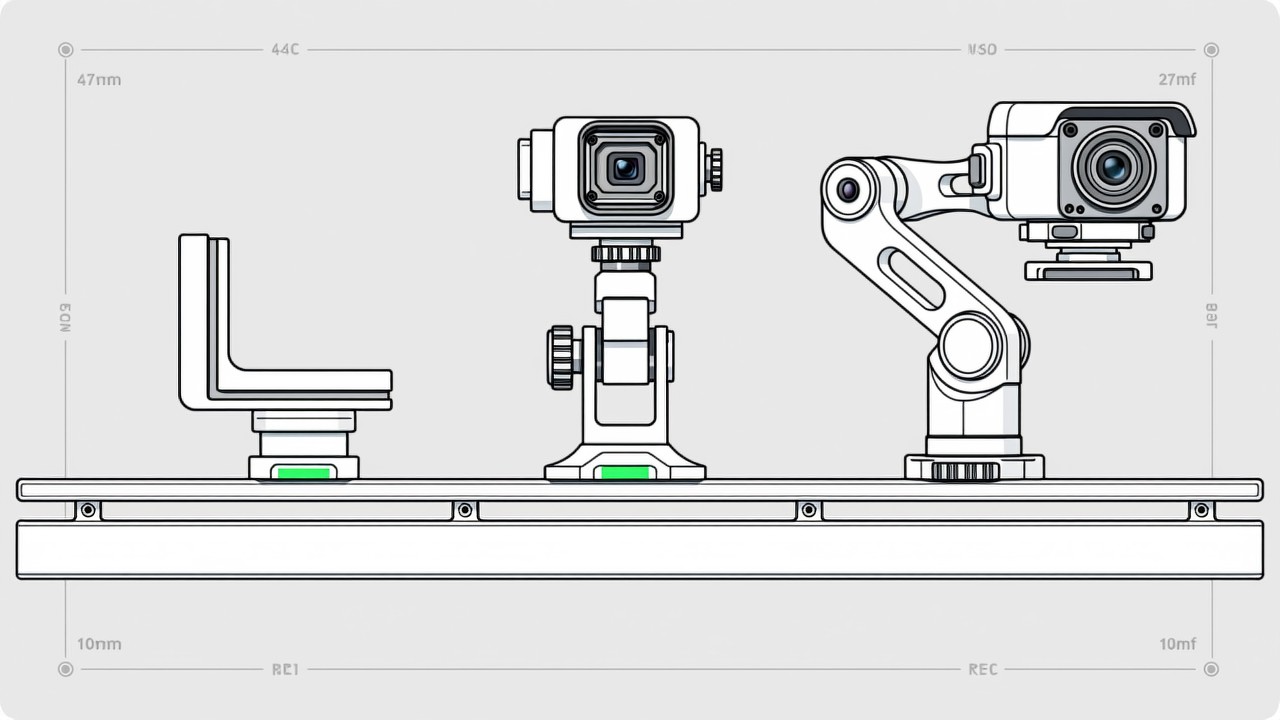
Visual SOP Camera Selection and Mounting
Camera selection for visual SOP is not the same as for product inspection. The s…
Read more → -
Vision Monitoring at the Semiconductor Die Bonder
Semiconductor packaging stations are characterised by high precision, fast cycle…
Read more → -
Wrong-Assembly Alarms Without the False Alarms
The most common reason a visual SOP project fails is not poor recognition — it i…
Read more →
Need specific advice for your production line?
Our engineers can share practical approaches to process error prevention and SOP compliance inspection for your scenario.
Request a free trial plan