
Where Should Vision AI Compute Live: Edge Box, Industrial PC or Server?
For most workstation-level visual SOP deployments, inference belongs at the station and the server belongs in the background. Three numbers drive the decision: how many cameras, at what resolution, and how fast the answer must arrive. Only heavy multi-stream analysis or frequent retraining justifies centralised inference.
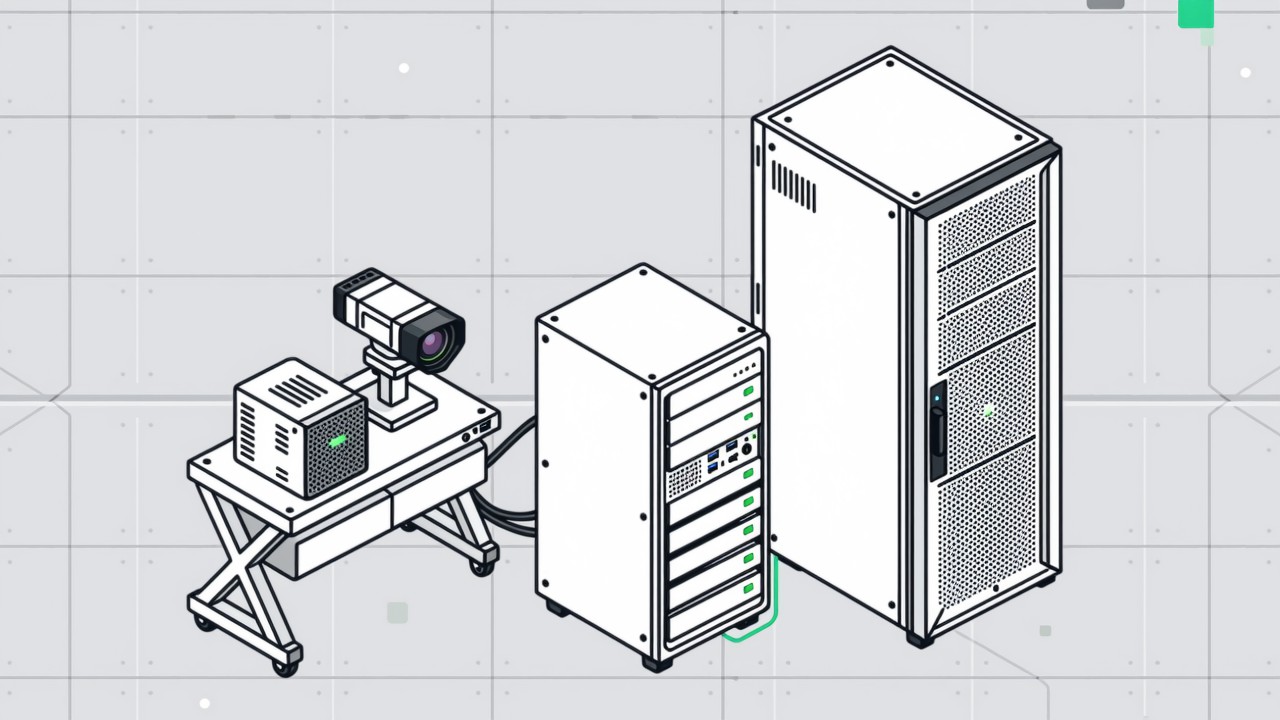
Key takeaways
- A station usually carries one or two cameras, so a thirty-station line means thirty to sixty streams — the point where centralised processing starts to strain.
- Latency is the most under-estimated factor: encoding, transport and decoding add hundreds of milliseconds end to end.
- Sending results instead of raw video cuts bandwidth from megabits per stream to a few structured records per second.
- A mixed deployment keeps detection running when the network drops, with records buffered and re-sent afterwards.
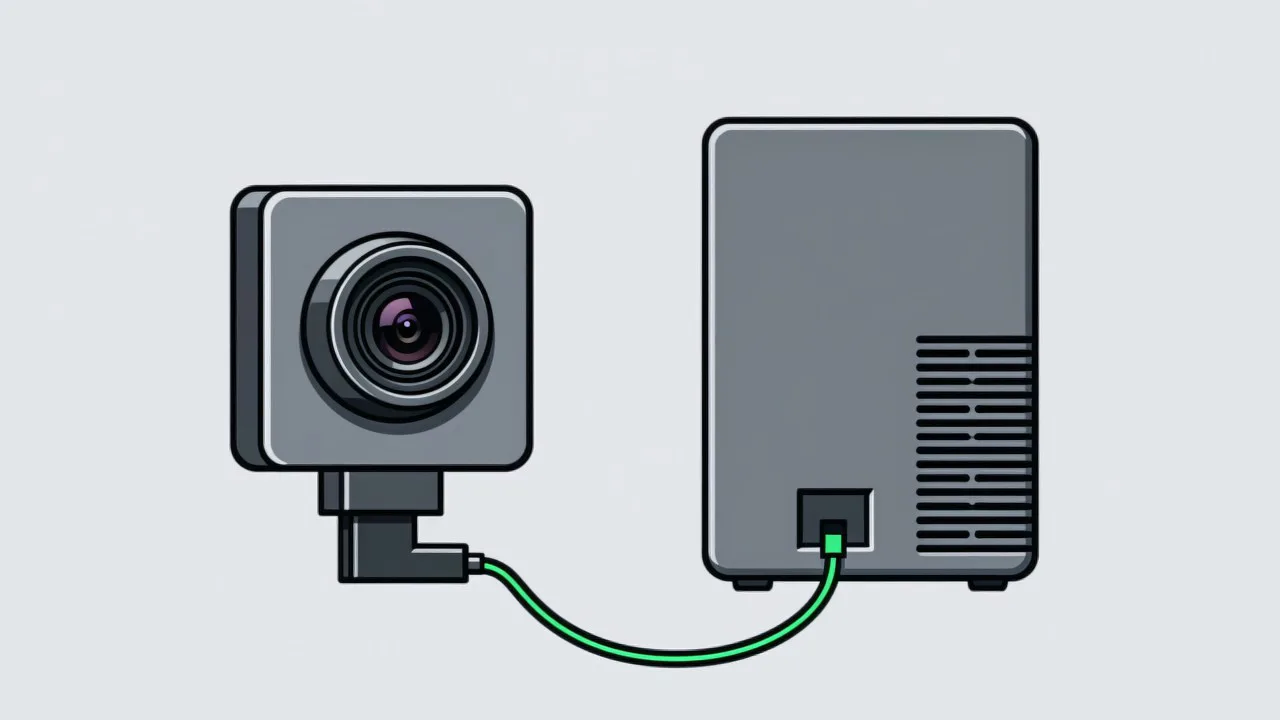
Ask where the compute should live and, for most workstation-level visual SOP projects, the answer is straightforward: inference runs at the station, and the server handles configuration, updates and long-term storage. The reason is latency — an alarm is only useful if it arrives while the operator can still correct the step. Centralised analysis adds encoding, transport and decoding to every frame, and that cost grows with resolution and frame rate. Central inference starts to earn its place only when you are analysing dozens of streams at once or retraining large models often. Three numbers drive the decision: how many cameras, at what resolution, and how fast the answer has to come back.
Start with three numbers: streams, resolution, latency
A station typically carries one or two cameras — one for the overall action sequence, one for detail such as whether a screw has seated. A thirty-station line therefore means thirty to sixty streams, and that count is the dividing line: a handful to a dozen streams sits comfortably on edge hardware, while several dozen begins to strain both bandwidth and a single server. Resolution is rarely free. Doubling pixel count raises convolution cost well beyond double, and many stations do not need 1080p at all: judging whether a hand reached into a bin is a large-motion decision that 720p handles, while checking whether a screw head protrudes above a hole needs more pixels and a tighter field of view. The resolution and field-of-view trade-off is covered in how to choose an industrial camera. Latency is the number teams most often under-estimate: a station alarm should land within about a second, ideally in the low hundreds of milliseconds, and a centralised path spends part of that budget on codec and transport. Fast-moving stations also force a shutter decision — see global vs rolling shutter.
- How many cameras are in view at once? Past roughly fifteen streams, plan for where the compute converges.
- What resolution does each stream really need? Large-motion checks can often drop to 720p.
- What latency is acceptable? If a one-second alarm is required, keep inference at the edge.
Edge box, industrial PC, or GPU server
| Form factor | Typical build | Fits | Main limit |
|---|---|---|---|
| Edge box | Embedded AI chip, low power, small | One or two streams per station, stable rules | Limited compute and memory; larger models or heavy multiplexing will not fit |
| Industrial PC | Fanless or short chassis, entry GPU | One station up to a small zone, local buffering | Dusty or hot areas need industrial models; thermals need attention |
| GPU server | Rack mount in a machine room, multi-GPU | Retraining, cross-line roll-up, dozens of streams | Network-dependent, higher end-to-end latency, wider blast radius on failure |
When centralising is the better answer
Three situations favour central compute. Frequent model updates: if the process changes weekly and the model is retrained that often, keeping compute in one place means one update covers the whole line instead of touching every edge device. Few streams, large model: a high-precision defect check may need a model too heavy for an edge box, and a single server card can host it. An existing machine room: if the plant already runs a staffed server room, central deployment can be cheaper to operate. Mixed architectures are common in practice — the visual AI SOP system page sets out how the layers divide.
Cost bands and the operating question
As a rough order of magnitude, edge boxes sit in the low thousands, industrial PCs with an entry GPU in the low tens of thousands, and GPU servers from the tens of thousands upward before machine room, UPS and network work. Those are bands, not quotes — the actual figure depends on stream count and model size. The operating question differs by architecture: edge means managing many dispersed devices, so remote update, health monitoring and replacement processes have to be designed in advance; central means watching one server whose failure has a wider blast radius and usually calls for redundancy. Neither is universally better. For sequencing, see the implementation timeline.
Common questions about compute placement
Can every station stream video to one server for analysis?
It is technically possible, but three things have to be sized: bandwidth (dozens of continuous streams), server compute (streams × resolution × frame rate) and end-to-end latency. Most sites end up with a mixed deployment — inference at the edge, results uploaded.
Will edge hardware run out of headroom later?
It depends on whether models grow or stream counts rise. The safe approach is to leave headroom in the specification and design the pipeline in tiers: lightweight models for the routine decision, a higher-power node for occasional re-checks.
Are results lost when the network goes down?
No. Results are stored locally first and re-sent automatically once the network or host system recovers, with the re-send status logged for verification.
Deciding whether your station needs edge compute?
Tell us your camera count, resolution and latency target and we will suggest a deployment shape.
Related articles
-
Alarm Fatigue: Why the Floor Turns the System Off
Many visual SOP systems are not beaten by technical problems — they are muted by…
Read more → -
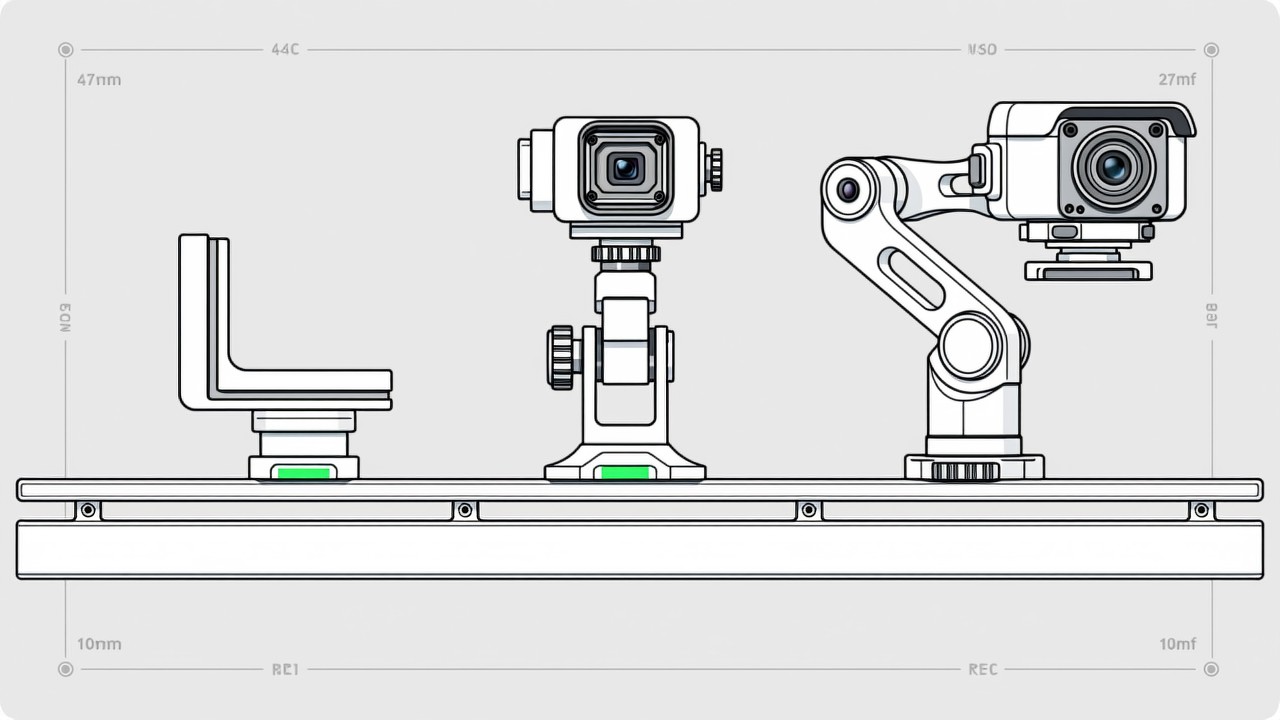
Visual SOP Camera Selection and Mounting
Camera selection for visual SOP is not the same as for product inspection. The s…
Read more → -
Vision Monitoring at the Semiconductor Die Bonder
Semiconductor packaging stations are characterised by high precision, fast cycle…
Read more → -
Wrong-Assembly Alarms Without the False Alarms
The most common reason a visual SOP project fails is not poor recognition — it i…
Read more →
Need specific advice for your production line?
Our engineers can share practical approaches to process error prevention and SOP compliance inspection for your scenario.
Request a free trial plan