
Process Compliance and Visual SOP in Medical Device Assembly
Visual inspection in medical device assembly differs from most industries in one respect: it is not only error-proofing, it is evidence. Under frameworks such as ISO 13485, process records usually need to be retrievable at audit and traceable to a specific batch and step — the record is part of the quality system. The question on the floor is therefore not only whether a part was missed, but whether this build can be reconstructed afterwards. A vision system records the action and state at the station as one link in that evidence chain. It does not constitute a conclusion about product safety or sterility assurance, and it does not replace sterilisation validation or statutory testing.
Key takeaways
- Under frameworks such as ISO 13485, process records are usually themselves audited, so continuous capture beats after-the-fact entry.
- Cleanrooms add constraints on new equipment: heat sources, exposed cabling and hard-to-clean surfaces all need assessment up front.
- Vision can cover action sequence, presence, label reading and seal appearance — not seal integrity validation or sterilisation validation.
- How any regulation applies is a judgement for the quality and regulatory function; a technical system only addresses process-level recording and prompting.
Visual inspection in medical device assembly differs from most industries in one respect: it is not only error-proofing, it is evidence. Under frameworks such as ISO 13485, process records usually need to be retrievable at audit and traceable to a specific batch and step — the record is part of the quality system itself. The question on the floor is therefore not only whether a part was missed, but whether this build can be reconstructed afterwards. A vision system records the action and state at the station as one link in that evidence chain. It does not constitute a conclusion about product safety or sterility assurance, and it does not replace sterilisation validation, biocompatibility testing or other statutory testing.
How a cleanroom step differs from an ordinary line
Medical device assembly often runs in a controlled environment. The steps themselves may be simple — dispensing, pressing, ultrasonic welding, assembly, sealing, labelling — but each brings extra requirements on environment and records. Materials pass through airlocks, gowning and access rules apply, and any new equipment at a station has to be assessed for its effect on cleanliness and for how easily it can be wiped down. Those constraints rule out simply copying a general assembly line approach: a fan-cooled industrial PC, an exposed cable bundle or a bracket with crevices is usually a problem in a cleanroom. The overlapping requirements of precision assembly and controlled environments are also described for 3C electronics.
- Dispensing and pressing. Bead continuity, volume and position affect seal and bond strength.
- Ultrasonic or laser welding. Weld position, count and presence are visually judgeable; joint strength is not.
- Sealing. Whether a pouch seal is complete, uncontaminated and free of trapped foreign material.
- Labelling and marking. Label position, batch number and unique device identifier matching the work order — a point audits check closely.
- Assembly sequence. The order of steps in multi-part products, and whether similar variants get mixed.
Why records matter as much as error-proofing
On an ordinary shop floor a missed part is handled as a quality issue. In a device context, the same event also has to answer the question “what is the process record for this batch?”. That means records cannot be generated only when something goes wrong — they should be continuous and traceable to batch and step. This is one place a vision system earns its keep: it produces timestamped process data by nature, chainable by batch, station and step. Retention period, field design and audit-friendliness deserve their own discussion at selection, and data traceability for visual SOP breaks it down further. If electronic work instructions are already in use, the two are complementary; the division of labour is covered in visual SOP versus eSOP.
What vision still cannot replace
| Step | Vision can carry | Cannot replace |
|---|---|---|
| Assembly | Recording and prompting on sequence, presence and position | Operator self-check and release decision |
| Labelling and batch ID | Reading labels, checking parts against the work order | The label verification procedure itself |
| Pouch sealing | Visible inspection of seal appearance and foreign material | Seal integrity validation |
| Sterilisation | Recording the pre-sterilisation assembly state | Sterilisation validation and sterility testing |
Putting that table in the proposal prevents a common misunderstanding: that installing vision means the process is “under control”. It is closer to an extra pair of eyes that never tires, never looks away and leaves a record — while judgement and release remain with people and the quality system. Cleanroom and personnel constraints also mean deployment tends to run slower here than on an ordinary line; the stage breakdown is covered under visual SOP implementation timeline, and post-launch responsiveness in visual SOP support terms.
Common questions on device assembly
Does medical device assembly need visual inspection at all?
It depends on the problem. If the pain is missed parts, assembly sequence or mixed variants, and records are still filled in by hand, the marginal value is high. If the pain is sterility assurance or material performance, that belongs to the quality system and process validation, and vision cannot solve it.
Will new equipment in a cleanroom affect the clean class?
That needs assessment at design stage. The usual approach is to move heat-generating and particle-generating parts outside the clean zone, choose surfaces that can be wiped down, and include the equipment in the site environmental monitoring routine. The conclusion itself belongs to the site’s cleanroom management procedure.
How long should process records be kept?
Retention period and field design are usually determined by the manufacturer according to product category and applicable regulation. What a vision system can do is make the data easy to export and easy to search by batch — not set the retention rule.
Can you pull a complete process record for any given batch?
Tell us the steps, the way records are kept and the audit requirements, and we will assess which gap vision can close.
Related articles
-
Alarm Fatigue: Why the Floor Turns the System Off
Many visual SOP systems are not beaten by technical problems — they are muted by…
Read more → -
Visual SOP Camera Selection and Mounting
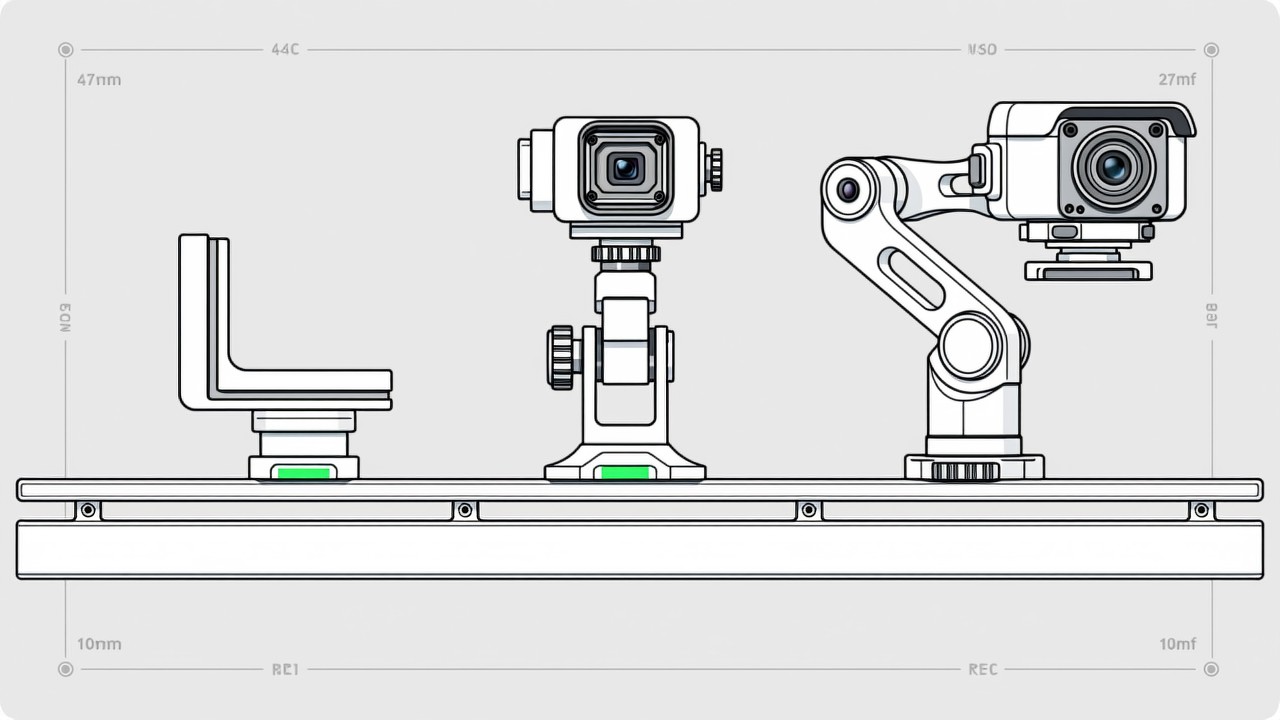
Camera selection for visual SOP is not the same as for product inspection. The s…
Read more → -
Vision Monitoring at the Semiconductor Die Bonder
Semiconductor packaging stations are characterised by high precision, fast cycle…
Read more → -
Wrong-Assembly Alarms Without the False Alarms
The most common reason a visual SOP project fails is not poor recognition — it i…
Read more →
Need specific advice for your production line?
Our engineers can share practical approaches to process error prevention and SOP compliance inspection for your scenario.
Request a free trial plan