
Evaluating a Vision Vendor
The differences between vision suppliers are hard to see in promotional material or in a quotation. Every supplier has a list of case studies, every supplier can use the terminology, and the differences in price usually reflect the specification rather than the capability. The place where capability shows is a technical discussion, and specifically in how a supplier answers questions about difficulty — whether they volunteer the limits and the risks, or claim that everything is straightforward.
Key takeaways
- A good supplier names the risks and limits. Be wary of one that claims everything is easy.
- Questions should be specific about parameters and conditions, or the answers will be general.
- Ask about the projects that went wrong and the ones that were taken over from somebody else.
- Weight support and responsiveness as heavily as technical delivery.
The difficulty in choosing a supplier is that the capability gap cannot be observed directly before the contract. Demonstration footage always looks good, because it was captured under ideal conditions with the best samples and the most favourable camera angle. What decides a real project is how the supplier behaves when something is difficult: what they do when the lighting will not behave, how they approach acceptance when defect samples are scarce, which part of the chain they attack when the cycle will not close. Asking about those in a technical discussion returns far more information than reading ten brochures.
Questions worth asking
| Question | What it tests | Answer to be wary of |
|---|---|---|
| What is the hardest part of detecting this defect? | Whether they have done comparable work | Nothing is difficult, it can all be detected |
| If samples are scarce, how is acceptance set? | Whether they have a working method | Evading it, or claiming samples will be sufficient |
| The cycle is tight — which stage would you attack first? | Whether they understand where the time goes | Just use a better camera |
| What do you do when the lighting on site is poor? | Whether they have field experience | Asking the user to improve the environment and stopping there |
| Under what conditions would this scheme fail? | Whether they will say something inconvenient | Silence, or claiming it will not fail |
| Who manages and changes parameters after go-live? | Whether they think about the long term | Anyone can adjust it, it is simple |
| Have you ever had to change scheme mid-project? Why? | Honesty, and whether they review their work | Denying it ever happens |
| How are spares and support arranged? | Long term capability | Lead time discussed, support not |
What these questions have in common is that they approach difficulty rather than capability. A supplier with real experience answers with conditions attached: "that works under X, but if Y happens we would need Z instead". A conditional answer is a sign of credibility, because it shows the person has specific situations in mind rather than a product description. A supplier who answers yes to everything is in one of two positions: they have not done it and do not know where the difficulty lies, or they know and have chosen not to say. Neither is helpful.
Reading a reference list
A list of successful projects is less informative than it appears. Any supplier trading for a few years can produce dozens, and their common characteristic is that the conditions happened to suit them. Two other categories carry much more information: projects where the supplier took over work somebody else had left unfinished or unsuccessful, and projects that have been running for three years or more. The first tests problem solving under awkward conditions; the second tests whether the thing keeps working. With the second, ask what has gone wrong over those years, how it was handled, and what was changed as a result.
Where it can be arranged, visiting a station that is running is worth more than any document. What to look at is concrete: whether a check routine is being followed, whether parameters are controlled, whether operators can explain what to do when something is wrong, whether the window and the light are clean. These details show whether long term operation was part of the delivery or an afterthought. A station handed over and then abandoned usually looks neglected, with missing records and operators who cannot answer basic questions about it.
Common questions about vendor evaluation
A much cheaper quotation — can it be trusted?
First confirm the specifications are genuinely comparable: camera, lens, lighting, compute, software functions, training and support duration, listed side by side. The gap is often explained by something omitted from the support or spares. If the specifications really do match and the difference remains large, ask where it comes from — scale, efficiency from experience, or an intention to economise on service. The price alone is not the signal; its origin is.
Should two suppliers be asked to compete?
For a critical station, a small comparative trial on a limited sample set is worth the cost. The design matters: the same samples, the same criteria and the same site conditions, or the differences measured will reflect the test conditions rather than the suppliers. The conclusion need not be a single winner — it is perfectly reasonable to conclude that one supplier suits one station and the other suits another.
Is a free trial a good sign?
Usually, since it shows willingness to invest before the contract. Define the boundaries first: which samples, how far the trial goes, who owns the resulting work, and what happens to the samples and images if the project does not proceed. Left unstated, a free trial can become the source of a later dispute.
Choosing a supplier?
Send us your conditions, the state of your criteria and the key points of each proposal. We will say which answers are credible and where to press further.
Related articles
-
Alarm Fatigue: Why the Floor Turns the System Off
Many visual SOP systems are not beaten by technical problems — they are muted by…
Read more → -
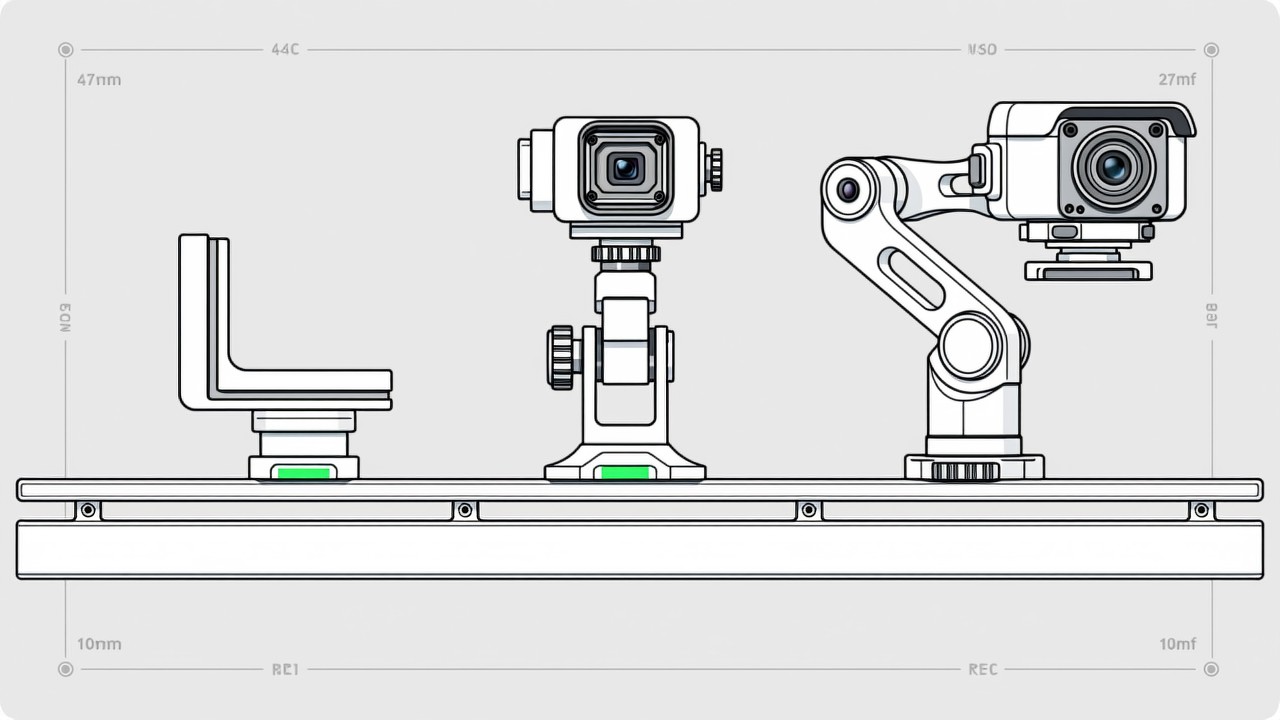
Visual SOP Camera Selection and Mounting
Camera selection for visual SOP is not the same as for product inspection. The s…
Read more → -
Vision Monitoring at the Semiconductor Die Bonder
Semiconductor packaging stations are characterised by high precision, fast cycle…
Read more → -
Wrong-Assembly Alarms Without the False Alarms
The most common reason a visual SOP project fails is not poor recognition — it i…
Read more →
Need specific advice for your production line?
Our engineers can share practical approaches to process error prevention and SOP compliance inspection for your scenario.
Request a free trial plan