
Strobe versus Continuous Light
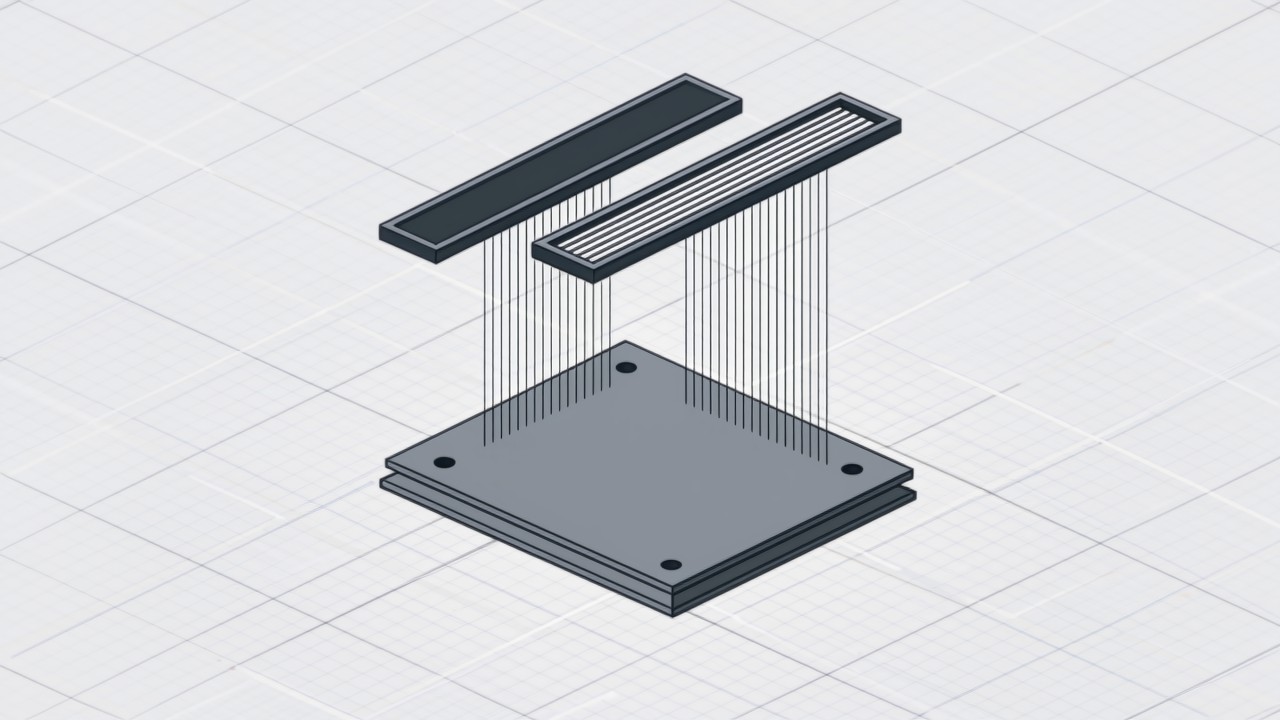
The choice between continuous and strobe lighting is a choice about where the light comes from at the moment of exposure. Continuous lighting runs at a modest, sustainable level all the time. A strobe drives the same emitter hard for a very short interval, delivering far more light during the exposure and staying dark between exposures. The reason to pay for a controller is almost always motion: a strobe is how a fast moving part is frozen without a shutter that does not exist.
Key takeaways
- A strobe buys light at the moment of exposure, which is how motion is frozen.
- It costs a controller, cabling, a trigger and a shorter emitter life.
- Continuous light is the right answer whenever the exposure can be long enough.
- Strobe makes the trigger path part of the imaging chain, not just the camera.
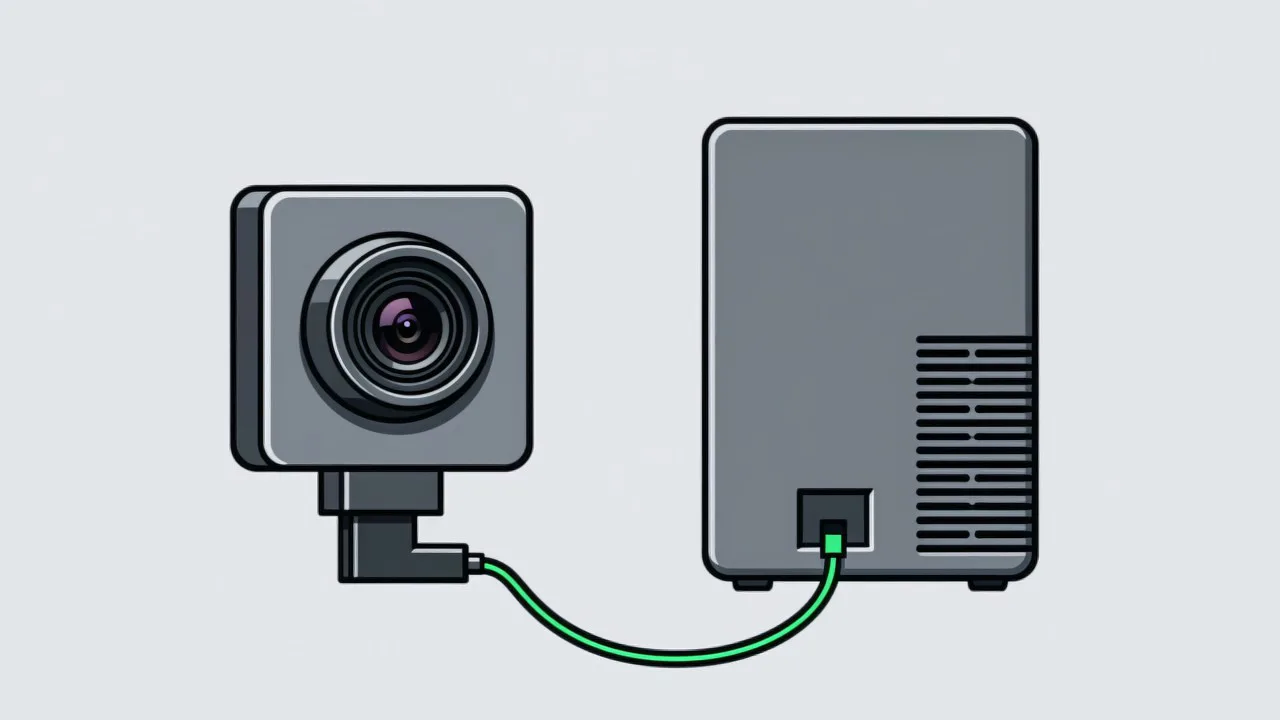
An emitter has a continuous rating and a pulsed rating, and the pulsed rating is much higher. Running a light emitting diode at ten times its continuous current for a hundredth of the time produces roughly the same average heat, but delivers ten times the light during that brief window. A strobe controller does exactly this, and it is triggered in step with the camera exposure so that the bright pulse and the open shutter coincide. Between exposures the emitter is off, or driven at a low level for aiming.
When the extra light is the point
- Fast moving parts. If the part moves far enough during the shortest exposure the camera allows to blur the feature beyond tolerance, more light is the only way to shorten the exposure further. This is the main reason strobes exist.
- Very short line periods. On a line scan station running at tens of thousands of lines per second, each line is a very short exposure, and continuous illumination at that intensity would cook the emitter and the part.
- Long working distances or large fields. Light falls off with distance and spreads over area, so a big field of view from far away may simply be beyond what a continuous source can illuminate.
- Light-hungry techniques. Dark field, low-angle and coaxial arrangements throw most of the light away by design. A technique that needs ten times the light is much easier to achieve with a strobe than with a bigger continuous source.
The counterweight is the whole apparatus around it. A strobe needs a controller unit, a trigger signal that arrives at the right time with the right width, cabling rated for the pulse current, and an emitter that tolerates being driven that way. It also puts the light source into the timing budget: the trigger has a delay and a rise time, and both have to be accounted for when the exposure begins. On a slowly moving line where a five millisecond exposure is acceptable, none of this earns its cost.
| Situation | Continuous | Strobe |
|---|---|---|
| Stationary or slow parts, exposure can be milliseconds | Yes | Unnecessary |
| Part moves during the shortest available exposure | Not sufficient | Yes |
| High speed line scan | Rarely practical | Yes |
| Large field or long working distance | Often insufficient | Usually |
| Light-hungry technique (dark field, low angle) | Possible with a bigger source | Easier |
| Simple retrofit on an existing station | Yes | Only if the trigger can be routed |
What changes when you fit one
Fitting a strobe turns the illumination into part of the timing chain, and that has consequences beyond the light. The trigger has to reach both the camera and the controller, with a delay that is stable from shot to shot — jitter in that delay shows up as brightness variation between images, which a threshold based algorithm will read as a change in the part. The pulse width has to be short enough to freeze the motion but long enough to deliver the light, and those two pull in opposite directions. And the emitter is driven hard in short bursts, so the electrical installation matters: pulse currents are large, and a supply or a cable that was fine for continuous operation may not be.
The validation requirement also grows. With continuous lighting, the station's behaviour is steady and a single image characterises it well. With a strobe, brightness depends on the pulse, and the pulse depends on the trigger, so any change in the trigger path is a change in imaging conditions. That is why strobe stations should have the trigger delay and pulse width recorded as controlled parameters alongside exposure and gain, and why changing a controller or a cable is a change that warrants re-validation.
Common questions about strobe lighting
Can the strobe stay on continuously instead?
Usually not at the same brightness. The pulsed rating is what makes the brightness possible, and running the emitter continuously at that level would overheat it. Some controllers offer a continuous mode at a reduced level, which is useful for aiming and setup, but it is a different operating point and any settings found there do not transfer to the pulsed mode.
Does the strobe need to be the same colour as the continuous light?
It needs to be the same spectrum the criteria were established under, whatever that is. Since criteria are validated under particular illumination, a change of spectrum — not just of brightness — alters how features appear. If a strobe replaces a continuous source, re-run the fixed sample set before accepting the result, exactly as for any other change to the lighting.
Is a strobe ever worth it on a stationary part?
Occasionally, for a light-hungry technique where a continuous source cannot deliver enough without becoming impractically large or hot. In that case the reason is brightness, not motion, and the timing requirements are much easier because the part is not moving. Be clear about which reason applies — it determines how tight the trigger requirements really are.
Does your part move during the exposure?
Tell us the speed, the exposure you can achieve and the technique you are using. We will work out whether a strobe is needed or whether more light is the wrong fix.
Related articles
-
Alarm Fatigue: Why the Floor Turns the System Off
Many visual SOP systems are not beaten by technical problems — they are muted by…
Read more → -
Visual SOP Camera Selection and Mounting
Camera selection for visual SOP is not the same as for product inspection. The s…
Read more → -
Vision Monitoring at the Semiconductor Die Bonder
Semiconductor packaging stations are characterised by high precision, fast cycle…
Read more → -
Wrong-Assembly Alarms Without the False Alarms
The most common reason a visual SOP project fails is not poor recognition — it i…
Read more →
Need specific advice for your production line?
Our engineers can share practical approaches to process error prevention and SOP compliance inspection for your scenario.
Request a free trial plan