
Wiring Vision into Andon and Interlocks: Signals, Reset, Bypass
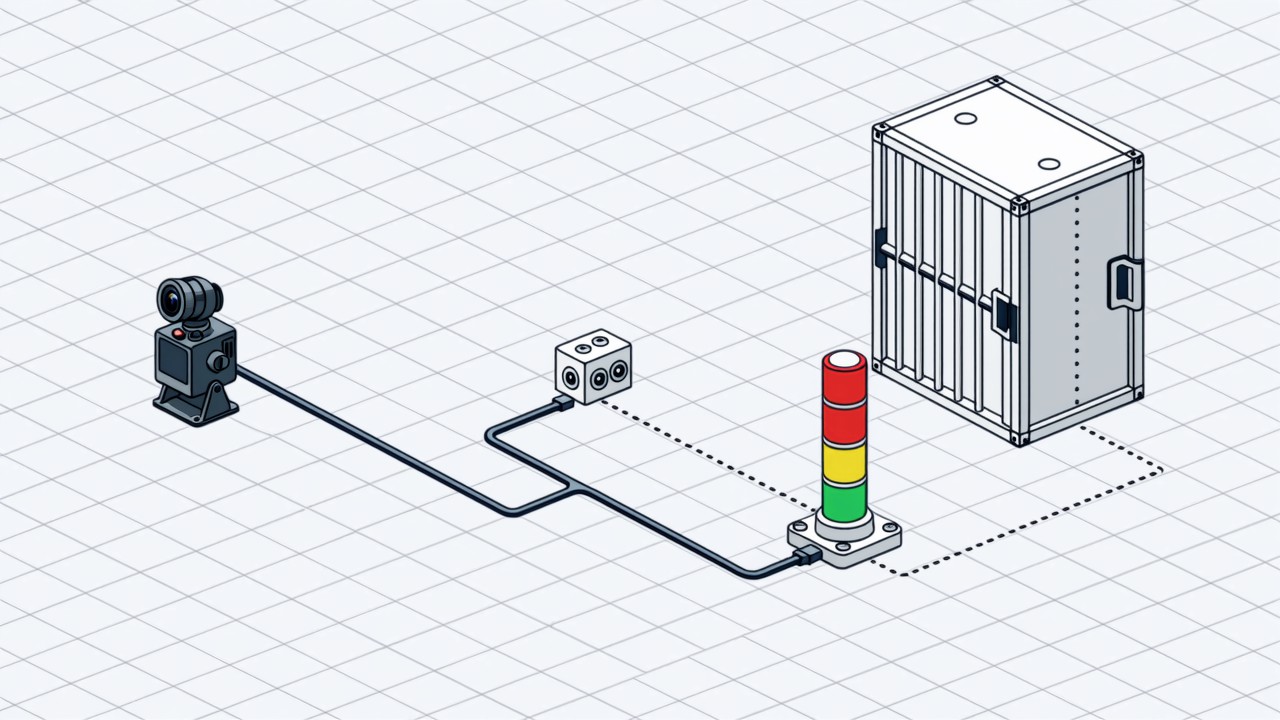
A system that only logs raises no objections. The moment it drives an andon lamp or an interlock, the conversation gets serious, because it stops the line. Before anything is wired, three things have to be settled: what form the signal takes — dry contact, network message or hard wire — who may reset an alarm and under what condition, and how the system exits safely when it fails. Projects that go to interlock without settling these usually find the shopfloor bypassing them within weeks, by pulling a wire or editing a parameter.
Key takeaways
- Decide first whether a given signal is a prompt or an interception; the reliability requirements differ completely.
- Reset authority must be assigned to a role and the reset itself must be recorded, or the interlock is decorative.
- How the system exits on its own failure — bypass, degrade or stop — must be agreed at design time.
- Bypass prevention is not technical lockdown; it is making the intended path easier than the workaround.
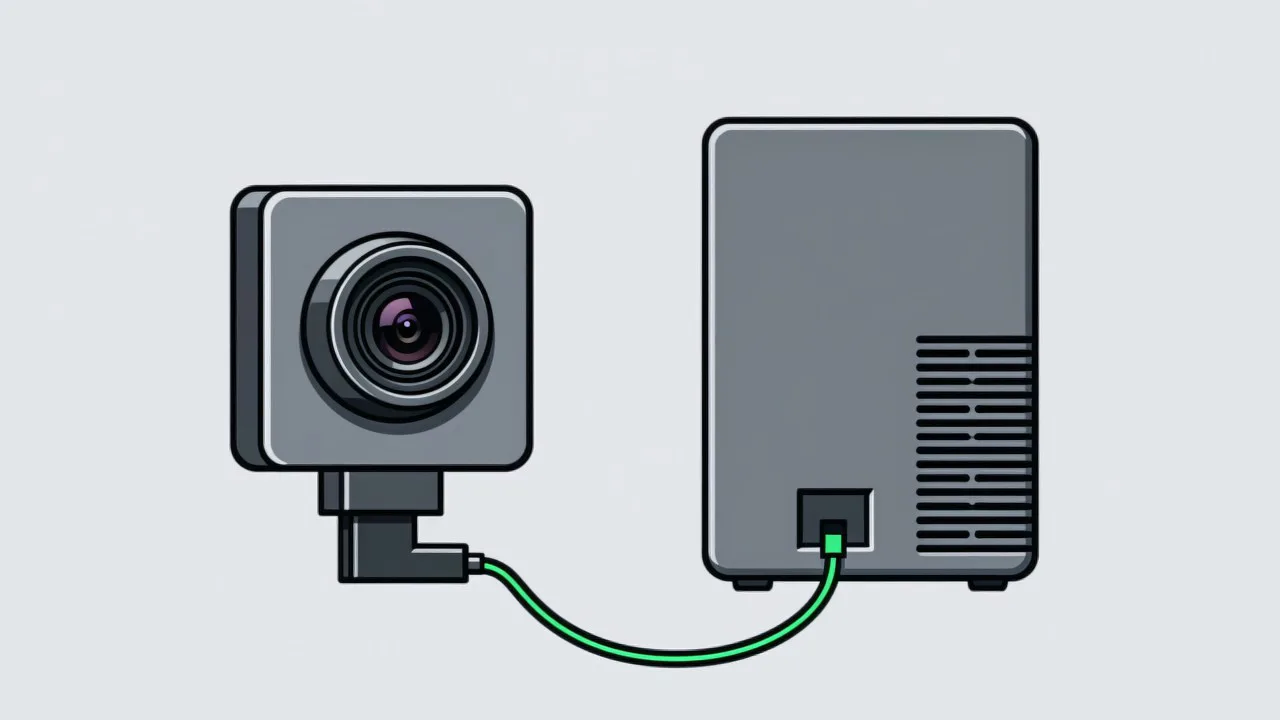
A vision system that only records raises no objections, because it changes nothing about how the line already runs. The moment its verdict drives an andon lamp or a machine interlock, the conversation gets serious, because it stops the line. This step — from visible to intercepting — is the point of the whole exercise and also the most likely to generate opposition. Three things have to be settled before wiring begins: what form the signal takes, whether a dry contact, a network message or a hard wire; who may reset an alarm and under what conditions; and how the system exits safely if it fails. Projects that go to interlock without settling these are, in practice, bypassed quite quickly.
Prompt or interception, decided per item
Prompt and interception make very different demands. A prompt only has to deliver information to a dashboard or a station display, tolerates latency and the occasional lost message, and can travel over a network. An interception has to drive an actuator or prevent the next action, which means considering the consequence of a false actuation — one spurious line stop costs production directly, so the demands on reliability, response time and fail-safe behaviour are far higher. Within one station, different check items often suit different forms. Sequence errors such as a missing part or a skipped step usually justify interception, while a small positional deviation may be better as a prompt. Assigning each check item to prompt or intercept is the first step in interlock design, and it belongs to process and production jointly, not to the technical side alone.
| Form | Where it fits | Watch out for |
|---|---|---|
| Dry contact or hard wire | High-reliability interception signals such as line stop or release inhibit | Needs electrical cooperation; the default state on a broken wire must be considered |
| Network message | Prompts, records, dashboards, MES exchange | Jitter loses packets, so it cannot be the only safety-related signal |
| Machine-side integration | The PLC reads the verdict and decides the action itself | Agree the data format and timeout policy so the machine never waits |
Reset: authority, condition and record
How reset works decides whether the interlock means anything. If the button sits within the operator's reach and one press resumes the line, then on a tight takt it becomes muscle memory within days and the interlock exists in name only. A better arrangement grades reset authority by check item: minor deviations may be cleared by the operator, with the system counting how often; sequence or safety-related errors need a team leader or process engineer, and the reset is recorded with who cleared it and when. The reset condition needs defining too — is it "the workpiece has been removed" or "the step has been redone"? Those two require different detection. Making reset a recorded action rather than a click is what turns an interlock into something that actually holds.
Bypass prevention: make the honest path the easy one
Any mechanism that affects takt will be worked around: a wire pulled, the camera covered, an interlock parameter disabled. Technical lockdown is rarely airtight and it puts the shopfloor in opposition. The more effective idea is to make the intended path easier than the workaround. False alarms low enough that the system is not a burden. A reset that takes two presses and no waiting. A prompt that tells the operator what is wrong and what to do, rather than announcing NG. When handling an alarm takes clearly less time than bypassing it — and than the consequences of having bypassed it — the motive disappears on its own. This is why reducing false alarms matters more at the interlock stage than at the logging stage; the available levers are in cutting false alarms.
The record belongs in the interlock chain too
An interlock action with no record cannot be reviewed afterwards. The record should contain at least the trigger time, the check item, the verdict, the image, the time the signal was issued, the time of reset, and who reset it. With those, two questions become answerable: was this stop a false alarm or a real problem, and how long did recovery take. These are the same fields described in write-back field design, with interlock timestamps added. Joining the interlock record to production data is the only way to answer, months later, how many real problems the interlock actually stopped — which is the question that decides whether it stays.
Andon and interlock questions we get asked
Can a retrofit start with prompts only, no interlock?
Yes, and most projects should. Run in prompt mode first, accumulate genuine false alarm data, and only move to interlock once false alarms are at an acceptable level. Doing it the other way round costs the system the shopfloor's trust from day one.
There are too many alarms. Operators are pulling the wire.
Pulling the wire is a symptom, not the cause. Look at how many alarms are false, whether the prompt explains the problem, and how easy the reset is. Most wire pulling happens where false alarms are high and prompts are vague; improve those and the motive fades.
Should the interlock signal be redundant?
It depends on the consequence of failure. If failure creates a safety risk or a large loss, consider redundancy or an independent detection method. If it is a quality prompt, a single path is normally sufficient. Judge by consequence, not by technical preference.
Is your interlock signal a prompt or a real stop?
Tell us the station interlock requirement and we will work through signal form, reset rules and failure behaviour with you.
Related articles
-
Alarm Fatigue: Why the Floor Turns the System Off
Many visual SOP systems are not beaten by technical problems — they are muted by…
Read more → -
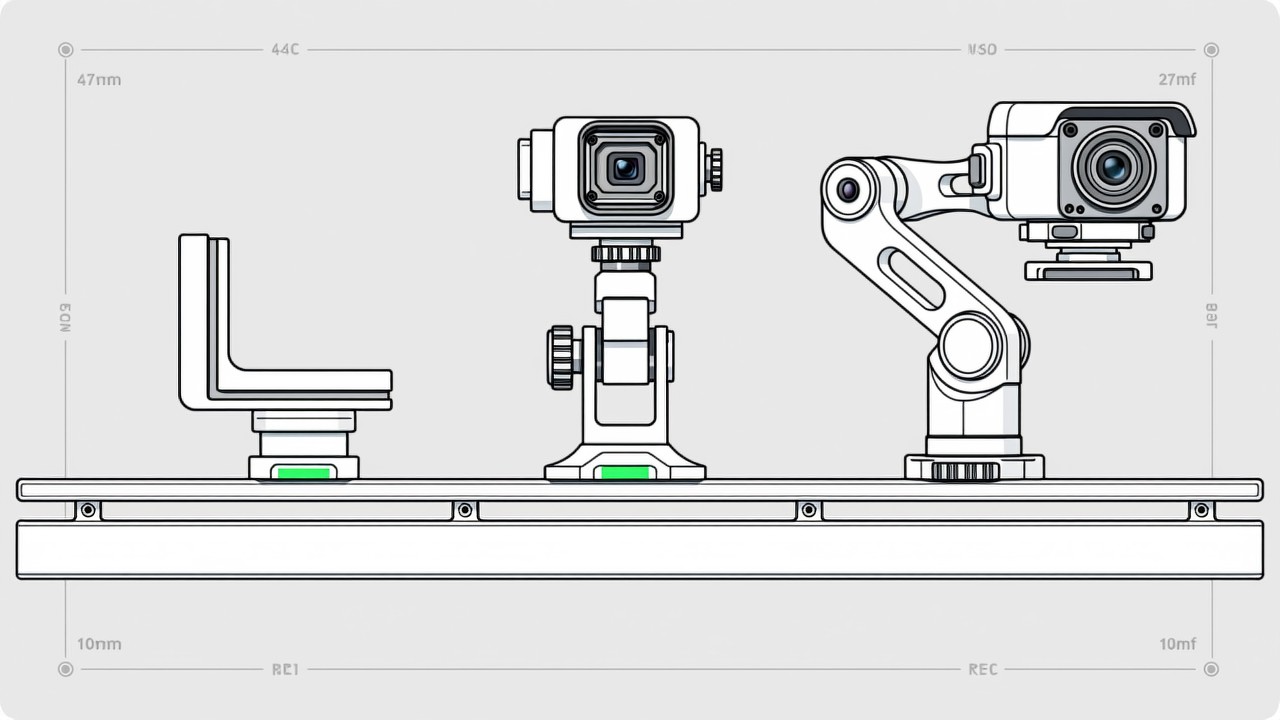
Visual SOP Camera Selection and Mounting
Camera selection for visual SOP is not the same as for product inspection. The s…
Read more → -
Vision Monitoring at the Semiconductor Die Bonder
Semiconductor packaging stations are characterised by high precision, fast cycle…
Read more → -
Wrong-Assembly Alarms Without the False Alarms
The most common reason a visual SOP project fails is not poor recognition — it i…
Read more →
Need specific advice for your production line?
Our engineers can share practical approaches to process error prevention and SOP compliance inspection for your scenario.
Request a free trial plan