
Guidance versus Inspection
To a customer, "use a camera to find where the part is" and "use a camera to check whether the part is good" sound like the same request. They are two different disciplines. One produces a continuous coordinate delivered into a control loop; the other produces a discrete verdict that decides whether a part proceeds. That single difference propagates into how accuracy is defined, what happens when it is wrong, how tight the timing is, and what safety assessment is required.
Key takeaways
- Guidance outputs a coordinate, inspection outputs a verdict, and the metrics follow from that.
- Latency is a hard limit in guidance because the output sits inside a control loop.
- Guidance drives machinery, so its safety requirements are a different order of magnitude.
- When one station does both, write two separate sets of acceptance criteria.
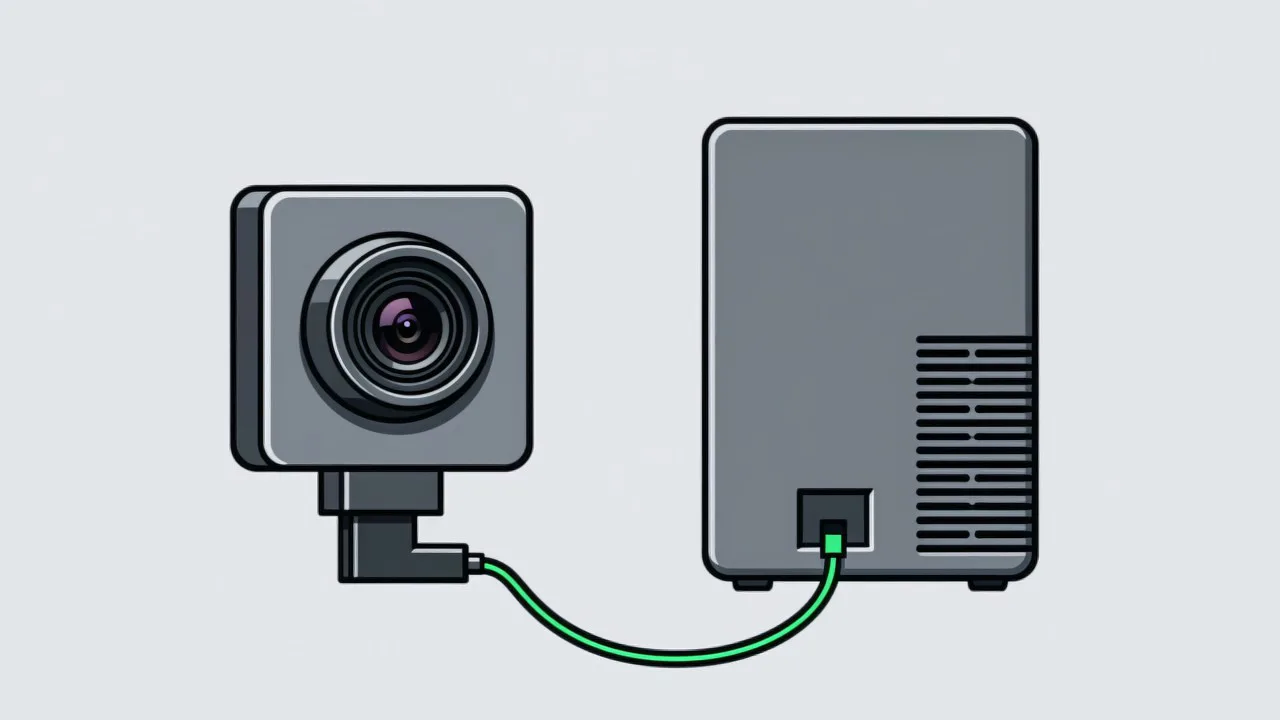
Draw the line by looking at the output. Guidance produces a position or pose — where the part is in x, y and angle — and that value is handed to a robot, a servo or a motion controller which acts on it. Inspection produces a verdict, pass or fail, together with whatever evidence supports it. One participates in control; the other participates in a decision. Everything that differs between the two follows from this, and mixing them up in a requirement document is how projects end up arguing about the wrong numbers.
The metrics are not the same metric
| Aspect | Guidance | Inspection |
|---|---|---|
| Output | Coordinate or pose, continuous | Verdict and evidence, discrete |
| Key metric | Landing accuracy and latency | Detection rate, false call rate, repeatability |
| If it is wrong | Missed grasp, collision, damage | A bad part released or a good part rejected |
| Timing | Inside the control loop; latency limits throughput | Asynchronous, as long as the verdict precedes release |
| Safety | Drives machinery; needs a safety assessment | Normally does not drive machinery; lower risk |
| Acceptance | Error distribution across the working volume | Detection and false call rates on a fixed sample set |
Latency is the item most often overlooked. An inspection station can take its time — image, compute, publish — so long as the verdict exists before the part moves on. A guidance station cannot: its output has to reach the controller within a cycle, and a delay of a few tens of milliseconds means the robot has already passed the point where it should have turned. This is why inference time optimisation is a hard constraint in guidance and merely an efficiency concern in inspection.
Three questions that separate them
Ask these in order
- What is done with the result?
If it becomes an action — an arm moving, a cylinder firing, a servo turning — it is guidance. If it only affects information — a record, a release, an alarm, a rejection — it is inspection. A rejection does actuate a mechanism, but it is a binary trigger rather than a continuous trajectory, so it is normally treated as inspection.
- Who is waiting for it?
If a robot is waiting, latency is a hard number. If the line is waiting for a release decision, being inside the cycle is enough. This single question sets the compute budget and therefore the ceiling on algorithm complexity.
- What happens if it is wrong?
A wrong inspection is a wrong judgement, with sampling and review as a backstop. A wrong guidance is a collision, and there is no backstop. This determines whether a safety assessment is required, and it usually is.
When one station does both
It is common for a single station to guide a robot to a part and also judge whether that part is acceptable. There is nothing wrong with the combination, but the requirement document has to state two separate sets of numbers or acceptance will turn into an argument. At minimum: for guidance, the landing accuracy, the permitted error at each point in the working volume, and the maximum time from trigger to output; for inspection, the detection and false call rates, which sample set they will be measured on, and what happens to a part that is judged wrongly.
There is also an engineering choice worth making early: one set of cameras and compute doing both jobs, or two. Sharing saves hardware, but guidance is sensitive to latency and inspection to compute, so the two compete for the same resources — one difficult batch that takes longer to analyse will push guidance past its deadline. Separate hardware costs more but keeps the two sets of metrics from interfering and makes faults easier to attribute. When the cycle is tight, or when either job is already close to its resource ceiling, separating them is the more reliable choice.
Common questions about guidance and inspection
Is rejecting a part guidance or inspection?
Inspection. The reject mechanism receives a binary signal, not a trajectory. The system does not need to know precisely where the part is at the reject gate, only to fire at the right moment. The metrics should be written as inspection metrics — detection and false call rates — not as positioning accuracy.
Is guidance accuracy usually tighter or looser than inspection tolerance?
It depends on the mechanical clearance, not on the inspection tolerance. Dropping a large casting into a generous bin tolerates a millimetre or two; inserting a small pin into a small bore does not. The two numbers come from different sources and have to be established separately, even when the same camera serves both.
Can the inspection model be reused for guidance?
Normally not directly. An inspection model outputs the presence and location of defects; guidance needs the pose of the part. The labelling and the output structure differ, so the models are trained separately even though they share the same image acquisition and preprocessing.
Is your requirement guidance or inspection?
Send us the customer's description in their own words. We will say which discipline it belongs to and how the criteria should be written.
Related articles
-
Alarm Fatigue: Why the Floor Turns the System Off
Many visual SOP systems are not beaten by technical problems — they are muted by…
Read more → -
Visual SOP Camera Selection and Mounting
Camera selection for visual SOP is not the same as for product inspection. The s…
Read more → -
Vision Monitoring at the Semiconductor Die Bonder
Semiconductor packaging stations are characterised by high precision, fast cycle…
Read more → -
Wrong-Assembly Alarms Without the False Alarms
The most common reason a visual SOP project fails is not poor recognition — it i…
Read more →
Need specific advice for your production line?
Our engineers can share practical approaches to process error prevention and SOP compliance inspection for your scenario.
Request a free trial plan