
Network and Data Security for a Production Vision System
A vision system sits in an awkward place. It captures images, and those images frequently contain people. It transmits process data, which is commercially sensitive. It often holds a remote-access channel, opened for maintenance and forgotten. None of these is exotic, and none needs exotic treatment, but all three need decisions made deliberately at design time rather than inherited by default. This article covers network placement, access control, retention policy and the privacy questions that a camera in a workspace inevitably raises.
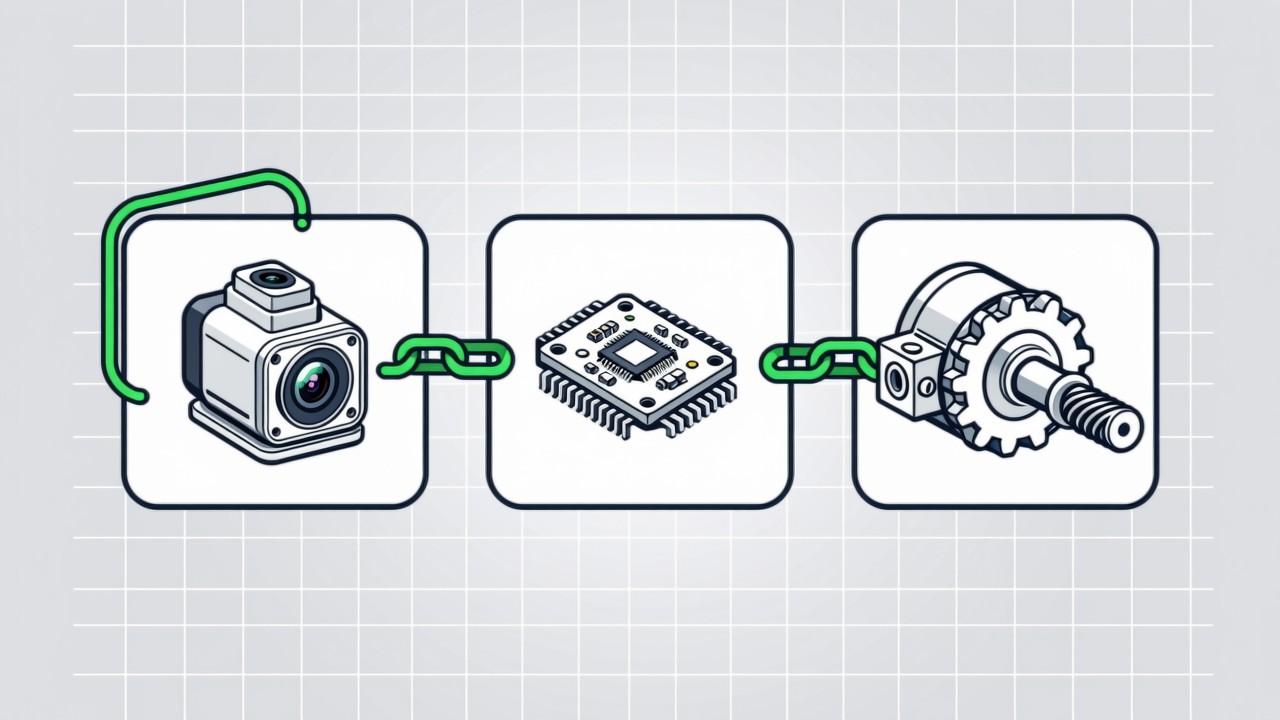
Key takeaways
- Place the vision network in its own segment; reaching the corporate network should be a deliberate route, not a default.
- Remote access opened for maintenance must carry an expiry and be closed deliberately.
- Retention periods should be per data type, with alarms and ordinary frames treated differently.
- Images containing people are personal data in many jurisdictions; handle them accordingly from the start.
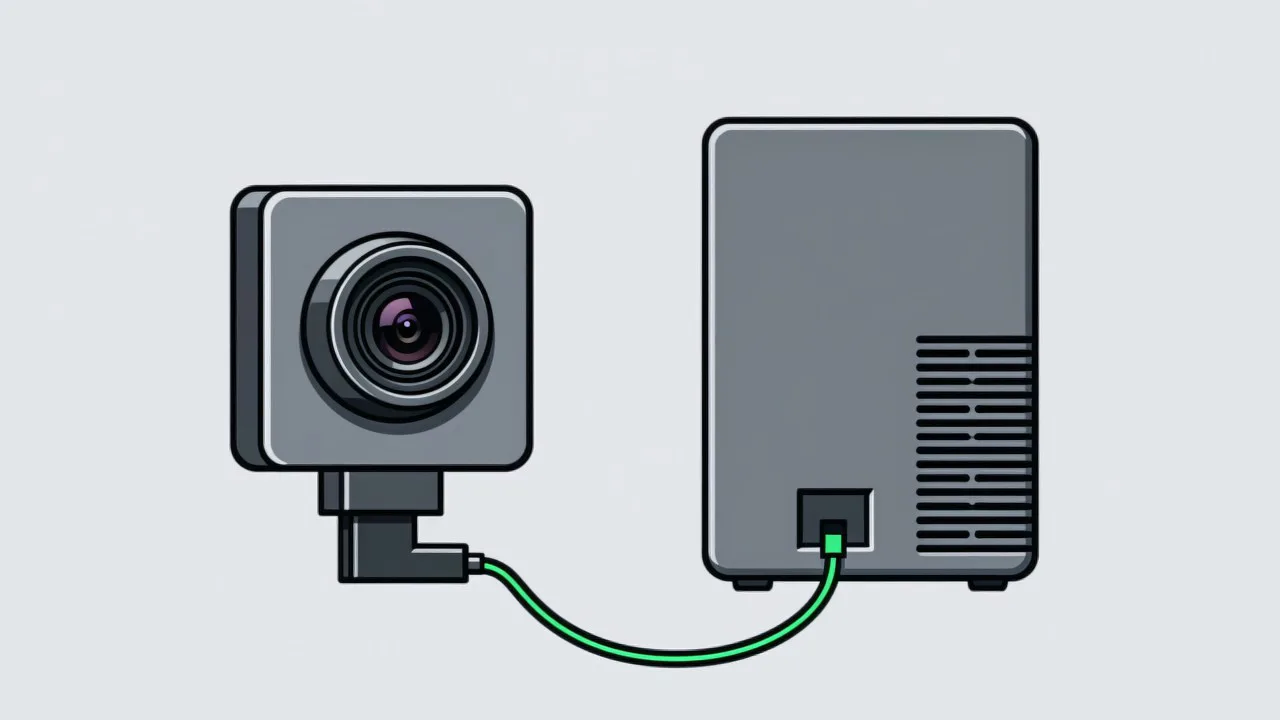
A vision system occupies an awkward position in a plant. It captures images, and working areas contain people. It transmits process data, which is commercially sensitive. It usually carries a remote-access channel, opened so that a supplier could support it during commissioning and left in place afterwards. None of these is unusual and none needs an exotic answer, but all three need to be decided deliberately at design time, because the default outcome of not deciding is the least secure arrangement available: a device on the corporate network, with an old remote-access route, keeping images indefinitely. The three decisions are network placement, access control and retention.
Network placement
The practical approach is a dedicated segment for production equipment, with the vision system inside it and corporate traffic kept out. Reaching the vision system from the office then requires a defined route, typically through a gateway with rules, rather than being a side effect of both being plugged into the same switch. Equipment traffic also benefits: production devices behave predictably when office traffic and broadcast storms are not sharing the link. Where the vision system must reach MES or a data platform, agree which specific endpoints are allowed, and in which direction — a vision system that can reach anything is also a system that anything can reach. Where the segment boundary sits depends on what exists already, but the general shape is always the same, and it is discussed further in MES write-back field design.
| Area | Minimum practice | Common omission |
|---|---|---|
| Segment | Separate production segment, corporate traffic excluded | Left on a shared switch because a port was available |
| Access | Named accounts, no shared passwords, remote access with an expiry | Vendor remote access opened at commissioning and never reviewed |
| Direction | State which endpoints may be reached, and in which direction | Unrestricted outbound access from the device |
| Updates | Patches scheduled inside a maintenance window | Device running its original firmware for years |
Access control and remote support
Remote access is the weakest link in practice, and it is opened for the best of reasons: an equipment supplier needs to support the system, and travelling to site takes a day. What goes wrong is not the access itself but its permanence. A defensible arrangement gives each supplier a named account and closes the channel when the support window ends, with the reopening going through a quick approval. Two accompanying habits matter as much: log who accessed the system and when, and separate read access from parameter-changing access so that reviewing data does not require the ability to alter thresholds. The second is the more commonly skipped — engineers are given a single administrator credential because it is convenient, and the system then has no meaningful audit trail at all.
Retention: decide per data type
Keeping everything forever is expensive and risky, and deleting everything quickly makes the system useless for improvement. The workable approach differentiates by data type. Alarm images and verdict records should be kept long enough to support traceability, which generally follows the product's traceability requirement. A sample of conforming-part images is worth keeping for trend analysis at much lower volume. Full continuous video, where it exists at all, has the shortest justified life and is usually kept in days or weeks rather than months. What matters is that the policy is written down and implemented automatically, because a retention rule that depends on someone remembering to delete files will not be followed.
- Alarm records and images: per the product traceability requirement, commonly months to a few years.
- Sampled conforming images: a low-rate sample for trend analysis, typically months.
- Continuous video: only where a specific need justifies it, and then measured in days.
- Access and change logs: kept at least as long as the records they explain, since they are what makes the rest defensible.
Network and data questions we get asked
Our IT team insists the vision system live on the corporate network.
That is often negotiable with specific information: what data leaves the segment, to which endpoints, and what would be exposed if the device were compromised. Concrete answers usually get further than a general argument about separation.
Does the vision system need internet access?
Usually not for operation. Internet access is typically needed only for licensed software updates or vendor support, which can be opened for a defined window rather than left permanently available.
How should we handle employee concerns about cameras?
Directly and early. State what is captured, what it is used for, how long it is kept and who can see it — and keep it to the workstation where the work is judged rather than the surrounding area. The worker privacy considerations in our glossary apply here.
Has anyone reviewed your vision system network placement since commissioning?
Tell us your network arrangement and data types and we will lay out a practical policy.
Related articles
-
Alarm Fatigue: Why the Floor Turns the System Off
Many visual SOP systems are not beaten by technical problems — they are muted by…
Read more → -
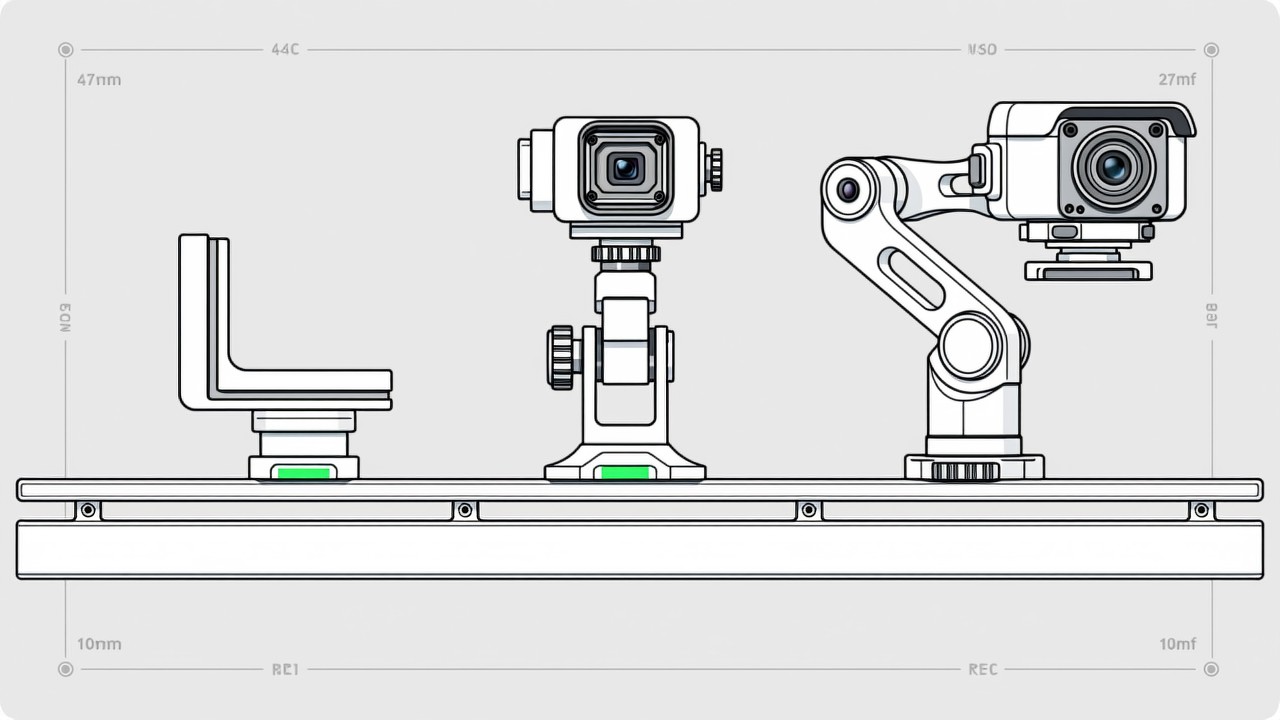
Visual SOP Camera Selection and Mounting
Camera selection for visual SOP is not the same as for product inspection. The s…
Read more → -
Vision Monitoring at the Semiconductor Die Bonder
Semiconductor packaging stations are characterised by high precision, fast cycle…
Read more → -
Wrong-Assembly Alarms Without the False Alarms
The most common reason a visual SOP project fails is not poor recognition — it i…
Read more →
Need specific advice for your production line?
Our engineers can share practical approaches to process error prevention and SOP compliance inspection for your scenario.
Request a free trial plan