
Why a Solution That Worked on the Pilot Line Fails in Production
A pilot line is not a smaller version of the production line. It is cleaner, runs more slowly, has better lighting and more experienced staff, and is watched closely because it is a pilot. Every one of those differences flatters the system, and the gaps are usually visible during the pilot to anyone looking for them. This article names the seven differences that matter, how to test for them without building two systems, and how to set a rollout threshold that means something.
Key takeaways
- The pilot flatters on environment, takt, staffing and attention; each one is testable before rollout.
- Rehearse the real takt and the real shift pattern during the pilot, even briefly.
- Test with parts and operators the pilot team has never seen.
- Set a quantitative rollout threshold before the pilot starts, not after it succeeds.
A pilot line is not a smaller version of the production line. It is usually cleaner, lit better, run more slowly, staffed by more experienced people, and watched closely by everyone involved — because it is a pilot. Every one of those differences flatters the system, and when it later underperforms on the real line the usual explanation offered is that production is simply messier. That is true but unhelpful, because the gaps were visible throughout the pilot to anyone looking for them. The differences are enumerable, which means they are testable before committing to a rollout rather than discovered afterwards.
The seven differences that matter
| Dimension | Pilot | Production | How to test in the pilot |
|---|---|---|---|
| Environment | Clean, stable lighting, little dust | Dust, oil mist, varying light | Sample across shifts and after a long run |
| Takt | Slow, no pressure | Fixed takt, sometimes accelerating | Run at full takt for a full shift |
| Operators | Experienced, motivated, few | Rotating, varied experience | Include operators outside the pilot team |
| Parts | Selected, consistent | Full range, all suppliers, all ages | Use unselected incoming parts |
| Attention | Engineer standing by | No one watching | Run a shift with no engineer present |
| Changeovers | Rare | Frequent | Rehearse an actual changeover |
| Records | All captured for analysis | Only what the system does automatically | Verify the record is complete without manual help |
The fifth row does the most damage and is the least discussed. During a pilot there is usually an engineer within reach, who can nudge a threshold, restart a process, or interpret an ambiguous verdict. In production there is nobody, and the system has to handle every situation on its own, including the ones nobody anticipated. Running at least one full shift with no engineer present during the pilot is the single most informative test available, and it regularly surfaces problems that never appeared while somebody was standing there. The same logic applies to records: the pilot team often collects data by hand alongside the system, which masks the fact that the system's own records are incomplete.
Testing without building two systems
You do not need to deploy a second system to test these things; you need to vary the conditions of the one you have. Three tests recover most of the value. First, run at real takt for a full shift, including a changeover — this exercises timing, operator pressure and the transition between products at the same time. Second, run with unselected incoming parts and operators who were not part of the pilot, which tests whether the system has learned the pilot's particular conditions rather than the process. Third, leave it alone for a shift and read the records afterwards, which tells you what the system does when nobody is helping. Each of these can be done in the last weeks of a pilot at modest cost, and each has a habit of producing an uncomfortable finding. The rollout path itself is covered in from pilot to full rollout.
Setting a rollout threshold that means something
A threshold worth having has four properties: it is numeric, it was agreed before the pilot, it is measured under production-like conditions, and it has a consequence attached. "The pilot went well" has none of them. Something like "at production takt across a full shift, with unselected parts, fewer than five false alarms per shift and no misses on the standard sample set for two consecutive weeks, then we roll out" is a threshold — and if it is not met, the correct response is to fix the cause rather than to proceed on optimism. Where the pilot genuinely is limited, say so explicitly and set a smaller first rollout, at two or three stations rather than the whole line, with the same numeric test applied again.
Pilot rollout questions we get asked
Do we have to run a pilot?
For a first installation on a new type of station, yes. It is where you learn the imaging conditions and the real error behaviour, and it is far cheaper than learning it across ten stations at once.
Our pilot performed badly. Is the approach wrong?
Not necessarily. Separate the causes: were the imaging conditions inadequate, the criterion ambiguous, the takt too tight, the environment too harsh. Some of those are fixable and some mean the station genuinely is not suitable.
How long should a pilot run?
Long enough to cover at least one shift rotation, one changeover and one batch transition — typically four to eight weeks. Shorter than that rarely reaches the conditions that cause trouble.
What does your pilot threshold actually say?
Tell us how your pilot is set up and we will suggest the tests that predict production.
Related articles
-
Alarm Fatigue: Why the Floor Turns the System Off
Many visual SOP systems are not beaten by technical problems — they are muted by…
Read more → -
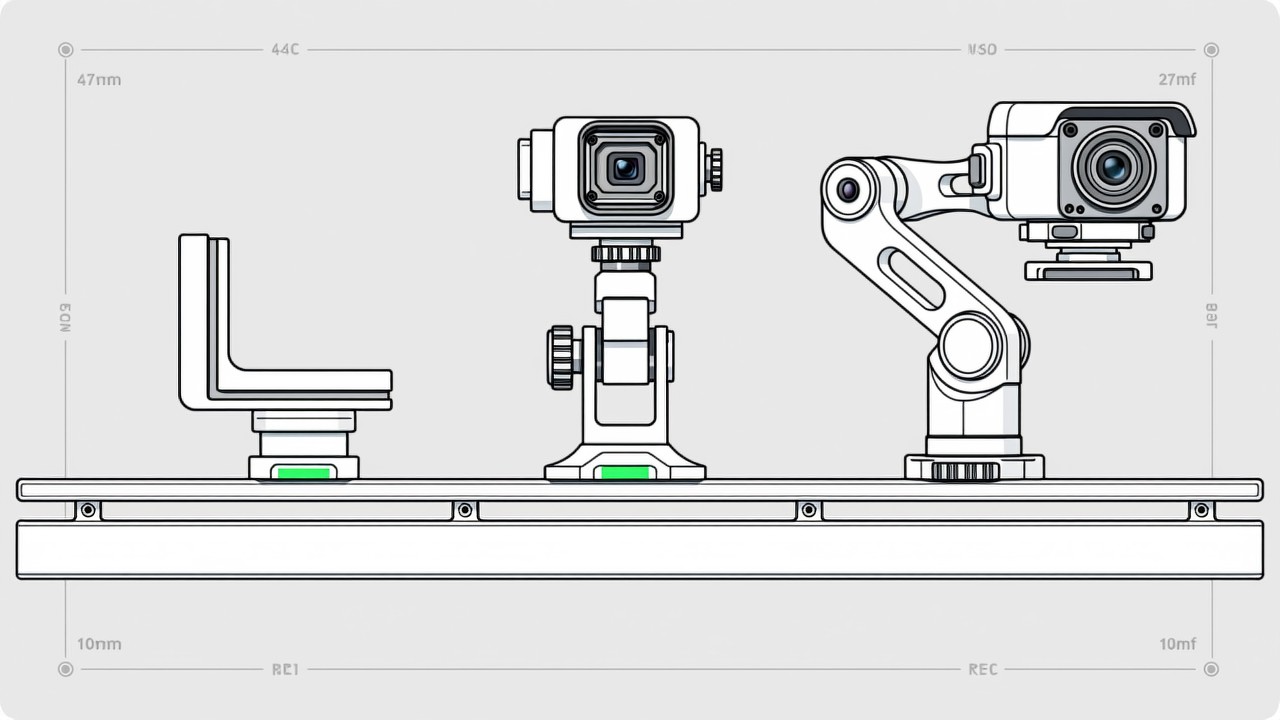
Visual SOP Camera Selection and Mounting
Camera selection for visual SOP is not the same as for product inspection. The s…
Read more → -
Vision Monitoring at the Semiconductor Die Bonder
Semiconductor packaging stations are characterised by high precision, fast cycle…
Read more → -
Wrong-Assembly Alarms Without the False Alarms
The most common reason a visual SOP project fails is not poor recognition — it i…
Read more →
Need specific advice for your production line?
Our engineers can share practical approaches to process error prevention and SOP compliance inspection for your scenario.
Request a free trial plan