
Calculating the Cost of a Defect That Escapes
Nearly every proposal to management for error proofing starts with the same problem: the case is made on rework cost alone, which is the smallest of the three layers and makes the investment look marginal. The real number lives in the third layer — what happens after the customer is involved — and it is usually invisible because nobody tabulates it. This article sets out the three layers with worked estimates, and the calculation order that produces a defensible number without exaggeration.
Key takeaways
- Rework cost is the smallest layer and is the one quoted most often.
- Lost production time usually costs more than the rework itself.
- Customer-side consequences dominate and are the number nobody tabulates.
- Calculate from observed frequency first, then present a range rather than a single figure.
A proposal for error proofing usually opens with rework cost: this many defects a month, this much per rework, therefore this much saved each year. The trouble is that rework is the smallest of the three layers and using only that layer makes the investment look marginal. Escaped defects also consume production time — the line stops while the problem is found and rectified — and, once one reaches a customer, the consequences are an order of magnitude larger than the other two combined. That third layer is the one nobody tabulates, because the costs land on different desks and nobody assembles them into a single number. Assembling it is exactly what makes the case.
The three layers
| Layer | What it contains | Rough estimate |
|---|---|---|
| Direct rework | Labour, materials, re-inspection, scrap of unusable components | Minutes to hours of labour per case, plus material |
| Production time | Line stoppage to find and fix, downstream idle, delayed order | Takt times the number of people affected, often several times the rework cost |
| Customer side | Returns, rework or recall at the customer, freight, sorting, penalties, credibility | Typically an order of magnitude above the other two, and much larger for safety-related items |
The second layer is the most frequently overlooked because production time is rarely charged to a specific defect. A line stopping for twenty minutes while somebody traces a problem is absorbed into overall downtime figures rather than attributed to this event, so it never appears in the quality account. Multiply the stoppage by the takt and the number of people waiting and it is often several times the rework cost itself. The third layer is what actually justifies the investment, but be honest about its magnitude: for a safety-related component, a recall can exceed the production cost of the batch many times over, while for a cosmetic issue it may be negligible. Chapter and verse here would be guesswork, so present a range with the assumptions stated.
The calculation order matters
- Start from observed frequency, not from an imagined worst case. How many escapes have there actually been in the last year, of which types, with what consequence each time. Use records, and where records are missing say so.
- Then the unit costs, with sources named. Labour rate, line rate, freight. Numbers with a stated origin survive challenge; numbers without one get dismissed outright.
- Then a range, not a point value. Present best case and worst case, which is both more honest and better suited to a decision.
- Then the detection rate, since no system catches everything. Multiplying by a realistic detection rate keeps the case defensible when it is later examined.
The costs that never appear on the sheet
Three real costs resist quantification and still belong in the discussion, stated as unquantified. Customer trust, which does not show up in any account until it does, often in a tender where the incumbent loses on quality history. Internal investigation effort, where engineers spend days tracing a problem that a record would have answered in minutes. And regulatory exposure, which ranges from trivial to existential depending on the industry. Listing them explicitly as unquantified items, rather than quietly leaving them out, shows that the analysis is complete and that its author knows what it excludes. The same framing applies when the comparison is between error proofing approaches, as in vision versus mechanical poka-yoke.
Making a defensible comparison
Put costs on both sides. A vision project carries hardware, installation, integration, training, ongoing tuning and maintenance, and it will not detect everything. Omitting the system's own costs makes the proposal look better for a few weeks and far worse the first time a controller asks what it actually costs to run. Where a cheaper alternative exists — a fixture, a process change, a procedural control — state it, and why it was not chosen. A proposal that has visibly considered the alternatives is far harder to dismiss than one that presents a single option with an attractive return.
Cost justification questions we get asked
The payback is over three years. Is that acceptable?
It depends on the plant's normal hurdle. What usually helps more than shortening the payback is presenting the third layer honestly and excluding it separately, so the reader can see the case standing on rework and production time alone and treat the customer-side benefit as upside.
Should we include the cost of false alarms?
Yes. False alarms consume production time just as real defects do, and a system that stops the line three times a shift for nothing will not survive. Put your expected false alarm rate on the cost side of the sheet; it strengthens the case and pre-empts the objection.
We do not have escape records. Now what?
Say so, and use the records you do have — rework tickets, customer complaints, line stoppage logs — noting the gaps. A case built on partial records with the gaps declared is credible; one built on estimates presented as records is not.
What does an escaped defect actually cost you?
Send us your rework, stoppage and complaint records and we will help assemble a defensible case.
Related articles
-
Alarm Fatigue: Why the Floor Turns the System Off
Many visual SOP systems are not beaten by technical problems — they are muted by…
Read more → -
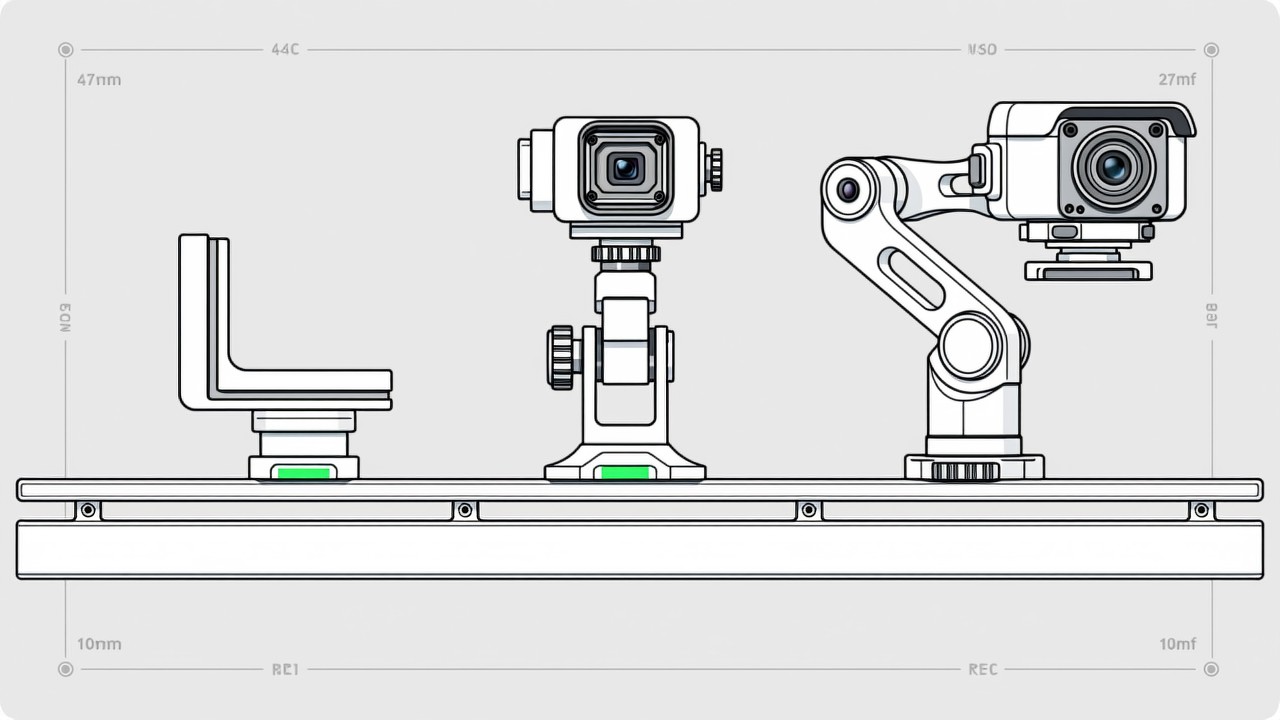
Visual SOP Camera Selection and Mounting
Camera selection for visual SOP is not the same as for product inspection. The s…
Read more → -
Vision Monitoring at the Semiconductor Die Bonder
Semiconductor packaging stations are characterised by high precision, fast cycle…
Read more → -
Wrong-Assembly Alarms Without the False Alarms
The most common reason a visual SOP project fails is not poor recognition — it i…
Read more →
Need specific advice for your production line?
Our engineers can share practical approaches to process error prevention and SOP compliance inspection for your scenario.
Request a free trial plan